
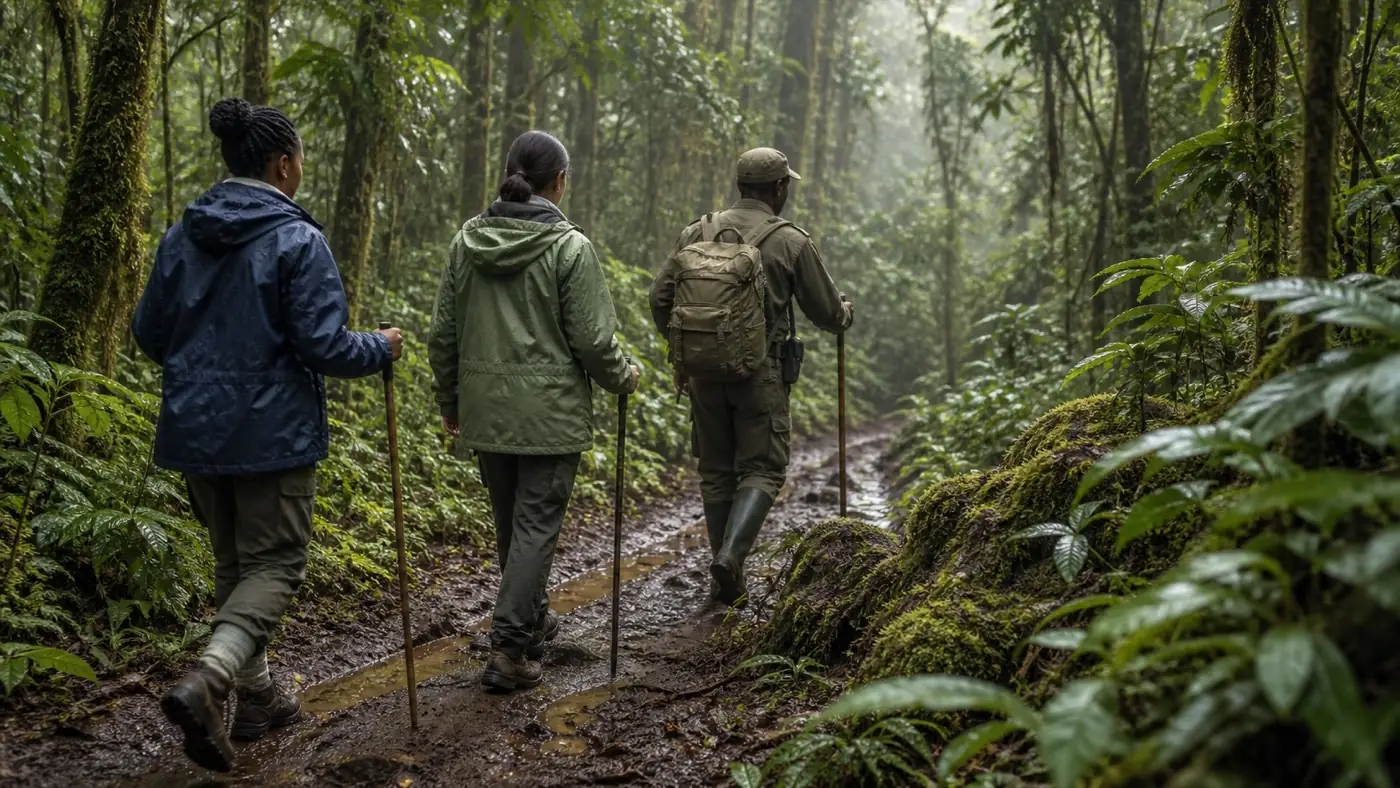
Gorilla trekking is a ranger-led forest walk to visit one habituated gorilla group for a tightly controlled period. It is not a zoo encounter, a guaranteed photo session or a casual nature stroll. The gorillas choose where to move; the terrain and weather choose how hard you work.
This beginner’s guide separates the experience into decisions you can make before booking, preparations that reduce risk, and respectful behavior that protects gorillas once you reach them.
Start with the three possible countries
| Country | Main mountain-gorilla destination | Planning character |
|---|---|---|
| Uganda | Bwindi Impenetrable and Mgahinga Gorilla national parks | Several trail sectors; confirm the sector before choosing lodging |
| Rwanda | Volcanoes National Park | Accessed from the Musanze area; permit price is higher |
| DR Congo | Virunga National Park | Gorilla and volcano treks are closed until further notice as of this review |
That third row matters. Old travel posts and cached booking pages can outlive a closure. Always start with the park authority, then verify government travel advice and your insurance terms.
What a permit does—and does not—buy
A permit reserves participation on a specified date under the authority’s rules. It supports regulated access, ranger operations and conservation financing, but it does not normally include international flights, lodging, transfers, porter fees, tips or personal equipment. Ask for an itemized quote so “the trek costs X” does not hide most of the trip.
The day, from boots to gorillas
- Briefing: staff explain health rules, distance, group behavior and the day’s logistics.
- Allocation: visitors are assigned to a habituated group. Allocation may consider fitness, but it cannot remove uncertainty.
- Tracking: rangers and trackers interpret fresh signs while the group follows forest trails and, sometimes, steep unformed ground.
- The encounter: once the gorillas are located, the formal viewing clock begins. Follow the guide’s instructions even when a gorilla changes the distance.
- Return: the walk back still counts. Save water and energy for it.
Uganda Wildlife Authority describes tracking as commonly taking two to seven hours, with one hour around the gorillas after they are found. “Commonly” is not a promise: wildlife moves.
How fit do you need to be?
You do not need to be an athlete, but you should be comfortable walking for several hours on uneven, wet and sometimes steep ground. Train for time on feet, not just speed. In the six weeks before travel, build toward consecutive days of walking and include hills or stairs. Practice with the small pack and boots you intend to use.
A porter can carry your daypack and help on difficult sections. Hiring one can also direct income toward local livelihoods. It is assistance, not an admission of defeat.
Health rules protect a close relative
Gorillas can be vulnerable to human respiratory disease. Do not conceal illness to save a permit. Tell the operator or park authority promptly if you develop symptoms, follow current mask requirements, avoid eating near gorillas, and never touch them. If a gorilla approaches, do not stage a selfie; stop, stay calm and follow the ranger.
Your compact packing list
- broken-in, grippy hiking boots;
- long trousers and long sleeves;
- lightweight rain shell and a dry bag or pack liner;
- water, lunch or snacks as instructed, and personal medication;
- gardening-style gloves for vegetation, if recommended locally;
- camera with flash disabled and spare power;
- small first-aid kit and sunscreen.
Skip camouflage clothing where local law restricts it. Avoid dangling accessories and anything you cannot use quietly.
How to judge an ethical trip
Look for an operator who uses official permits, gives you written cancellation terms, refuses to promise physical contact, explains illness protocols and does not advertise access to unhabituated gorillas. Ask where the permit payment goes and whether the quote identifies taxes and fees. Read our responsible gorilla tourism guide before comparing itineraries.
Seven questions to ask before paying
- Which park, date and—where relevant—Bwindi sector is the permit for?
- Who holds the permit and when will I receive proof?
- What happens if I am ill or the park closes?
- Which transfers, accommodation and meals are included?
- What is the minimum fitness and maximum bag weight?
- Are porters available and how are they paid?
- Which official health, age and photography rules apply on my date?
The best beginner mindset
Plan the logistics precisely and hold the wildlife expectations lightly. You may see a silverback sleeping, juveniles tumbling, or a family feeding quietly in thick foliage. None is a lesser encounter. The privilege is entering their habitat under rules designed to keep the visit from becoming the threat.
Sources and verification
- IUCN: Best Practice Guidelines for Great Ape Tourism
- Uganda Wildlife Authority: Gorilla Tracking
- Visit Rwanda: Gorilla Trekking
- Virunga National Park: current visitor status
Fact-checked 22 August 2026. Permit prices, entry rules and park access can change; confirm with the relevant park authority before paying.