Short answer: Gorillas are threatened by illegal killing, habitat loss and fragmentation, infectious disease, mining and conflict. Conservation status differs by taxon: the western and eastern gorilla species are Critically Endangered, as are western lowland, Cross River and Grauer’s gorillas; mountain gorillas are Endangered.
Last fact-checked: August 2026. Status categories refer to IUCN assessments and should not be confused with exact population size.
Gorilla conservation status
| Taxon | IUCN category | Key context |
|---|---|---|
| Western gorilla (Gorilla gorilla) | Critically Endangered | Includes western lowland and Cross River gorillas. |
| Eastern gorilla (Gorilla beringei) | Critically Endangered | Includes Grauer’s and mountain gorillas. |
| Western lowland gorilla | Critically Endangered | Numerous relative to other gorillas, but declining across a vast range. |
| Cross River gorilla | Critically Endangered | Fewer than 300 estimated in small, fragmented groups. |
| Grauer’s gorilla | Critically Endangered | Endemic to eastern DRC after severe historical decline. |
| Mountain gorilla | Endangered | Numbers increased across recent surveys, but the population and range remain small. |
“Critically Endangered” describes extinction risk under formal criteria; it does not necessarily mean a taxon has fewer individuals than every taxon in a lower category. Trend, geographic range, rate of decline and population fragmentation also matter.
Illegal killing and snares
Gorillas may be killed for meat, during conflict with people, or incidentally by wire snares set for other animals. Because gorillas reproduce slowly, the loss of even a few adults can have long-lasting effects. Law enforcement works best when paired with community participation, legitimate livelihoods and trusted reporting.
Habitat loss and fragmentation
Agriculture, roads, logging, settlement and industrial development can remove forest or divide it into isolated patches. Fragmentation reduces access to seasonal food and mates and increases encounters with people. Cross River gorillas are especially vulnerable because their small groups occupy separated highland sites.
Disease
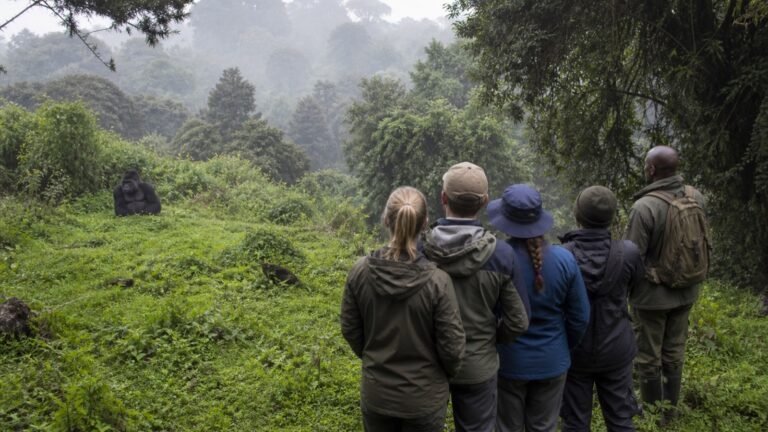
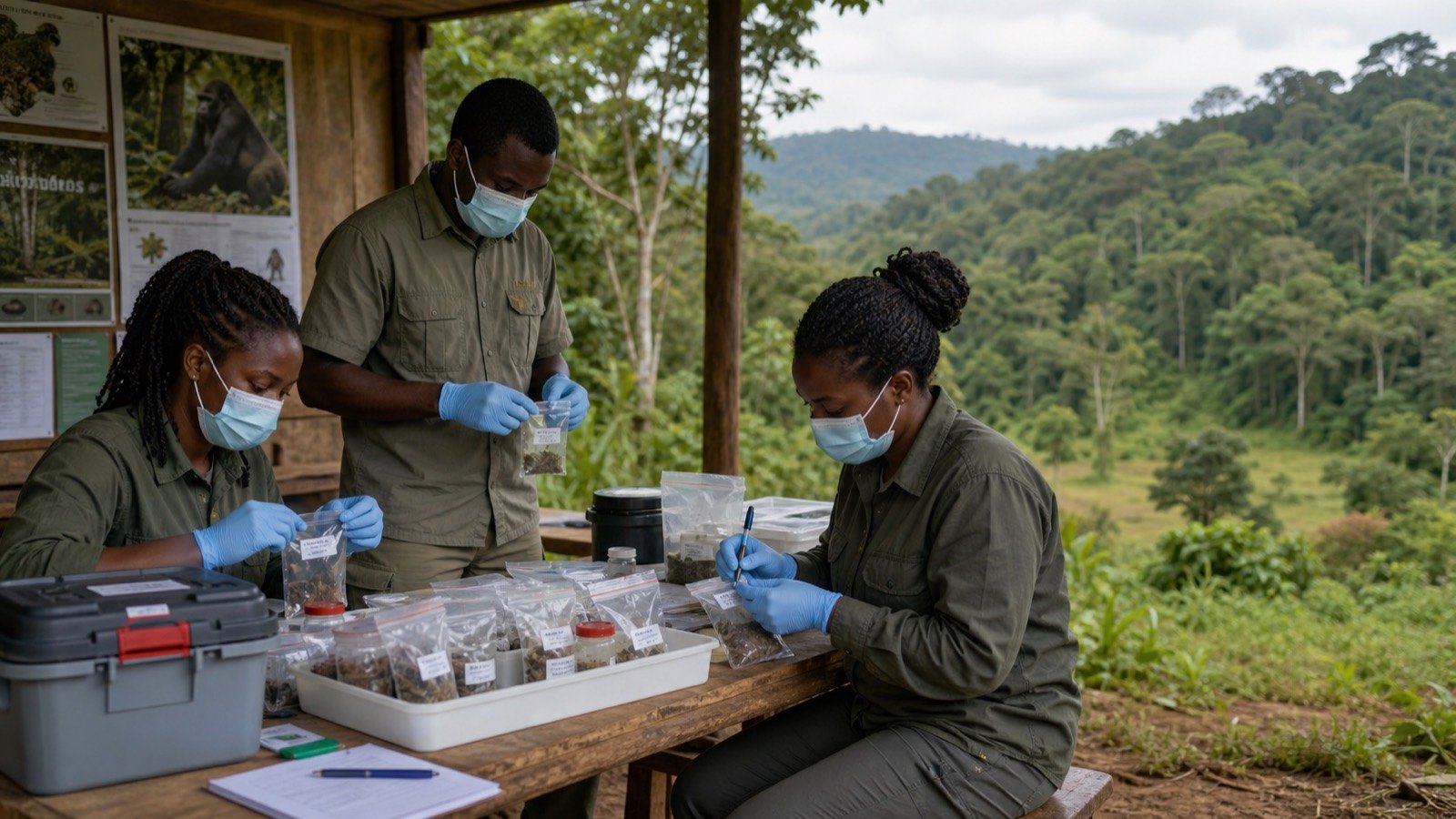
Gorillas are biologically close enough to humans to be susceptible to some of the same respiratory and gastrointestinal pathogens. Ebola outbreaks have caused major losses in western gorilla populations. Habituated gorillas also face infection risk from tourists, researchers and nearby communities, which is why distance, hygiene, group-size limits and staying away when ill are essential.
Mining, roads and armed conflict
In eastern Democratic Republic of the Congo, mining and conflict can accelerate forest clearance, hunting and displacement while making field monitoring dangerous. Roads created for extraction may open previously remote forests to new pressure. These threats interact rather than operating separately.
Climate change
Climate change can alter temperature, rainfall, fruiting and vegetation zones. Its exact population effects differ by landscape and are harder to measure than direct killing or deforestation, but a small, restricted population has fewer options if suitable habitat shifts.
Why mountain gorilla numbers improved
Mountain gorilla recovery followed long-term, intensive work: daily monitoring, veterinary intervention for human-caused or life-threatening problems, removal of snares, regulated tourism, protected-area enforcement and cooperation across national borders. The combined survey estimate reached 1,063 after the 2015/2016 Virunga and 2018 Bwindi–Sarambwe surveys.
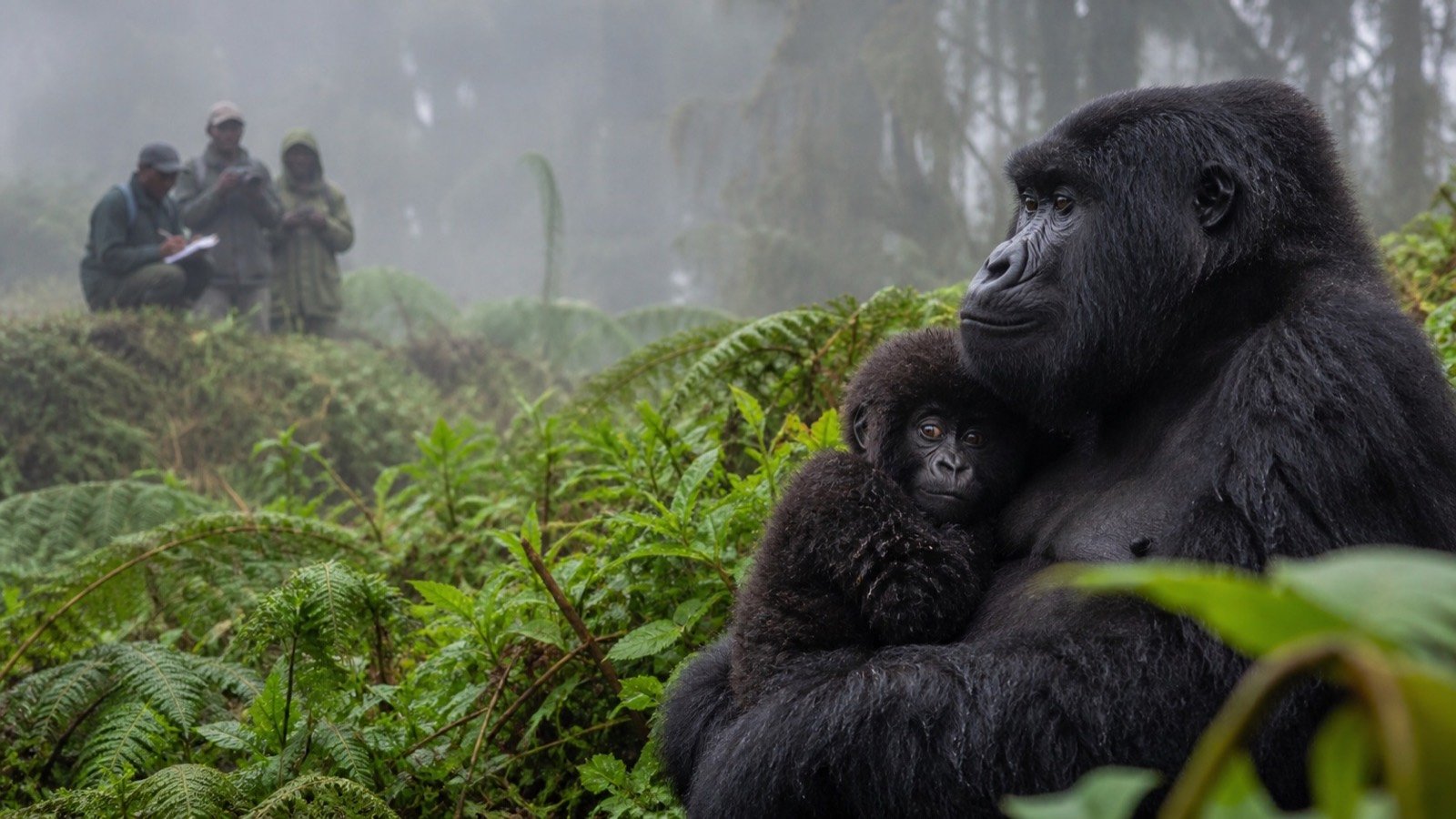
This success does not mean the subspecies is safe. Every mountain gorilla lives in two relatively small landscapes surrounded by dense human populations.
What effective conservation includes
- Protecting habitat and maintaining forest corridors
- Preventing illegal killing and removing snares
- Monitoring populations with transparent scientific methods
- Reducing disease transmission through evidence-based tourism and research protocols
- Supporting communities that bear the costs of living near protected wildlife
- Coordinating conservation across borders and during political instability
How readers can help responsibly
Support organizations that publish financial and scientific reporting, follow all official tourism rules, never buy wildlife products, and avoid sharing exact locations of vulnerable animals. Ask whether a campaign works with local communities and measures outcomes rather than relying only on emotional imagery.
See gorilla population estimates, the four subspecies and gorilla habitat and range.
Sources
- IUCN Red List, gorilla assessments.
- Strindberg et al. (2018), western equatorial Africa great-ape status and threats, Science Advances.
- International Gorilla Conservation Programme, mountain gorilla survey results.
- Wildlife Conservation Society, Cross River gorilla conservation profile.
- Convention on Migratory Species, Agreement on the Conservation of Gorillas and Their Habitats.