Short answer: There is no single, real-time count of every gorilla. The best published estimates were produced in different years with different survey methods. They indicate roughly 361,900 western lowland gorillas, fewer than 300 Cross River gorillas, about 6,800 Grauer’s gorillas and 1,063 mountain gorillas. These figures should not be treated as a precise current global total.
Last fact-checked: August 2026. Population figures below identify the assessment or survey period because wildlife estimates change and include uncertainty.
Latest published gorilla population estimates
| Subspecies | Published estimate | Where it lives | Important context |
|---|---|---|---|
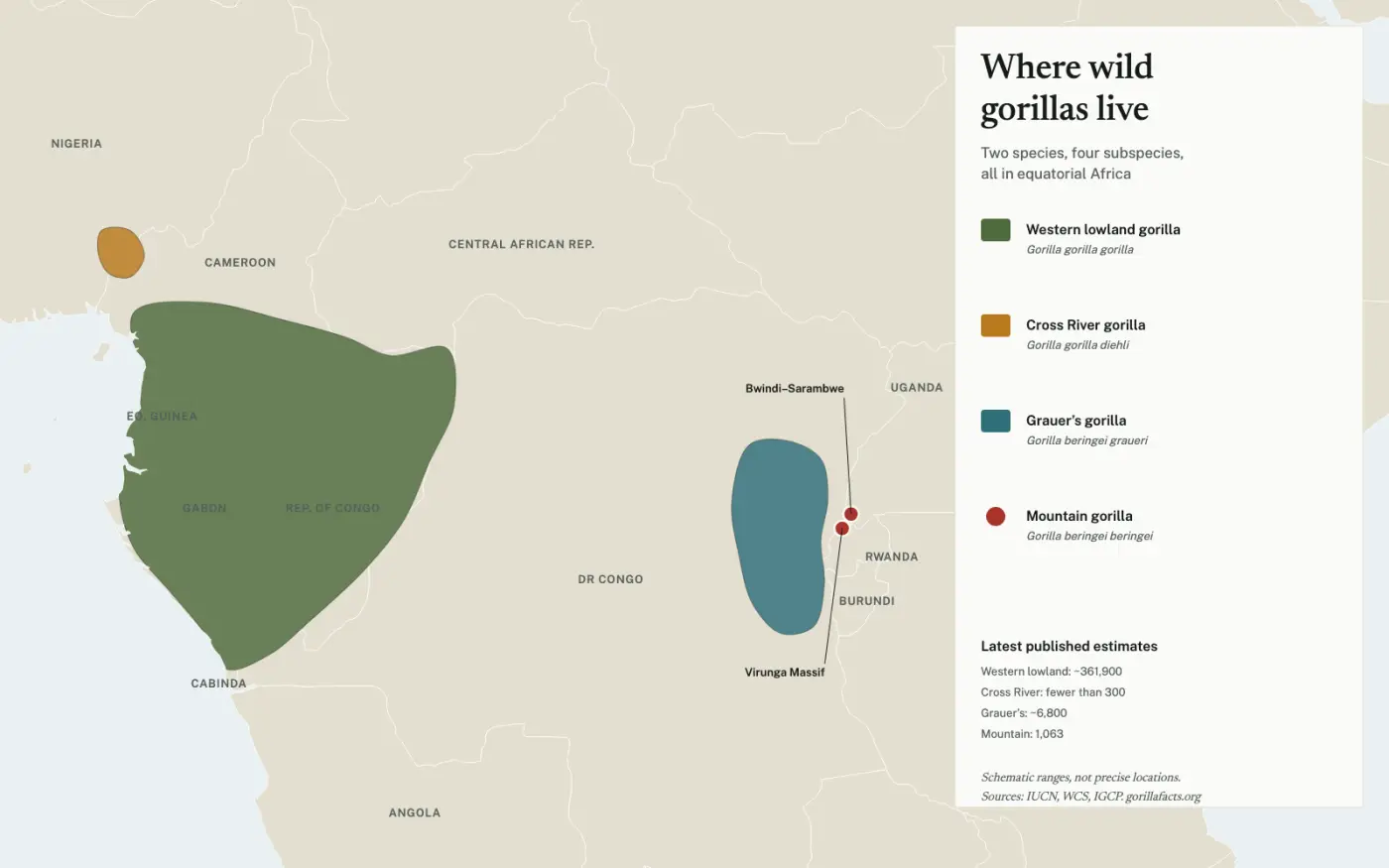
| Western lowland gorilla (Gorilla gorilla gorilla) | About 361,900 | Western Equatorial Africa | A 2018 range-wide model used surveys conducted from 2003–2013. Researchers also estimated a 2.7% annual decline, so this is not a 2026 head count. |
| Cross River gorilla (Gorilla gorilla diehli) | Fewer than 300 | Nigeria–Cameroon border region | The population is fragmented and is estimated mainly from indirect evidence such as nests, range and genetic sampling. |
| Grauer’s gorilla (Gorilla beringei graueri) | About 6,800 | Eastern Democratic Republic of the Congo | A 2021 analysis incorporated surveys from previously inaccessible strongholds. Insecurity still limits coverage. |
| Mountain gorilla (Gorilla beringei beringei) | 1,063 | Bwindi–Sarambwe and the Virunga Massif | This combines the 2015/2016 Virunga survey with the 2018 Bwindi–Sarambwe survey. |
Why these numbers cannot simply be added
Gorillas live in dense forests where direct counting is often impossible. Researchers may count nests along survey lines, identify individuals from genetic material in dung, use camera traps, or directly recognize habituated animals. Each method covers a particular place and time and has its own confidence interval.
The largest estimate—western lowland gorillas—was generated by a spatial model covering many survey sites. Mountain gorilla surveys can identify a much larger share of individuals genetically because the subspecies occupies two relatively restricted landscapes. A sum of the headline figures mixes survey years, methods and uncertainty and would imply a precision the evidence does not support.
Are gorilla populations increasing or decreasing?
The answer differs by subspecies. Mountain gorilla numbers increased across successive surveys after decades of intensive protection, veterinary care, monitoring and cooperation among Rwanda, Uganda and the Democratic Republic of the Congo. That recovery is significant, but a population of just over one thousand remains vulnerable to disease, habitat pressure and political instability.
Western lowland gorillas are far more numerous, yet their range-wide trend is declining. The 2018 study identified illegal killing, disease and habitat degradation as major drivers. A large population does not automatically mean a secure population when losses occur across a wide area.
Cross River gorillas remain exceptionally rare and isolated. Grauer’s gorillas suffered severe historical declines, and continuing insecurity makes both conservation and measurement difficult.
Conservation status by species and subspecies
- The western gorilla species is listed as Critically Endangered by the IUCN; both western lowland and Cross River gorillas face severe threats.
- The eastern gorilla species is listed as Critically Endangered.
- The Grauer’s gorilla is Critically Endangered.
- The mountain gorilla is Endangered. Its improvement from Critically Endangered reflects conservation progress, not the end of risk.
Learn how the groups fit together in our guide to gorilla species and subspecies, or examine the causes in why gorillas are endangered.
How scientists count gorillas
Nest surveys
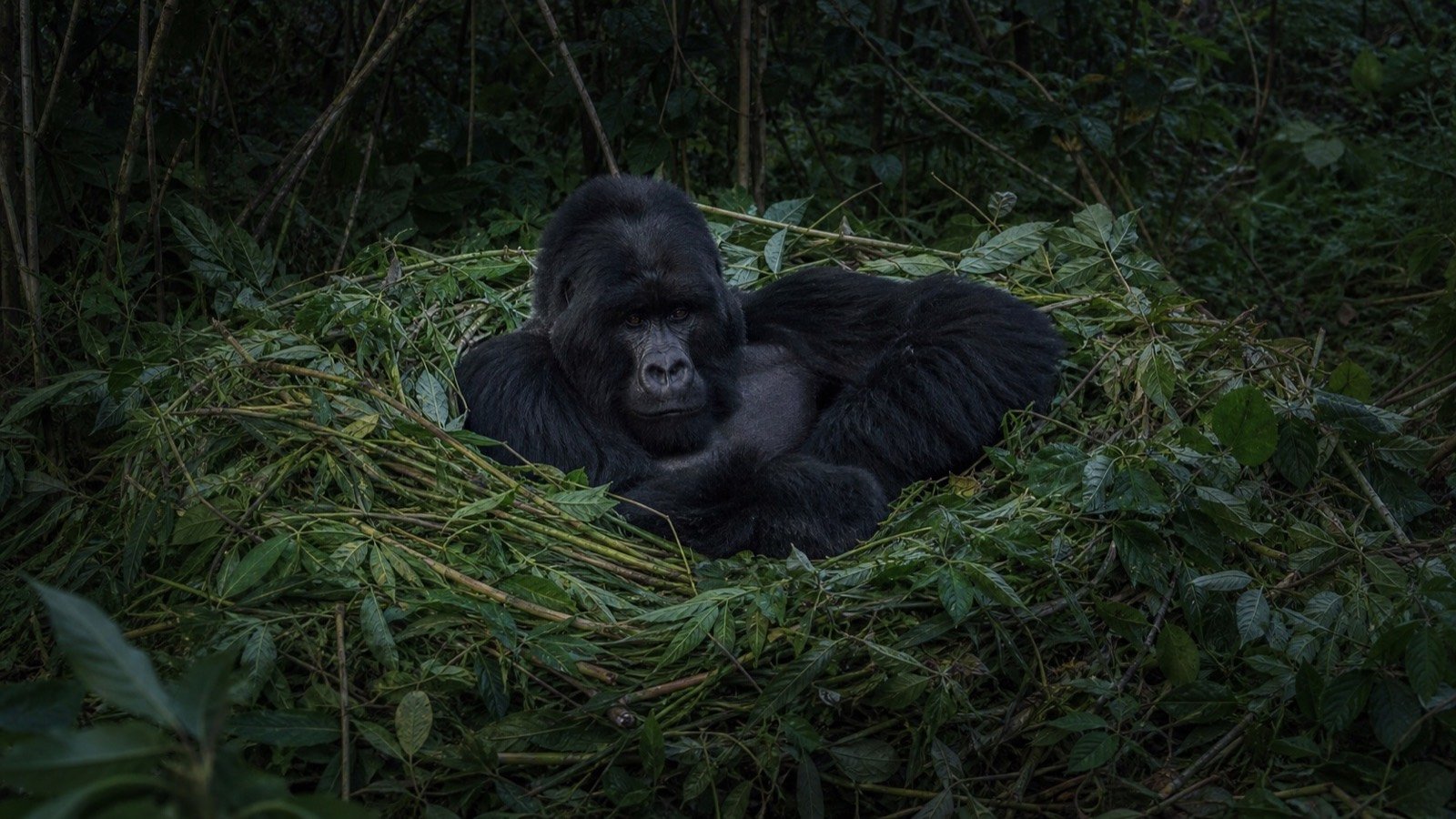
Gorillas generally build a new sleeping nest each night. Researchers count nests along carefully designed transects and combine those observations with information about nest decay and daily nest-building. The method can estimate density over large areas but does not identify every animal.
Genetic identification
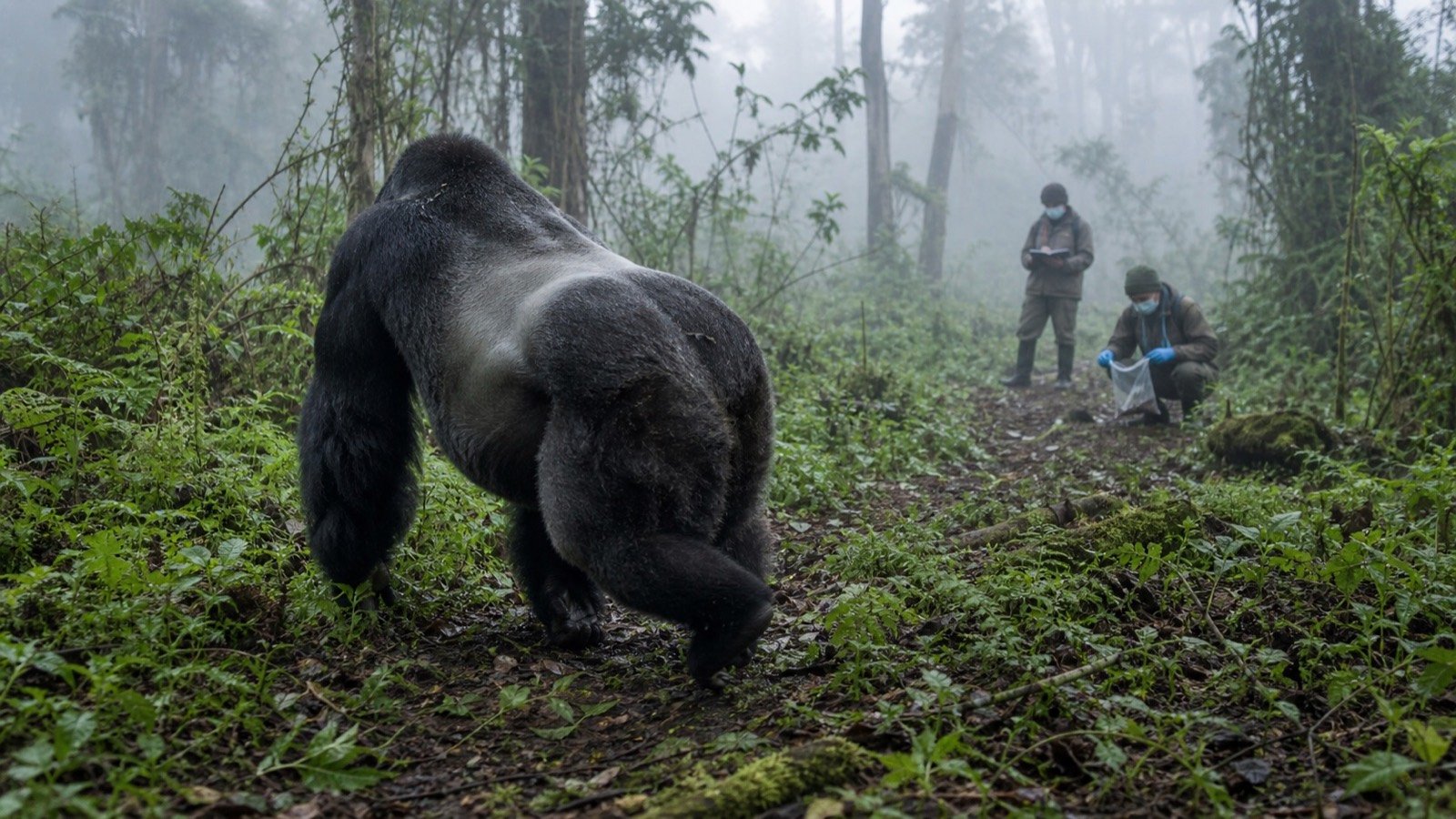
DNA extracted from dung can distinguish individuals, estimate sex and reveal whether the same gorilla has been sampled more than once. Repeated sampling supports capture–recapture estimates and is especially useful in intensively monitored populations.
Direct monitoring and camera traps
Teams can recognize habituated mountain gorillas individually. Camera traps are especially useful for rare, wary populations such as Cross River gorillas, but the images still need a sampling design before they can support an abundance estimate.
What readers should remember
Population estimates are evidence-based snapshots, not live counters. Always ask which taxon was counted, where surveys occurred, when fieldwork happened, how uncertainty was calculated and whether the reported number describes abundance or trend.
Sources
- Strindberg et al. (2018), “Guns, germs, and trees determine density and distribution of gorillas and chimpanzees in Western Equatorial Africa”, Science Advances.
- International Gorilla Conservation Programme (2019), global mountain gorilla survey announcement.
- Wildlife Conservation Society, Cross River gorilla conservation profile.
- Plumptre et al. research summarized by WCS (2021), updated Grauer’s gorilla estimate.
- IUCN Red List, gorilla assessments.