
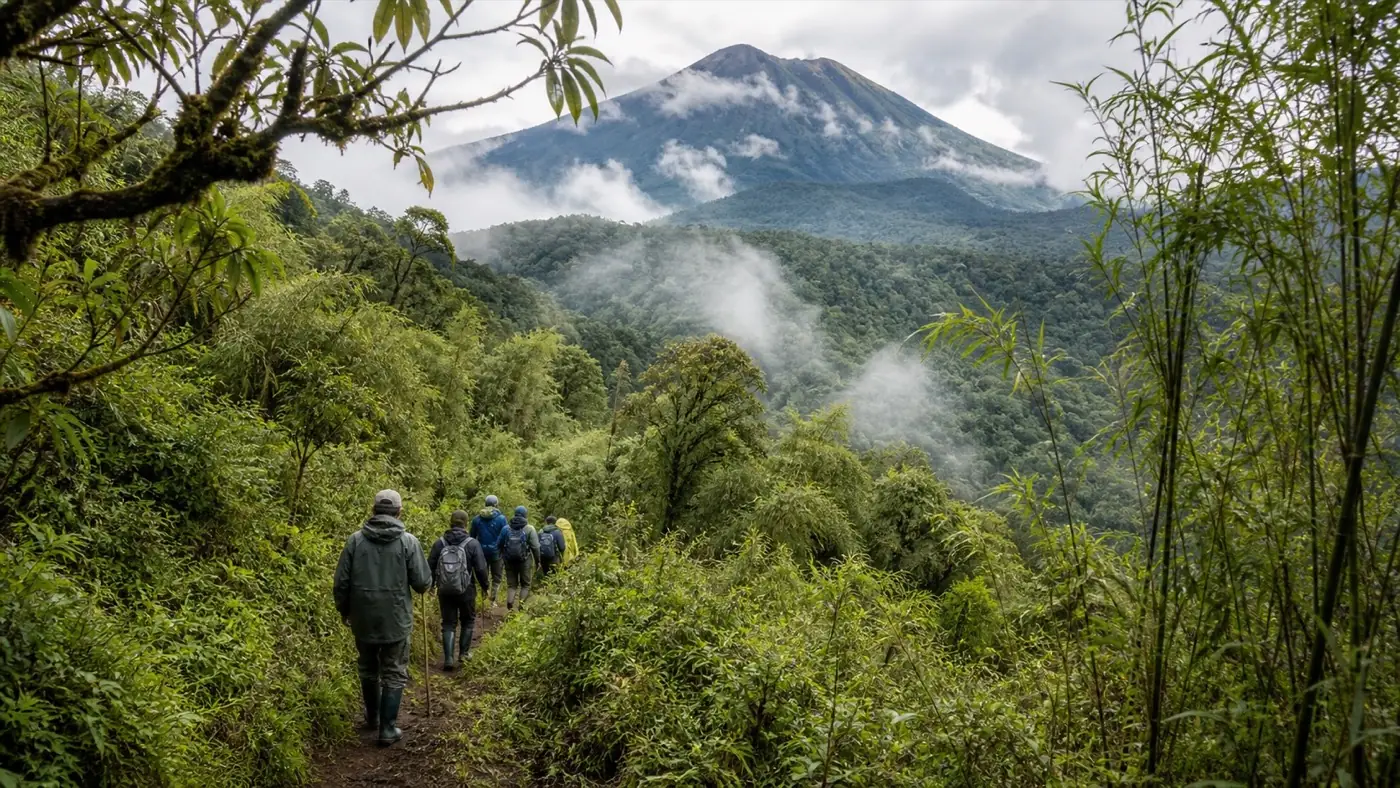
There is no single best month for gorilla trekking. Drier periods can make trails easier, while wetter months can bring lush scenery, fewer visitors and—on eligible Uganda dates—lower permit rates. Gorillas remain in their forest home year-round; your best time is the overlap of permit availability, safe travel, fitness and preferred conditions.
Use seasons as tendencies, not promises
Equatorial mountain weather changes quickly and varies by slope and elevation. Broadly, June–September and December–February are often described as drier windows; March–May and October–November are generally wetter. Climate variability can scramble neat calendars, so pack for rain in every month.
| Period | Possible advantage | Possible tradeoff |
|---|---|---|
| January–February | Often a relatively drier window | Popular dates can tighten availability |
| March | Green forest, shoulder-season feel | Rain and muddier ground may increase |
| April–May | Lush landscape; eligible Uganda low-season discount published for these months | Heavy rain risk, slippery trails; low-season permit conditions |
| June–September | Often drier and popular for wider safari circuits | Higher demand and less booking flexibility |
| October | Changing conditions, vivid vegetation | Rain commonly increases |
| November | Eligible Uganda low-season rates in the 2026 notice | Wet trails; discounted permits cannot be rescheduled under that notice |
| December | Often transitions to a drier window | Holiday demand and variable rain |
Best time for easier walking
A drier period can reduce mud, but it cannot flatten a mountain or control where gorillas feed. Choose boots for slick roots, train on hills and consider a porter in every season. If mobility is a concern, ask about allocation procedures without accepting a promise of an “easy gorilla family.”
Best time for lower cost
Uganda’s official February 2026 notice introduced discounted tracking in April, May and November: US$600 for foreign nonresidents and US$500 for foreign residents. The same notice says these low-season permits cannot be rescheduled. Confirm eligibility and the exact current tariff with UWA before payment. Rwanda publishes separate promotional categories with terms; never assume a discount applies to you.
Best time for photography
Cloudy forest light can be flattering because it reduces harsh contrast, while rain deepens greens and creates reflections. The real challenge is low light under foliage. Use a camera you can operate silently, know how to raise ISO, disable flash before the trek, carry a lens cloth and protect equipment from rain. Weather that looks “bad” on an app can produce beautiful images.
Best time for fewer people
Permit quotas limit each encounter, so “crowds” are felt more at lodges and popular travel dates than as a mass around one gorilla group. Shoulder and wetter seasons may have more availability, but do not assume solitude. Responsible tourism depends on regulated group size year-round.
Book around your whole route
Safari roads, domestic flights, borders and other parks have their own seasonal patterns. A gorilla date that looks ideal in isolation may make the rest of the itinerary rushed. Reserve the permit first, allow a buffer before an international departure, and avoid placing your only trek immediately after a fragile connection.
Four smart seasonal questions
- Can my insurance cover trekking and disruption on these dates?
- Am I physically prepared for the wettest plausible trail, not the average forecast?
- Does a discount remove flexibility I value more than the savings?
- Have I confirmed park access and travel advice close to departure?
Our practical pick
For a first trek, select the dates you can prepare for well and secure legitimately, then treat any dry weather as a bonus. The forest does not read “best month” lists. Read our permit cost guide before choosing a bargain date.
Sources and verification
- IUCN: Best Practice Guidelines for Great Ape Tourism
- Uganda Wildlife Authority: Gorilla Tracking
- Visit Rwanda: Gorilla Trekking
- Virunga National Park: current visitor status
Fact-checked 22 August 2026. Permit prices, entry rules and park access can change; confirm with the relevant park authority before paying.