A gorilla permit is only one line in the real trip budget. As of 22 August 2026, Rwanda’s official standard mountain-gorilla permit is US$1,500 per person per day. Uganda’s published structure includes a US$800 foreign-nonresident tracking rate outside eligible low-season discounts; an official February 2026 notice lists April, May and November low-season tracking at US$600 for foreign nonresidents and US$500 for foreign residents. Terms and eligibility matter.
Price warning: verify the exact date, residency class, availability, refund terms and payment channel directly with the park authority before sending money. A screenshot of an old tariff is not confirmation.
Official permit snapshot
| Destination | Published rate reviewed | Important context |
|---|---|---|
| Rwanda / Volcanoes National Park | US$1,500 standard permit | Visit Rwanda also publishes selected promotional/resident categories with conditions |
| Uganda / Bwindi or Mgahinga | US$800 foreign nonresident standard tracking rate; eligible low-season FNR US$600 in April, May and November | Low-season permits cannot be rescheduled under the February 2026 notice; classifications differ |
| DR Congo / Virunga | Do not budget from old permit pages | Gorilla and Nyiragongo treks are closed until further notice on the official park site |
Uganda’s February 2026 notice also says that from 1 January 2027 its revised tracking categories are FNR US$800, foreign resident US$700, rest-of-Africa US$500 and EAC UGX300,000. Because your travel date controls, check the live UWA tariff rather than copying this table into a payment instruction.
The six-part real budget
- Permit: priced per person and date.
- Transport: airport transfers, long road journeys, fuel, driver-guide time or domestic flights.
- Lodging: often priced per room or person; check meals and taxes.
- On-the-ground support: porter, walking stick, gratuities and laundry.
- Travel protection: insurance, vaccines or clinic visits, medication and visa costs where applicable.
- Contingency: an extra night, delayed baggage, gear replacement or route changes.
A cheap permit comparison can therefore be misleading. Rwanda may reduce road time on some itineraries; Uganda may offer a lower permit price but require different transfers depending on your entry point and Bwindi sector. Compare complete, like-for-like itineraries.
A worksheet that exposes vague quotes
| Line item | Questions to record |
|---|---|
| Permit | Authority, date, category, proof, refund/change rules |
| Transport | Private/shared, vehicle type, fuel, border fees, pickup and drop-off |
| Lodging | Nights, meal plan, taxes, single supplement, distance from briefing point |
| Guide/porter | Included or paid locally; cash and tipping guidance |
| Insurance | Trekking altitude, medical evacuation and government-advisory exclusions |
| Buffer | Money and time reserved for disruption |
How to avoid permit fraud
- Begin with the relevant authority: UWA or Visit Rwanda/Rwanda Development Board.
- If an operator buys for you, request an official invoice or verifiable permit details.
- Match the traveler’s name, date, park and residency classification.
- Do not pay a personal account because someone creates artificial urgency.
- Read cancellation and illness clauses before payment; “nonrefundable” deserves special attention.
Can you save money ethically?
Yes: travel in a genuinely eligible low season, compare total road and lodging costs, share transfers where safe and suitable, and book early enough to make calm decisions. Do not save by using unofficial access, crowding gorillas, skipping required insurance or misrepresenting residency.
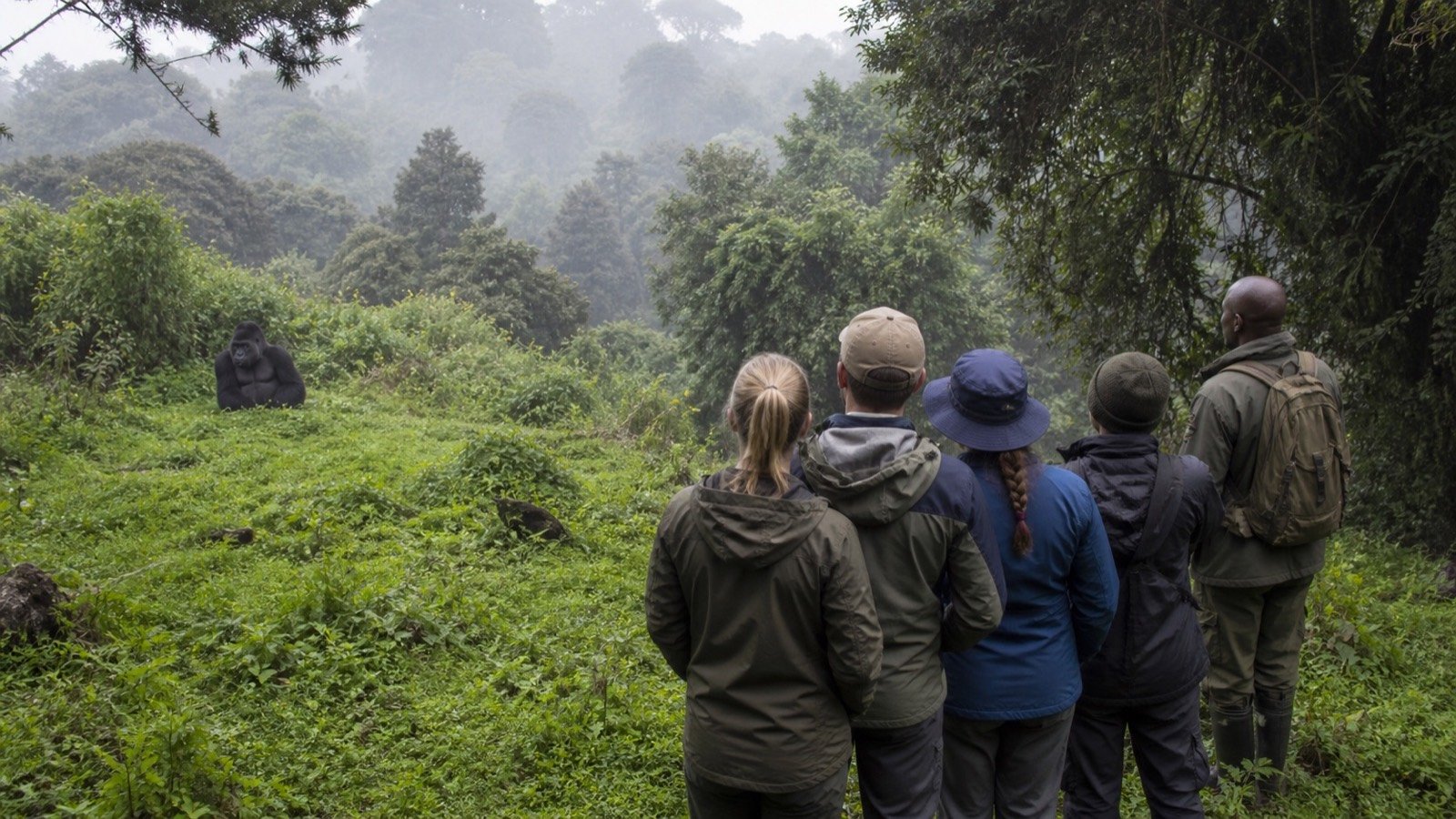
Why low-season pricing is not simply a bargain
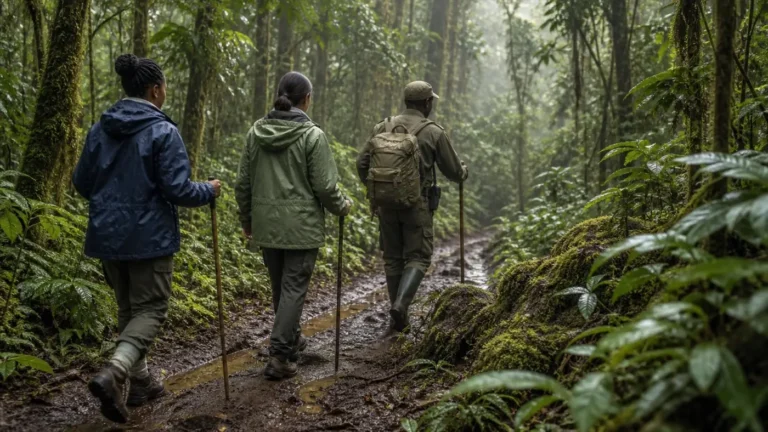
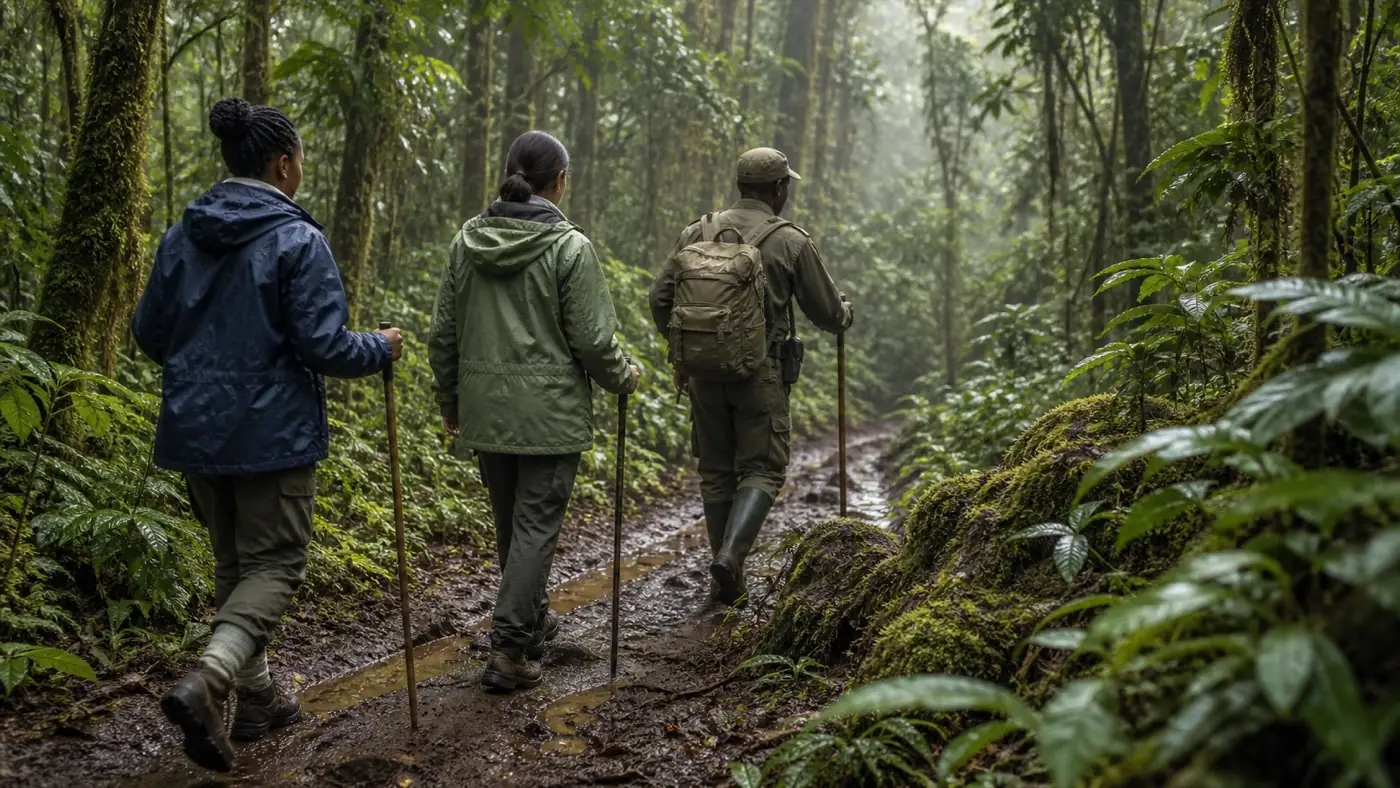
April, May and November often bring wetter conditions in the region. Mud can make a lower-priced permit physically harder, and the Uganda notice says its low-season permits cannot be rescheduled. Price the rain gear, schedule flexibility and your fitness into the decision.
Bottom line
Use permit price as a verified input, not the trip total. Build the whole budget, keep documentary proof and recheck official pages immediately before payment. Our beginner’s guide covers the experience beyond the numbers.
Additional official price sources
Sources and verification
- IUCN: Best Practice Guidelines for Great Ape Tourism
- Uganda Wildlife Authority: Gorilla Tracking
- Visit Rwanda: Gorilla Trekking
- Virunga National Park: current visitor status
Fact-checked 22 August 2026. Permit prices, entry rules and park access can change; confirm with the relevant park authority before paying.