Quick overview: Gorillas are the largest living primates, but their biology is far more interesting than their size. They are selective plant eaters, attentive parents, flexible problem-solvers and highly social great apes. This collection separates established evidence from familiar internet claims.
Gorilla facts at a glance
- There are two gorilla species: the western gorilla (Gorilla gorilla) and eastern gorilla (Gorilla beringei).
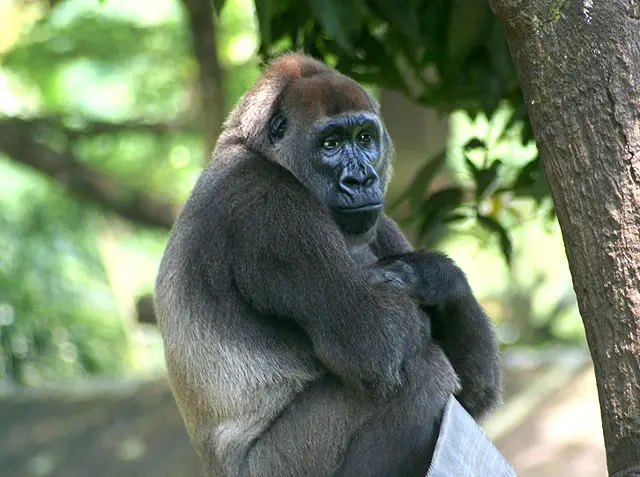
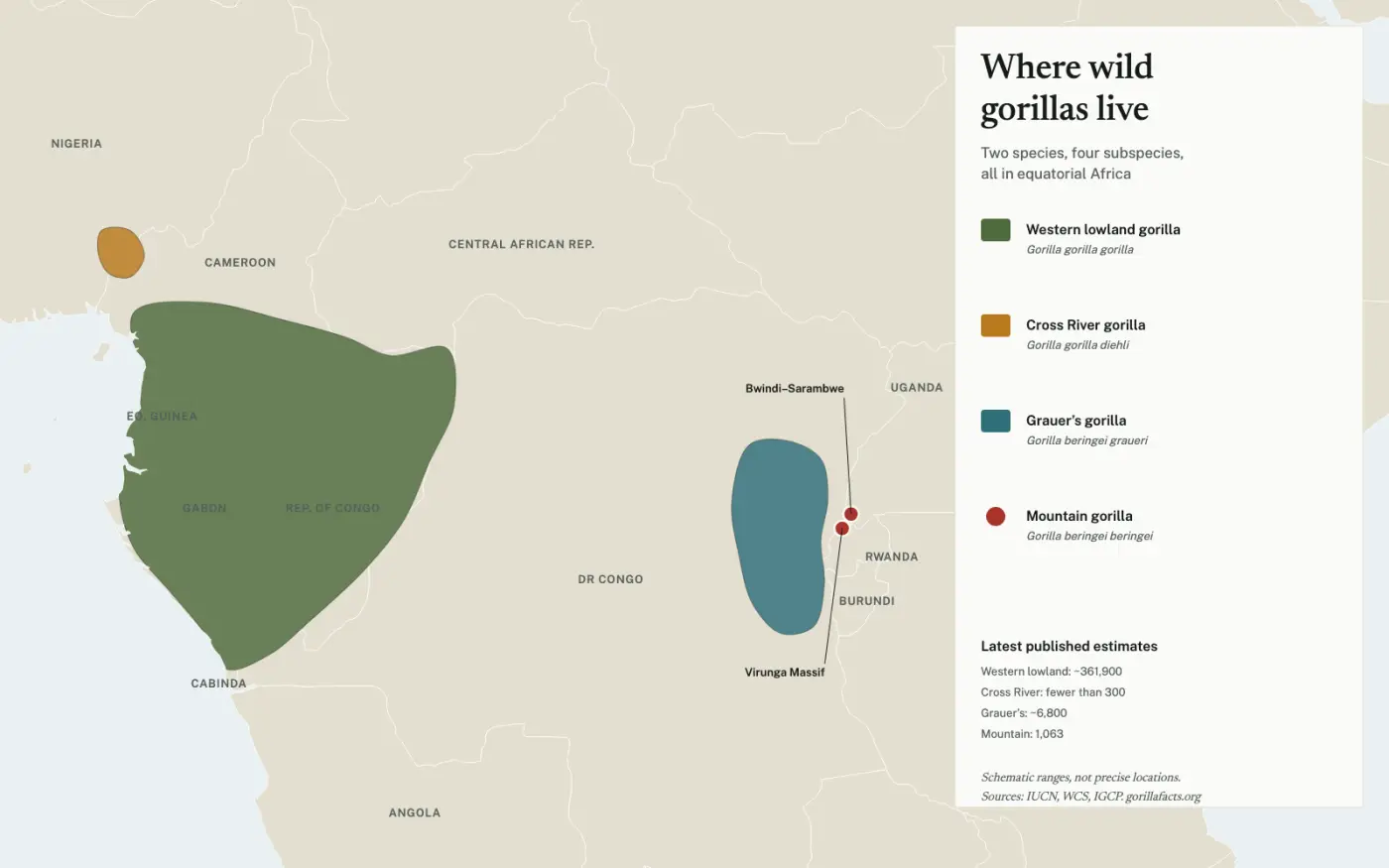
- Scientists generally recognize four subspecies: western lowland, Cross River, Grauer’s and mountain gorillas.
- All wild gorillas live in equatorial Africa. No wild population naturally occurs on another continent.
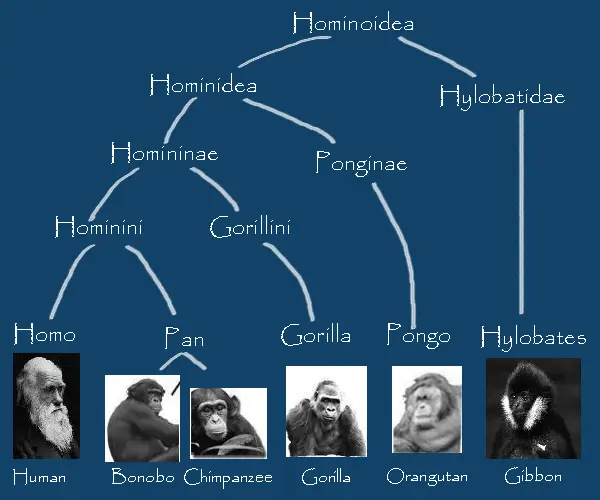
- Gorillas are apes, not monkeys. Like every living ape, they lack an external tail.
- They are our relatives, not our ancestors. Humans and gorillas descended from a shared ancestral population.
- Genome history is not a simple percentage. The landmark gorilla genome study found that different portions of the genome preserve different evolutionary relationships.
- Gorillas are the largest living primates. Adult males are considerably larger than females.
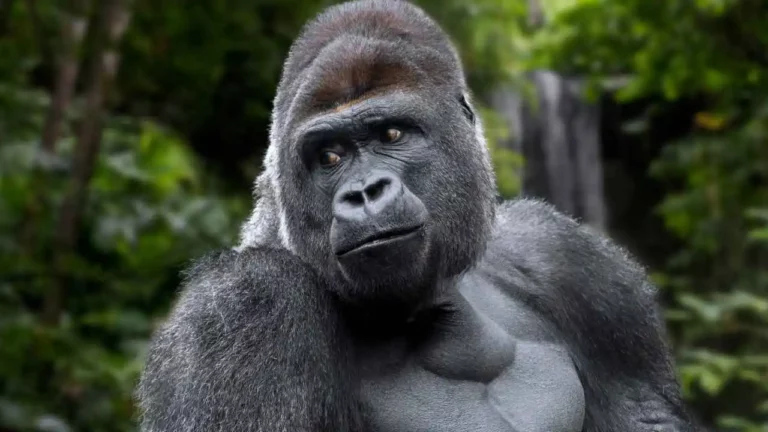
- A silverback is an adult male stage, not a species.
- A blackback is a maturing male that has not developed the adult silver saddle.
- Body size varies by taxon, sex, age and individual. One viral weight cannot represent every gorilla.
Body and movement facts
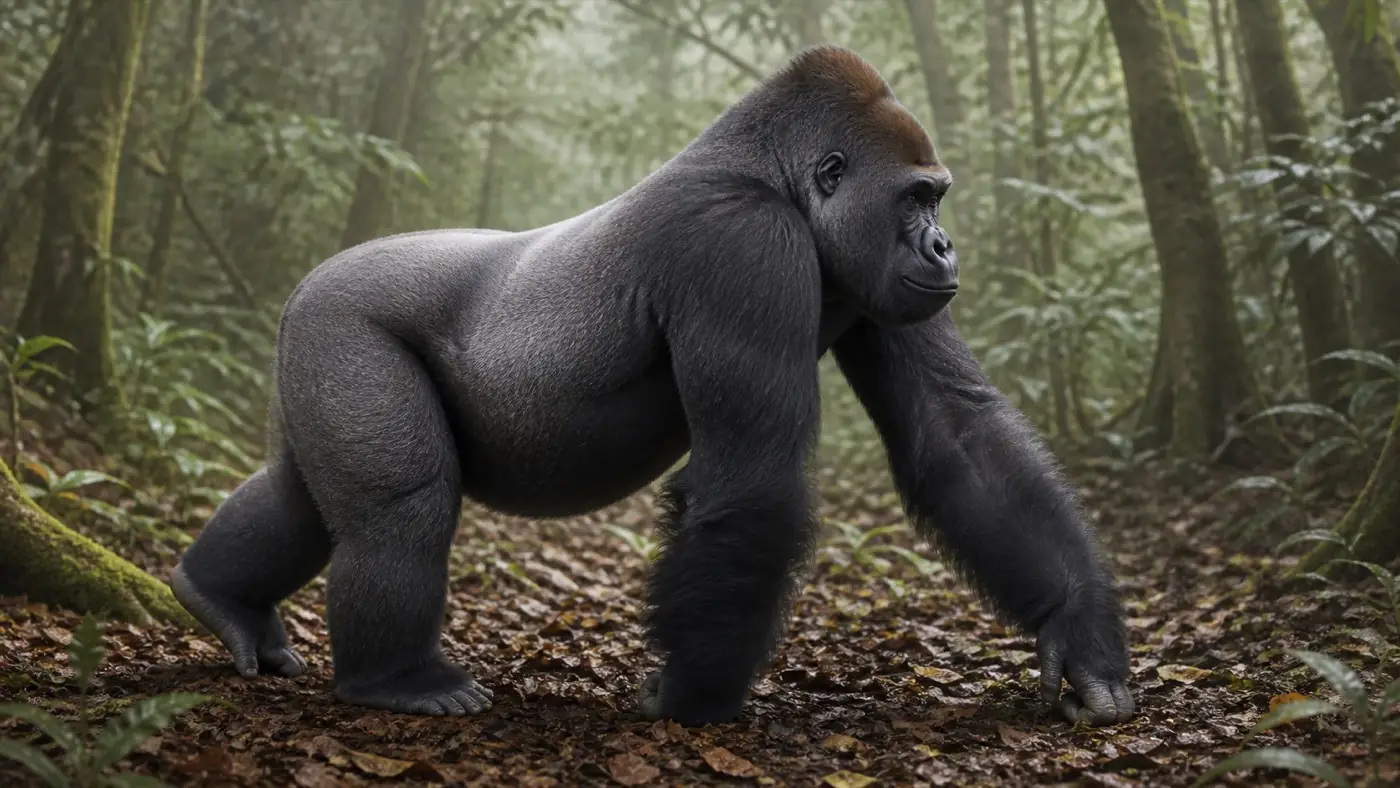
- Gorillas normally knuckle-walk. They support the forelimb on the middle finger segments rather than the palm.
- The arms are longer than the legs, useful for climbing, reaching and quadrupedal travel.
- Young gorillas climb more frequently than heavy adult males.
- They can stand and take short bipedal steps, but they are not habitual human-style walkers.
- Each gorilla has distinctive fingerprints.
- Nose patterns can also identify individuals, helping field researchers build long-term life histories.
- Adult males develop pronounced cranial crests that anchor large chewing muscles.
- Gorilla hands combine weight support and manipulation. Knuckle-walking does not prevent delicate food handling.
- There is no scientific gorilla bench-press record. Exact gym numbers online are speculation.
- There is no validated universal “times stronger than a human” multiplier.
Food and daily-life facts
- Gorillas eat predominantly plant foods.
- Leaves, stems, shoots, pith, bark and fruit all appear in gorilla diets.
- Diet changes by habitat and season. Western gorillas generally use more fruit when it is available.
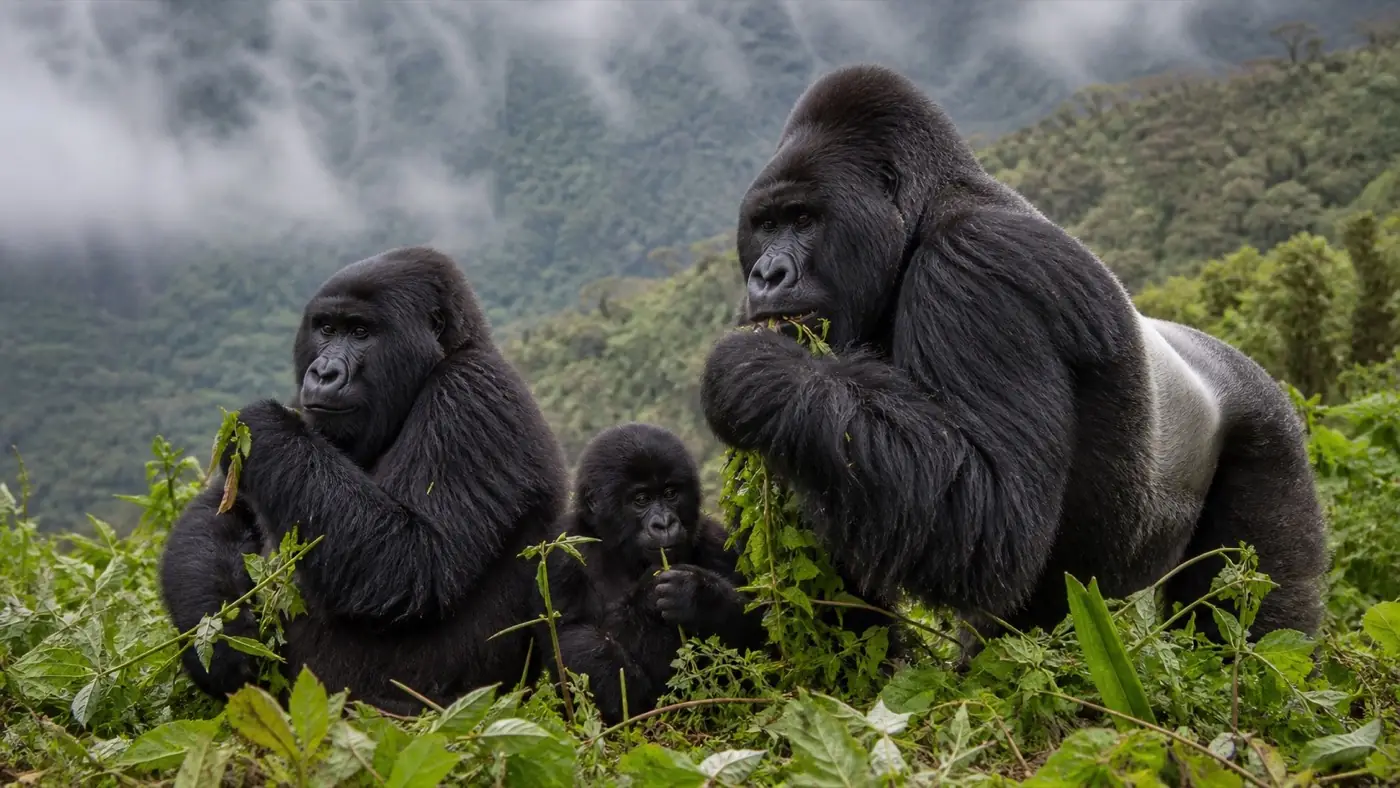
- Mountain gorillas rely heavily on terrestrial herbs, although Bwindi animals have access to more fruit than many Virunga groups.
- Small invertebrates may be eaten, but gorillas are not active large-prey hunters.
- The large abdomen houses a substantial digestive system suited to bulky, fibrous food.
- Most water comes from food and vegetation, though gorillas may drink.
- Feeding peaks commonly occur in the morning and later afternoon.
- Adults often rest around midday.
- Every evening, gorillas build sleeping nests from vegetation.
Family and communication facts
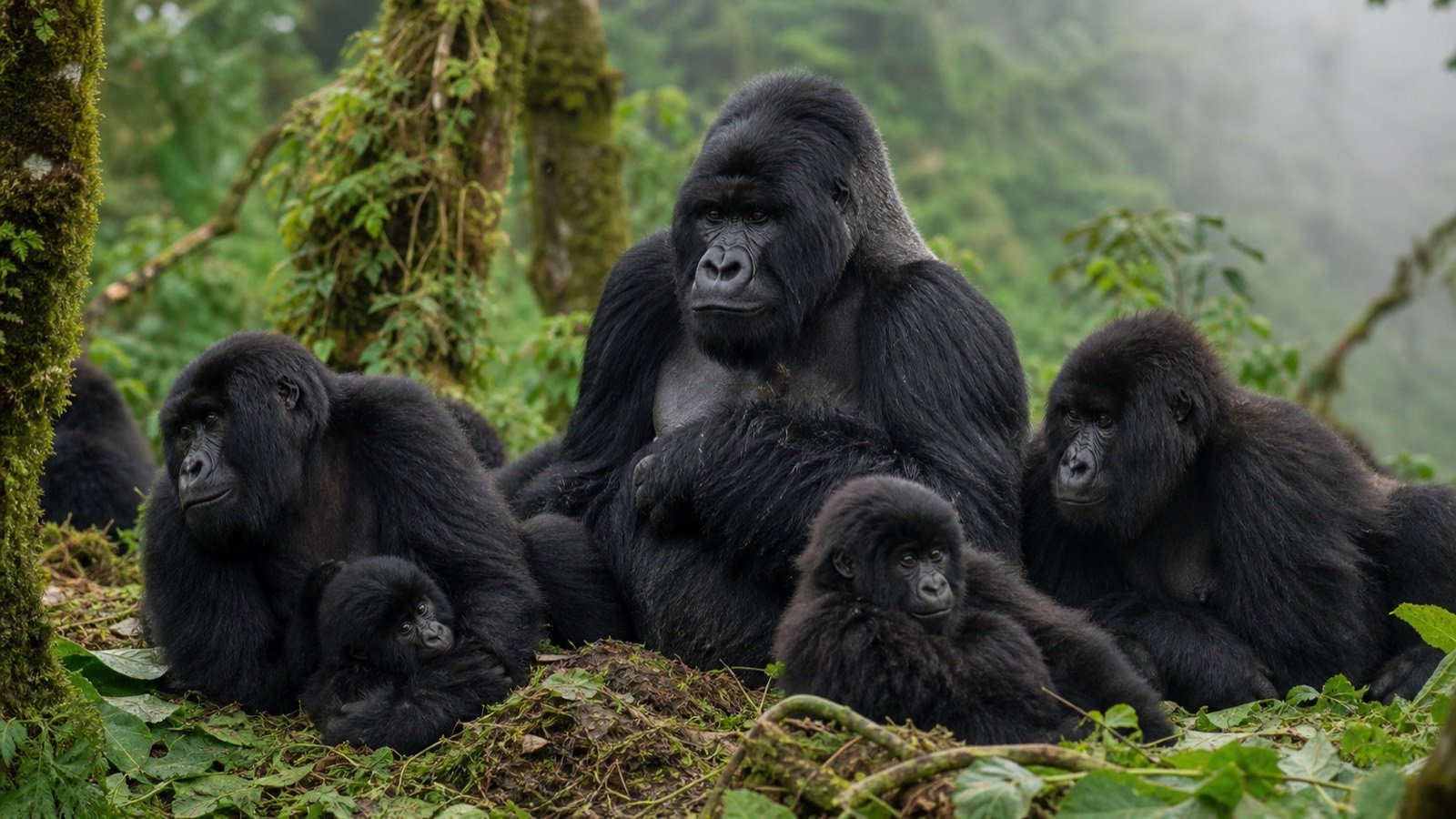
- Gorilla groups are socially flexible. There is no single troop size or composition.
- Many groups contain one adult male, several females and their offspring.
- Some groups contain more than one adult male.
- Both females and males may leave their birth group.
- Silverbacks do more than lead travel. They can mediate disputes, defend infants and maintain group cohesion.
- Infants learn through play, observation and participation.
- Gorillas communicate with calls, gestures, facial expressions, posture and touch.
- Chest beats carry information. Research on wild mountain gorillas found lower-frequency beats in larger males.
- Chest beating is not automatically an attack. It can advertise presence or reduce the need for close conflict.
- Researchers have described many call types, but meaning depends on context rather than a word-for-word dictionary.
Development, intelligence and conservation facts
- Gestation lasts roughly eight and a half months in western lowland gorillas.
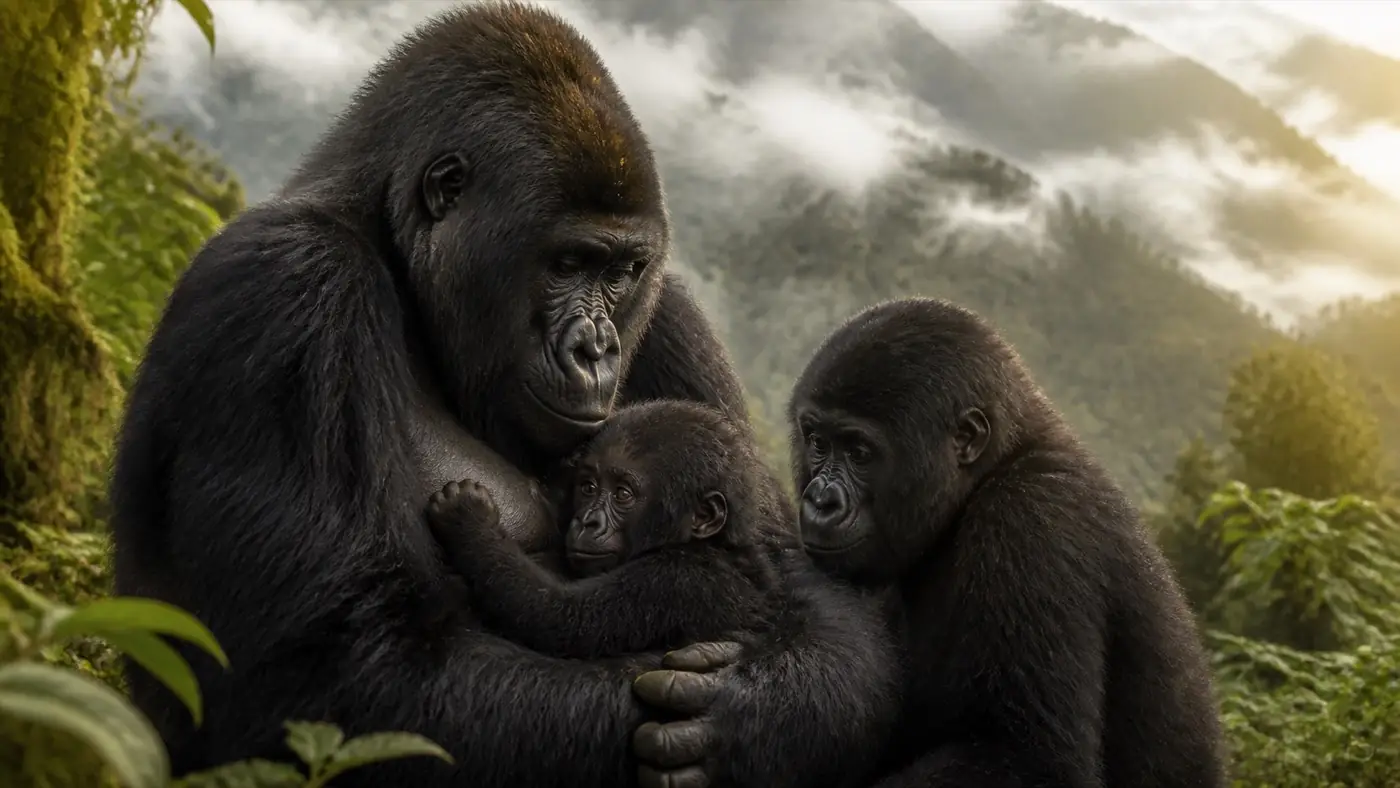
- A single infant is usual. Twins are rare but documented.
- Infants maintain close contact with their mothers and gradually begin riding, climbing and exploring.
- Gorillas develop slowly and have long birth intervals, making population recovery difficult.
- Wild gorillas have used tools. Researchers documented branches used to test water depth and aid swamp crossing.
- Problem-solving differs among individuals. Small studies should not be turned into one intelligence score for the species.
- Western and eastern gorillas face different combinations of threats.
- Illegal killing, habitat change and infectious disease remain major risks.
- Mountain gorilla recovery is real but fragile. A growing population can remain conservation-dependent.
- Protecting gorillas also protects forests, watersheds and many neighboring species.
Three popular “facts” that are not established
- “A gorilla is exactly nine times stronger than a human.” No standardized study supports that precision.
- “Every silverback weighs 500 pounds.” Upper figures are not averages.
- “Gorillas are naturally violent.” Displays and avoidance often prevent dangerous physical conflict.
Explore the evidence
Continue with our guides to gorilla species and subspecies, gorilla ranges, gorilla diets, social groups and conservation threats.
Sources
- Smithsonian’s National Zoo: western lowland gorilla biology
- Scally et al. (2012): gorilla genome sequence
- Breuer et al. (2005): first documented wild gorilla tool use
- Wright et al. (2021): chest beats and body size
Editorial method: Every numbered statement was checked against institutional or primary research sources. Where evidence varies by taxon or individual, the wording avoids presenting one observation as universal.