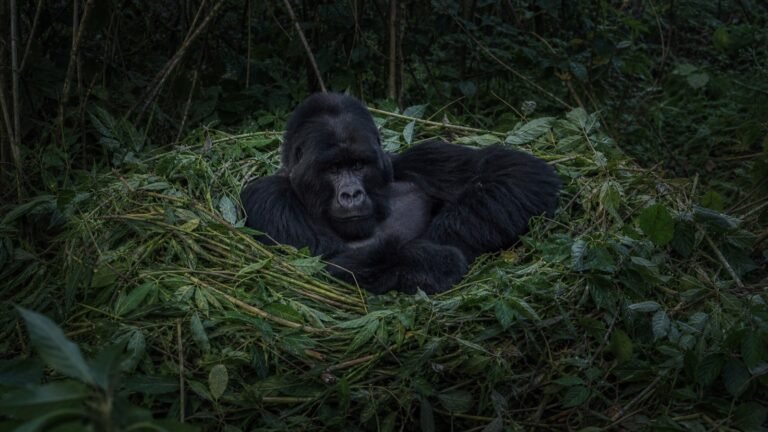
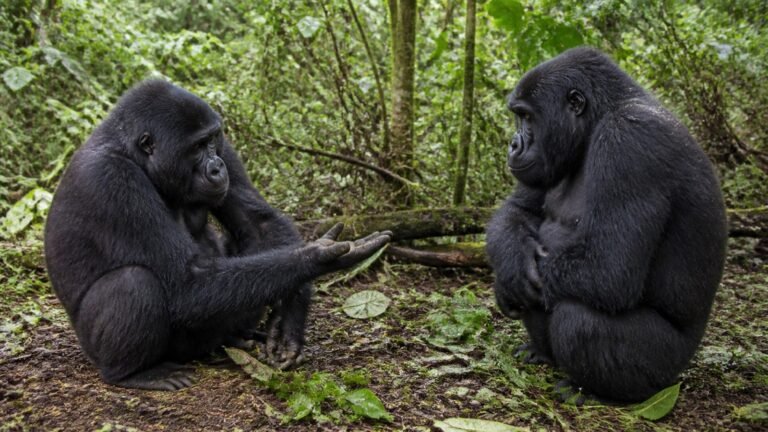
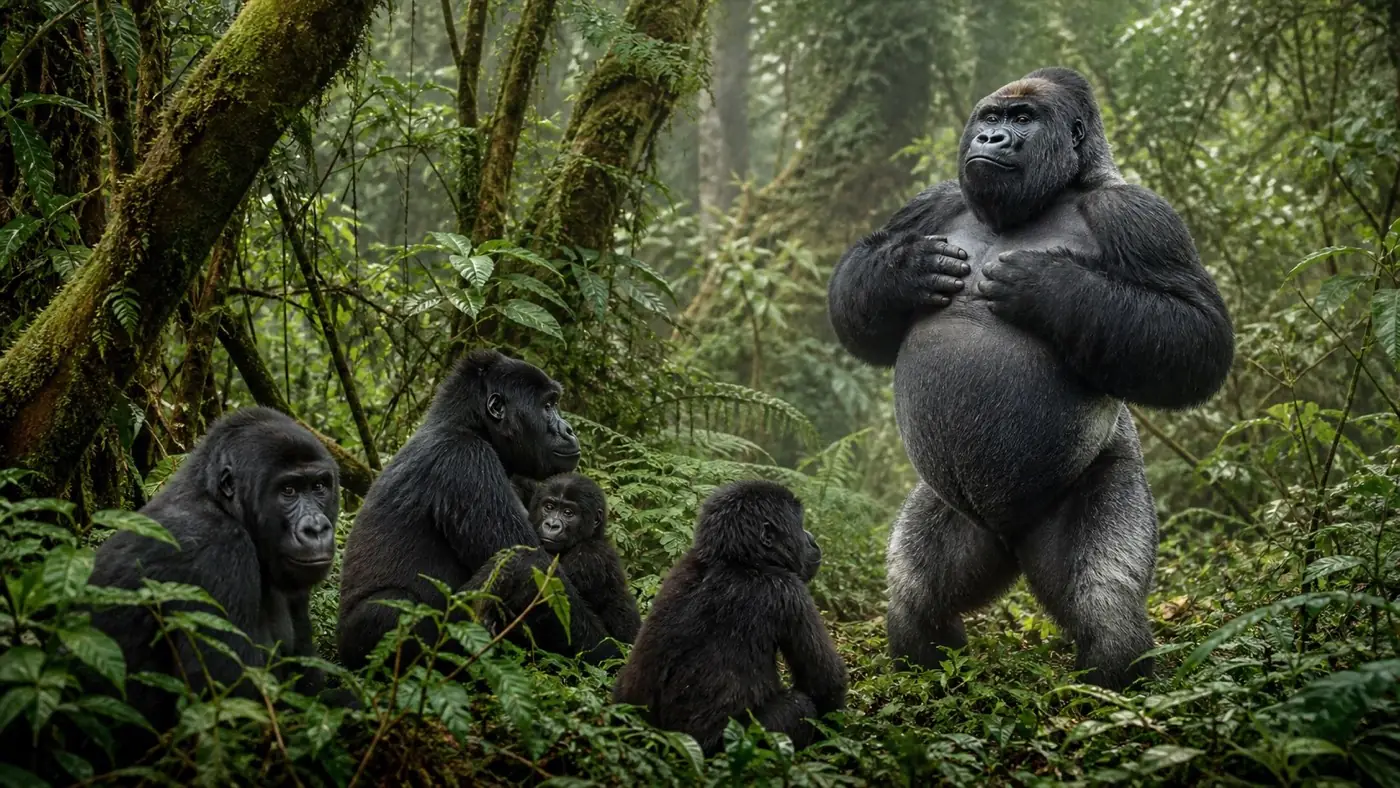
Short answer: Most gorillas live in stable social groups containing at least one adult male, several adult females and their offspring. A silverback provides leadership and protection, but gorilla society is a network of relationships—not a simple command hierarchy.
Evidence note: group composition varies among species, populations and stages of a group’s life cycle.
What is a gorilla group called?
Writers often use “troop,” “band” or “family.” Field researchers usually describe a group and identify it by a known silverback or another local name. The terminology matters less than recognizing that membership is generally cohesive: group members travel, feed and rest in proximity and encounter one another daily.
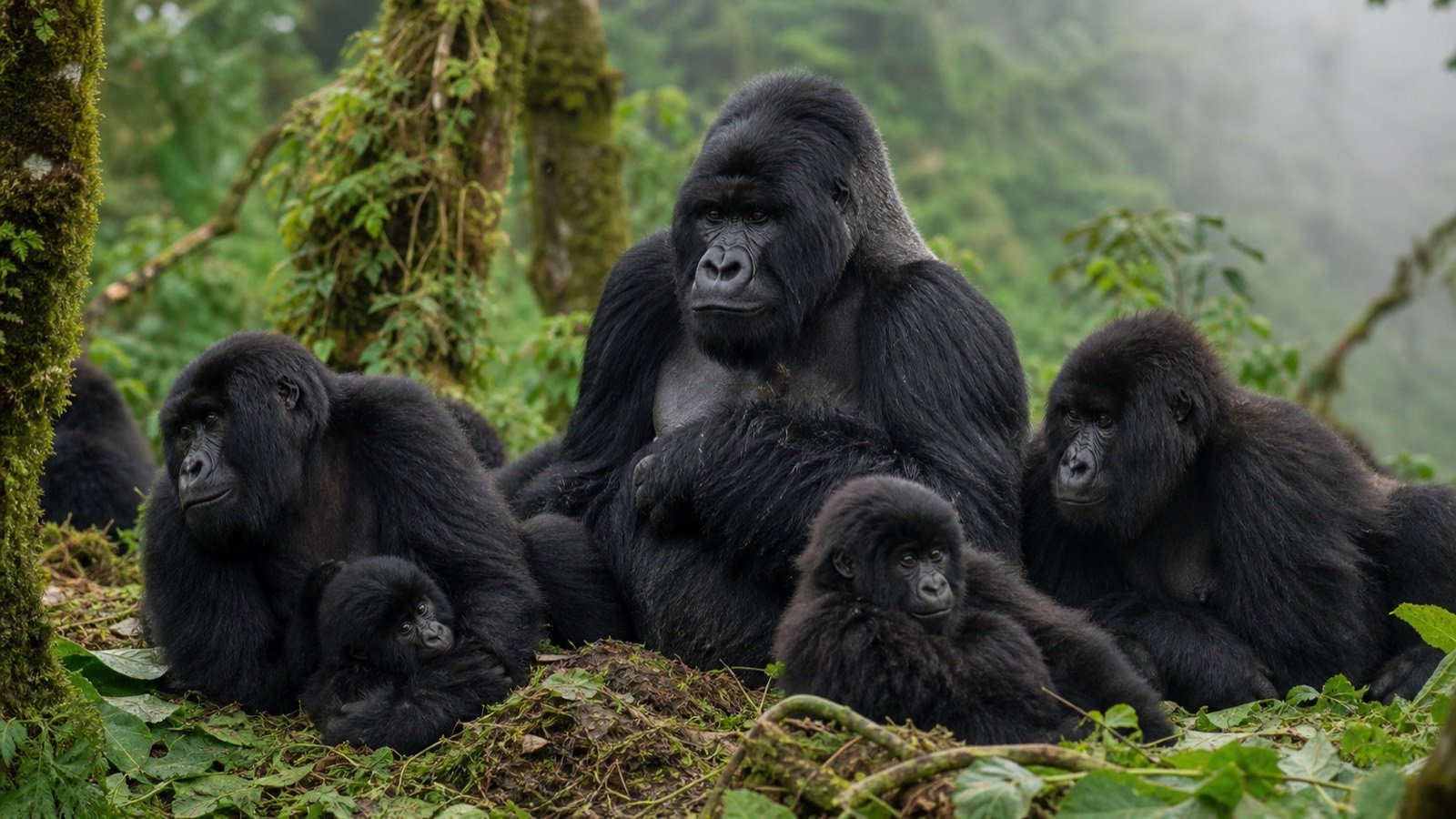
Who lives in a gorilla group?
- One or more mature silverback males
- Adult females, many of whom were born in other groups
- Blackbacks and subadults approaching maturity
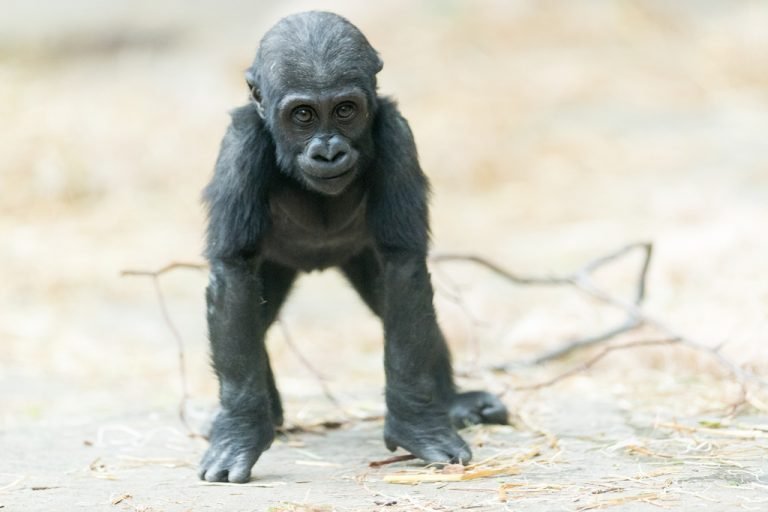
- Juveniles and dependent infants
A broad multi-site comparison found that groups averaged around ten gorillas, but the variation is substantial. Multi-male groups and groups of more than twenty have been recorded particularly among mountain gorillas. Solitary males also form part of the wider social system.
What does a silverback do?
The silverback often influences travel, mediates disputes and responds to threats. Females maintain important relationships with him, but this does not make every daily decision an order. Feeding needs, infants, neighboring groups and the behavior of other adults all affect group movement.
Groups with several adult males can have a clear dominance relationship while subordinate males still contribute social relationships and protection. A “silverback” is an age-sex class, not a separate species.
Female movement connects groups
Female gorillas commonly transfer between groups during their lives. Transfers affect reproduction and create social connections beyond a single group. Males may leave their birth group, spend years alone, associate with other males, or eventually establish a reproductive group.
Western lowland gorilla studies at forest clearings show that neighboring groups can tolerate one another and form higher-level associations. Their home ranges may overlap, which differs from the idea that every group defends a rigid territory.
Relationships within the group
Mother–infant bonds are central during early life. Juveniles develop skills through play with siblings and peers. Grooming, resting proximity, gestures and vocalizations help maintain relationships. A 2024 study of four wild western lowland groups recorded thousands of social interactions and found that younger individuals and males were especially important in connecting social networks.

What happens when a silverback dies?
The outcome depends on group composition and nearby males. A remaining adult male may assume leadership; a group may split; or females may transfer. Infants can face elevated risk when an unrelated male takes over, although outcomes are not identical in every population. Long-term demographic records are essential for understanding these transitions.
Are gorilla groups aggressive?
Serious conflict occurs, especially during competition between males, but routine group life also includes feeding, resting, play, care and low-intensity communication. Displays can advertise strength and reduce the need for direct fighting. Read why gorillas beat their chests for the research behind one such signal.
Sources
- Morrison et al. (2019), “Hierarchical social modularity in gorillas”, Proceedings of the Royal Society B.
- Mirville et al. (2016), behavioral variation across gorilla study sites, PLOS ONE.
- Manguette et al. (2024), western lowland gorilla social relationships, Primates.