
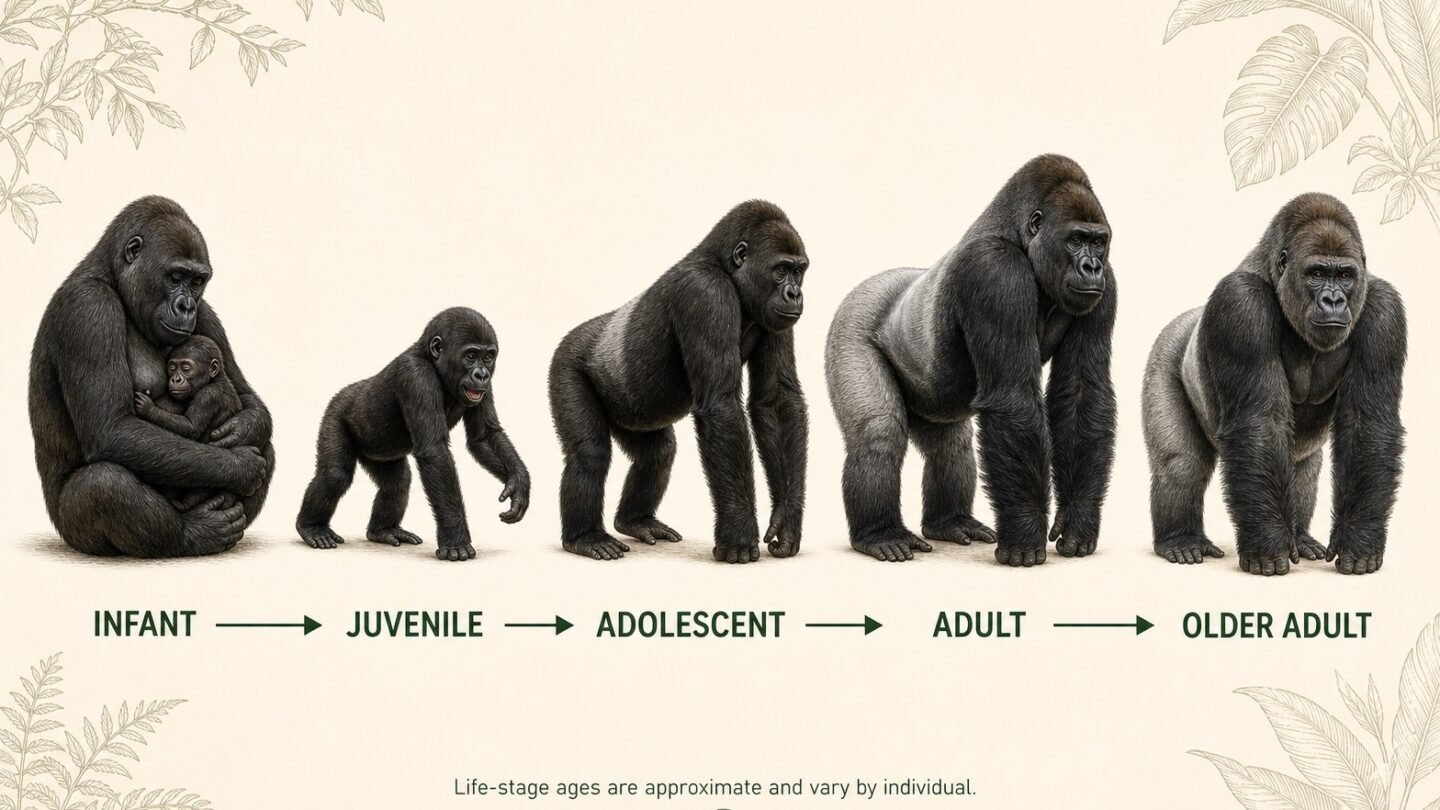
Short answer: The gorilla life cycle progresses through gestation, infancy, a juvenile period, adolescence and adulthood. Development is gradual and differs by sex, taxon and individual; labels such as blackback and silverback describe male developmental stages rather than separate kinds of gorilla.
1. Gestation and birth
Smithsonian reports an approximately eight-and-a-half-month gestation for western lowland gorillas. Births are not restricted to one season. A mother normally has one infant, which is born with a strong grasp and depends on her for transport, milk, warmth and protection.
2. Infancy
Young infants remain in close physical contact with their mothers. They gradually progress from clinging and supported movement to riding, crawling, climbing and brief independent exploration. Nursing continues while infants start sampling foods. See our baby gorilla development guide.
3. Juvenile development
Juveniles become increasingly independent but remain embedded in their social group. Play, observation and interaction build locomotor and social skills. The Dian Fossey Gorilla Fund describes roughly ages four to eight as a juvenile period, while recognizing that life stages overlap rather than changing on one birthday.
4. Adolescence
Adolescent males are commonly called blackbacks because they have not yet developed the full silver saddle of mature males. They continue growing and may remain in their birth group, join a male group or become solitary. Females generally transfer from their birth group as they mature, though individual pathways vary.
5. Adulthood
Adult females can reproduce after maturity, usually raising one dependent infant at a time with a long interval between births. Mature males develop the body size, cranial features and silver-gray back associated with silverbacks. Not every adult male leads a group.
6. Older adulthood
Wild gorillas may live into their 30s or 40s; individuals under human care can live into their 50s. Aging may bring reduced mobility, tooth wear or other health changes. Long-term field observations and zoo health records both contribute knowledge, but conditions are not directly comparable.
Life-cycle timing is not identical for every gorilla
Sources may use slightly different age brackets because physical, reproductive and social maturity do not occur simultaneously. Species, nutrition, health and individual development also matter. Good reporting presents ages as approximate and identifies the population being described.
Why a slow life cycle matters for conservation
Gorillas mature slowly, produce few offspring and invest years in each infant. This makes populations especially vulnerable to adult mortality from disease, illegal killing and conflict. Even when threats decline, recovery takes sustained protection across generations.
Sources
- Smithsonian’s National Zoo: reproduction, development and lifespan
- Dian Fossey Gorilla Fund: gorilla life stages
Related: gorilla lifespan and gorilla group life.