
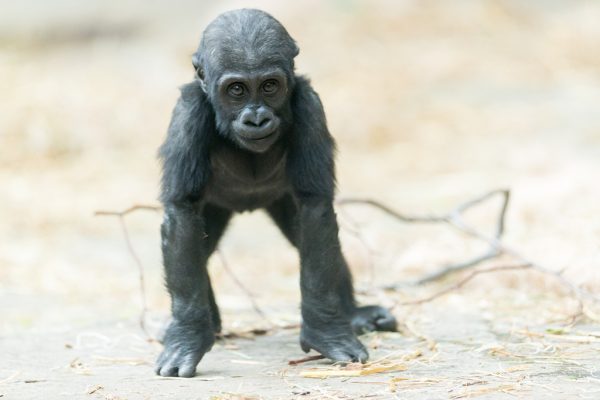
Short answer: A newborn gorilla is called an infant. Western lowland gorilla infants average about 4 pounds (2 kilograms) at birth and depend closely on their mothers for warmth, transport, milk, protection and social learning.
Baby gorilla facts at a glance
- Gestation in western lowland gorillas lasts about eight and a half months.
- Births can occur throughout the year.
- Infants have a strong grasp and cling to their mothers.
- Mothers support very young infants and later carry them on the chest, back or limbs.
- Young gorillas learn through observation, exploration and social play.
- Twins are possible but unusual.
What is a baby gorilla called?
The correct life-stage term is infant. As gorillas become more independent they are described as juveniles. Adolescent males are often called blackbacks, while physically mature adult males develop the silver-gray back associated with the term silverback.
Birth and early dependence
Gorillas normally give birth to one infant. A newborn can grasp but still requires extensive maternal support. The mother is the infant’s primary caregiver, carrying it during travel and keeping it close while feeding and resting. Other group members may show interest, but social access depends on the mother, the infant’s age and group relationships.
How baby gorillas move
During early months, infants ride against the mother’s body. As coordination develops, they begin crawling, riding on her back, climbing nearby vegetation and making short independent movements. Development varies among individuals; age ranges are guides rather than deadlines.
What do baby gorillas eat?
Infants nurse from their mothers. As they grow, they sample vegetation and other foods eaten by group members while continuing to nurse. Diet depends on species and habitat. Read what wild gorillas eat.
Play and learning
Play helps young gorillas practice movement and social skills. Infants and juveniles wrestle, chase, climb and interact with peers and older group members. They also learn where foods occur, how group members communicate and how to respond to social situations.
Relationship with the silverback
A dominant silverback may protect the group and tolerate or interact with infants, but gorilla groups vary. Avoid portraying every group as a rigid human-style nuclear family. Gorilla societies include one-male, multi-male and other arrangements, described in our gorilla social-group guide.
Threats to infant survival
Infant survival is influenced by maternal health, disease, food conditions, social disruption and human-caused threats affecting the group. Because gorillas reproduce slowly and infants require years of care, the loss of breeding adults has long population consequences.