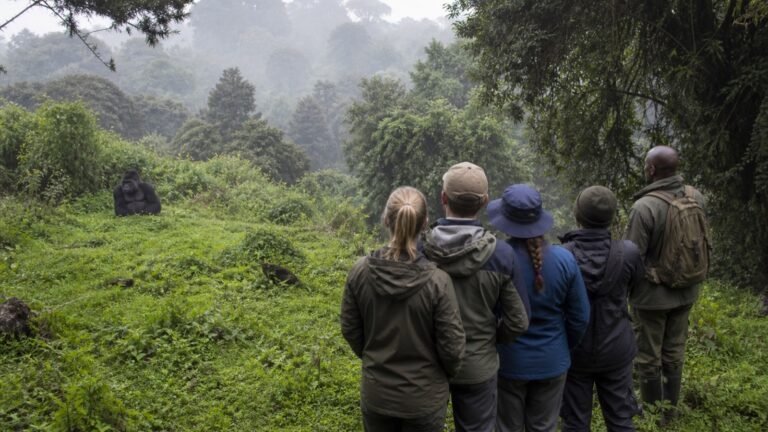
Gorilla trekking in Rwanda takes place in Volcanoes National Park, usually planned from the Musanze area with an official permit for a specified date. The standard permit is listed by Visit Rwanda at US$1,500 per person per day as of this review. The polished logistics do not make the forest predictable: slopes, rain and gorilla movement still decide the effort.
Why this park matters
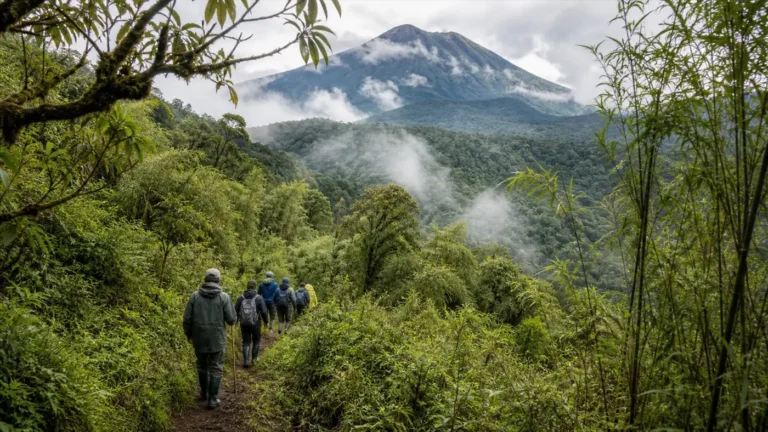
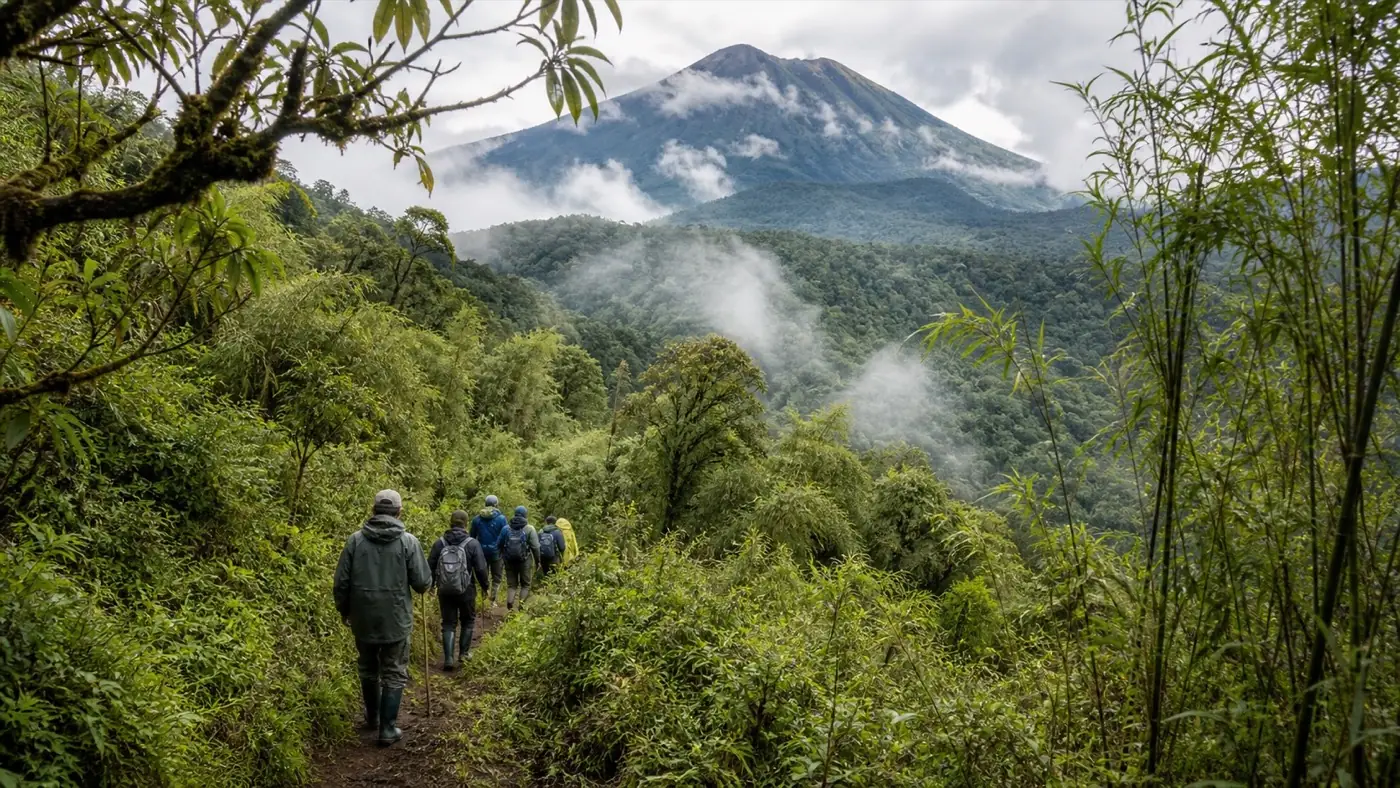
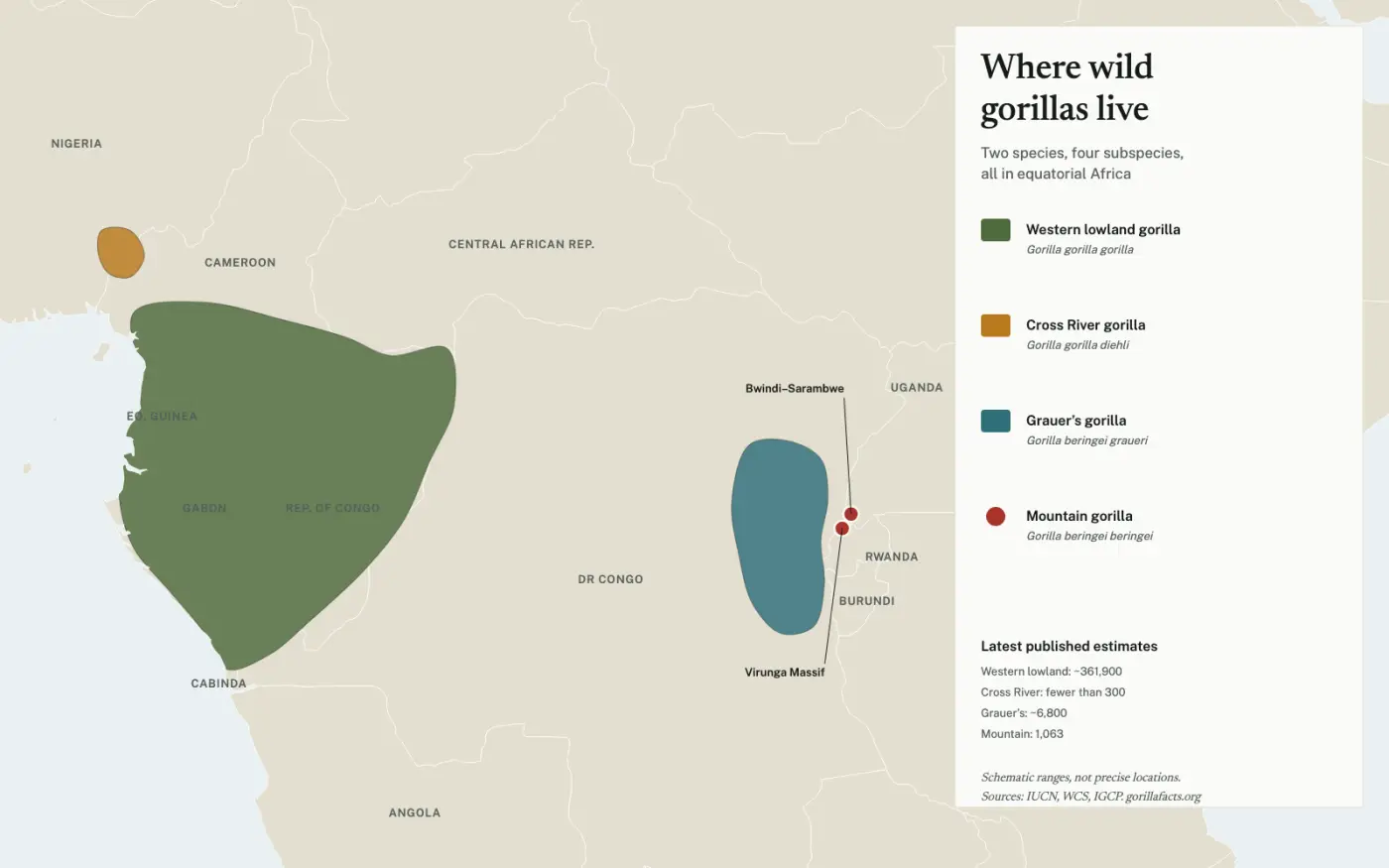
Volcanoes National Park protects part of the Virunga massif, a transboundary volcanic landscape shared with Uganda and DR Congo. Mountain gorillas range within this high-elevation ecosystem; political borders organize tourism, not the ecology.
Permit and age basics
Visit Rwanda lists the minimum trekking age as 15 and the standard permit at US$1,500. It also publishes selected special-offer categories with conditions. Verify eligibility directly rather than trusting a reseller’s interpretation. Match the permit name and date to your identity documents.
The usual planning sequence
- Check official availability and current rules.
- Confirm the permit before nonrefundable lodging.
- Choose a Musanze/park-area base and map the briefing transfer.
- Allow a buffer before onward flights.
- Train and pack for wet volcanic terrain.
How hard is it?
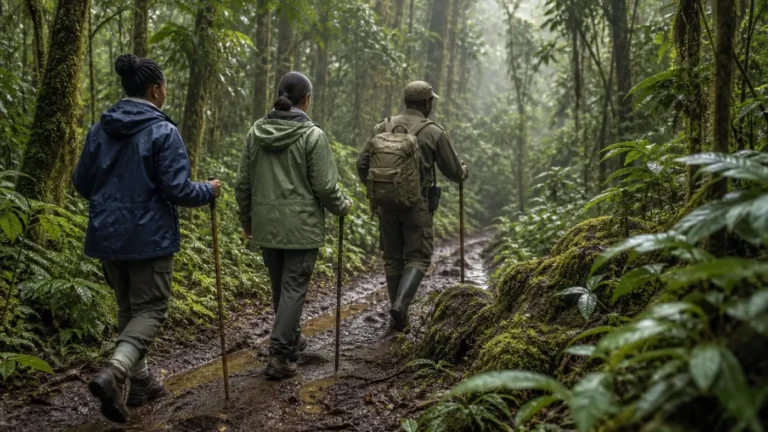
Assignment and gorilla location influence duration. Bamboo zones, mud, vegetation and gradients can be strenuous even when the road approach is straightforward. Explain genuine mobility limits at briefing, but reject any seller’s promise of a guaranteed easy family.
What to wear
- broken-in hiking boots with grip;
- long trousers and long sleeves;
- breathable rain shell;
- waterproof pack liner;
- water, food and medication according to instructions;
- camera with flash disabled;
- gloves or gaiters if recommended for current conditions.
Rules are conservation infrastructure
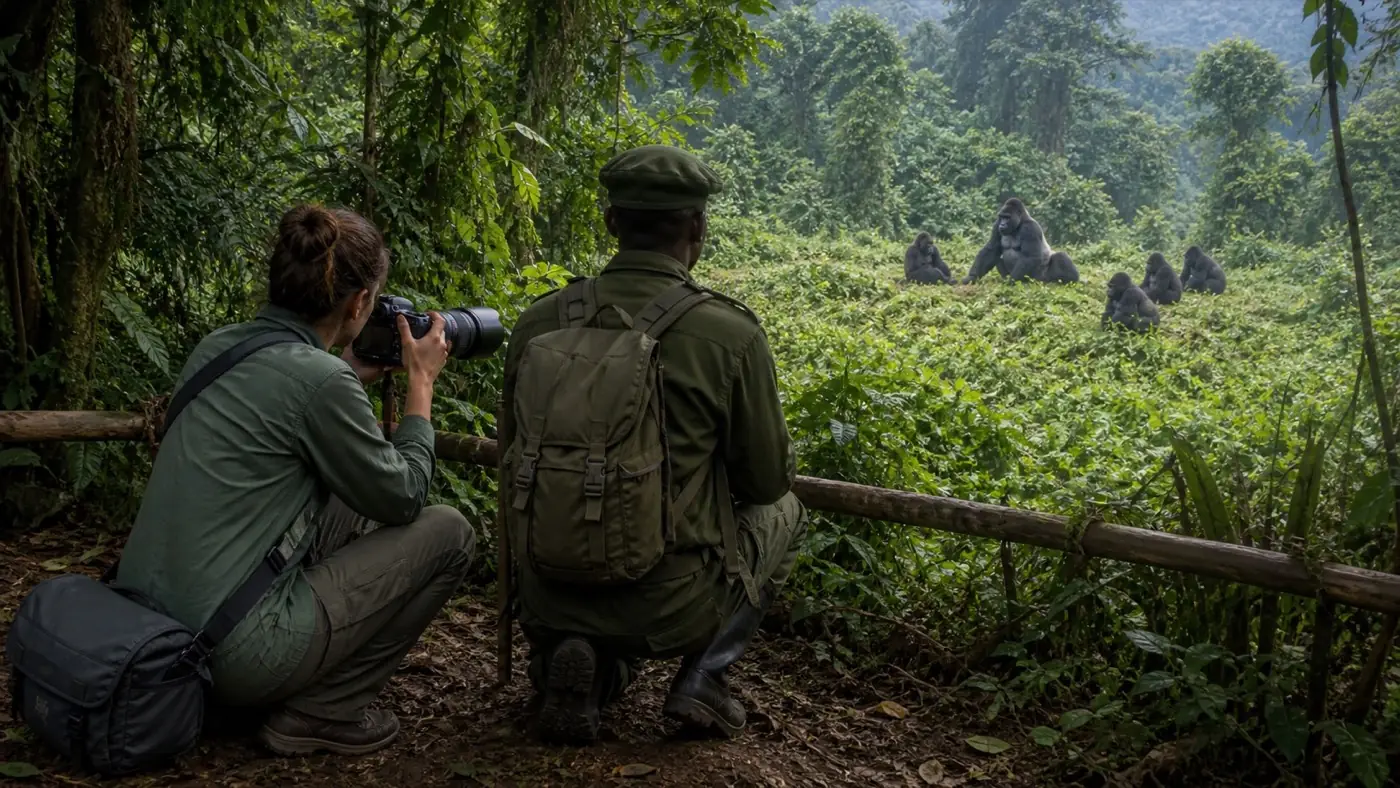
Health screening, masks where required, minimum distance, limited encounter time and small visitor groups reduce disturbance and disease risk. A gorilla may approach despite your effort to keep distance; freeze, avoid contact and follow the ranger. The animal’s movement is not permission to touch.
Photography in dark forest
Set up before the encounter: auto ISO with a sensible ceiling, a shutter speed suitable for animal movement and flash disabled. A versatile lens is more useful than a heavy bag of options. Step only where the ranger allows; the photograph is not worth trampling habitat or blocking another visitor.
Add context, not just activities
Volcanoes National Park is also associated with golden monkeys, montane biodiversity and the history of gorilla research and conservation. Build rest into the trip and seek interpretation that connects tourism revenue, ranger work and neighboring communities. Avoid turning conservation into a sequence of paid animal selfies.
Rwanda-specific red flags
- a “discount” with no official eligibility basis;
- guaranteed physical contact;
- no written illness or cancellation terms;
- a rushed same-day international connection after trekking;
- claims that every trek is short because the park is near Musanze.
Bottom line
Rwanda can offer a compact, well-defined route to a mountain-gorilla trek, but the encounter remains wild and tightly regulated. Verify the permit, respect the health rules and prepare for real mountain forest—not a staged attraction. Compare alternatives in our Rwanda vs Uganda guide.
Additional official source
Sources and verification
- IUCN: Best Practice Guidelines for Great Ape Tourism
- Uganda Wildlife Authority: Gorilla Tracking
- Visit Rwanda: Gorilla Trekking
Fact-checked 22 August 2026. Confirm permits, rules and access with the relevant authority before travel.