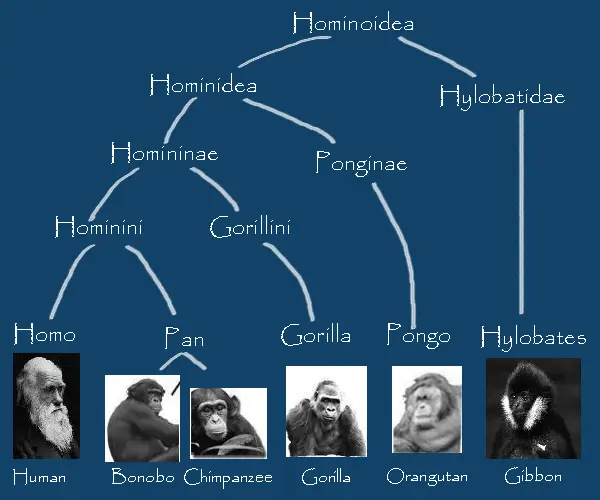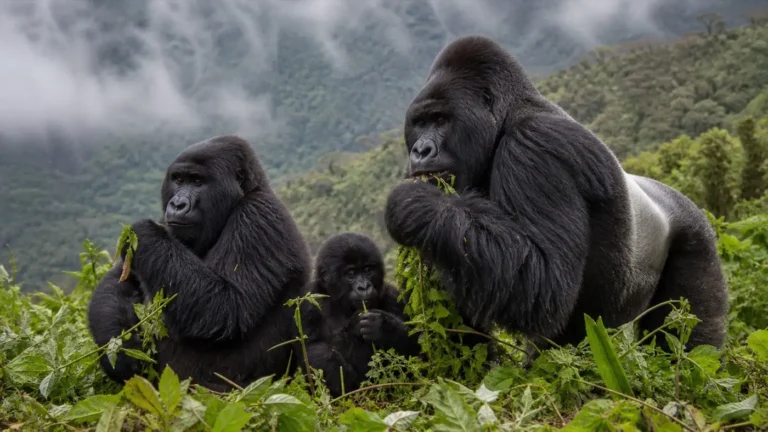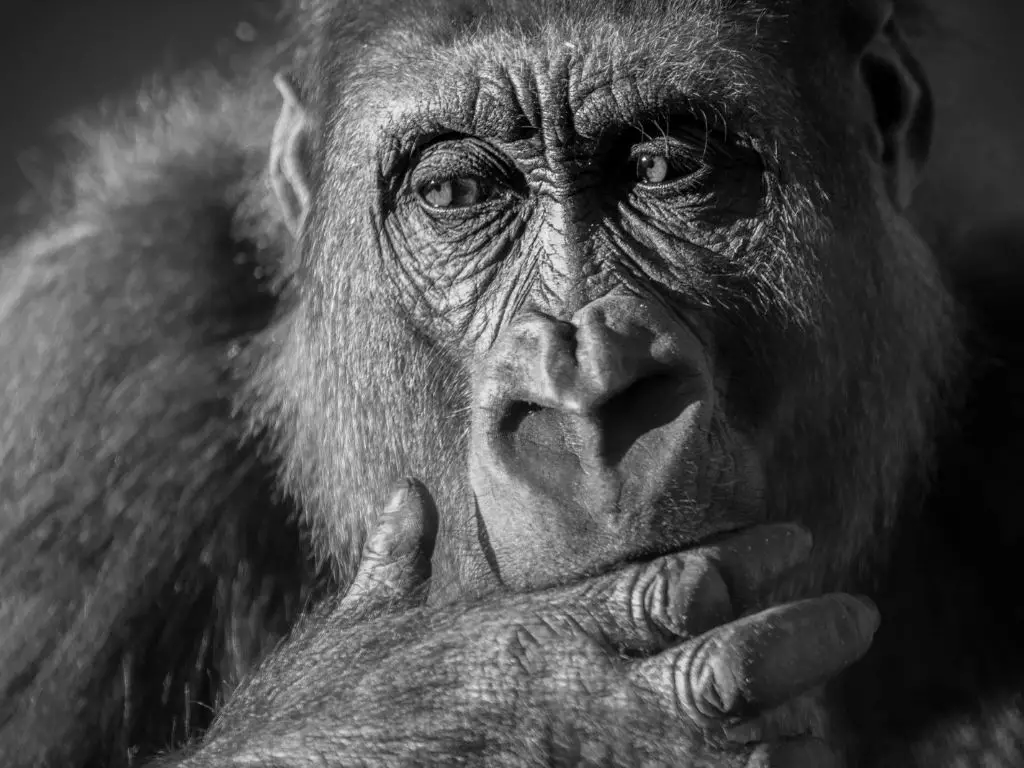
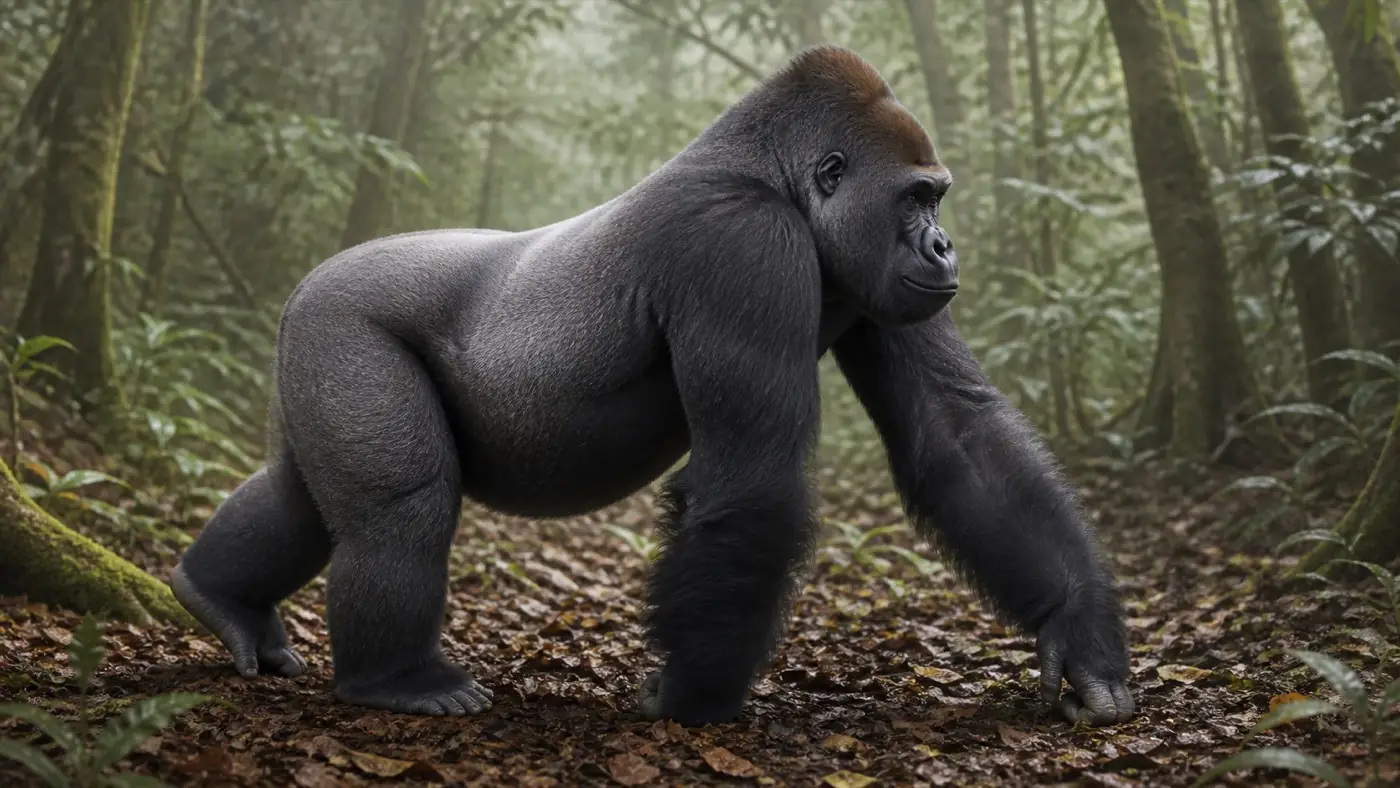
Short answer: Gorillas do not have external tails. They are apes, and all living apes—including gorillas, chimpanzees, bonobos, orangutans, gibbons and humans—lack an external tail.
Gorillas are apes, not monkeys
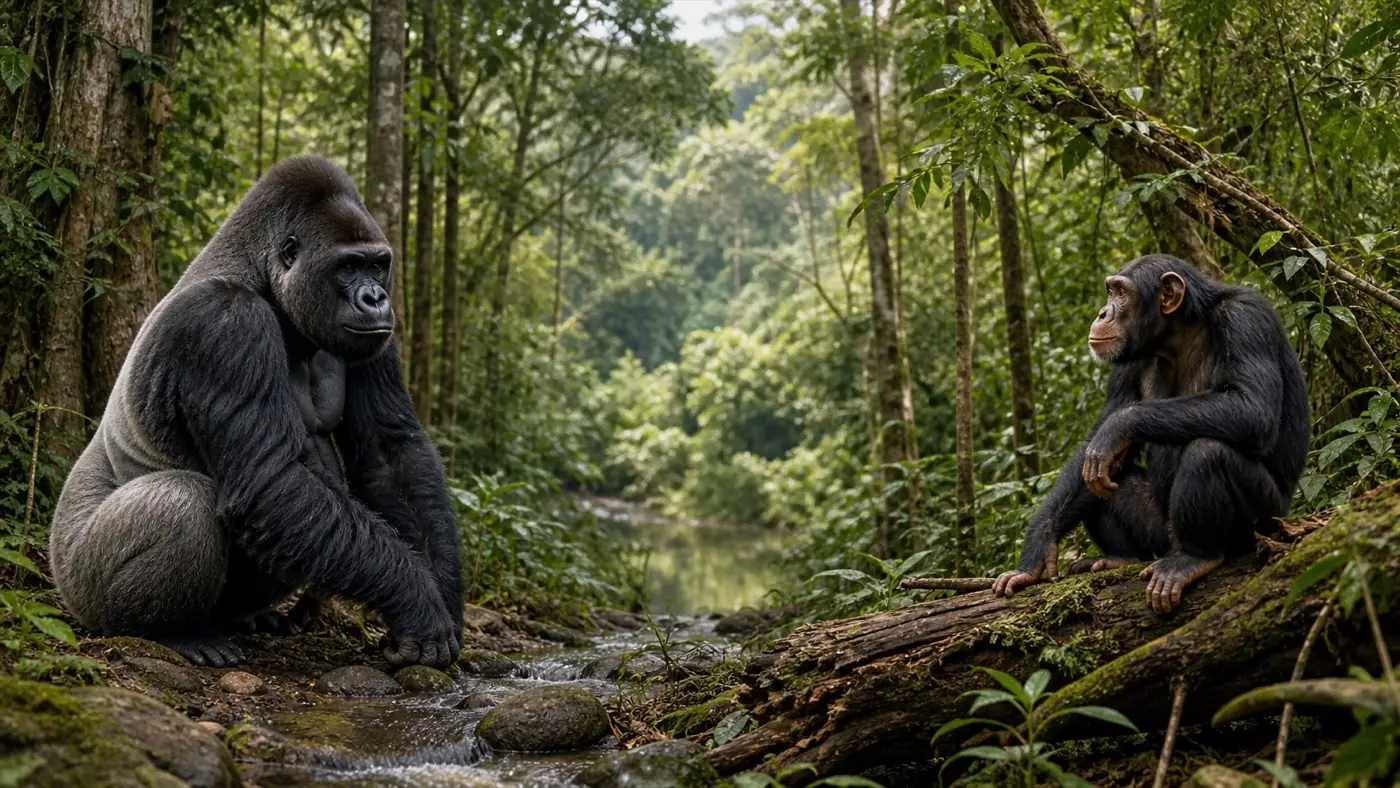
The tail is one useful visible distinction between apes and most monkeys, although classification depends on evolutionary relationships rather than one body part. Gorillas belong to the great-ape family Hominidae. Their long arms, mobile shoulders, broad chests and characteristic knuckle-walking anatomy reflect an evolutionary history different from that of tailed monkeys.
Do gorillas have a tailbone?
Gorillas retain small caudal vertebrae at the base of the spine—a reduced internal remnant of the ancestral tail region. This does not form a projecting or grasping tail. Calling it a “tailbone” is reasonable in everyday language, but it should not be mistaken for an external tail.
When did apes lose their tails?
Tail loss occurred in the common evolutionary lineage of hominoids long before modern gorillas or humans existed. Fossil and genetic evidence place the transition roughly around the period when hominoids diverged from Old World monkeys, about 25 million years ago, though evolutionary change is not a single precisely observed event.
What does recent genetic research show?
A 2024 study in Nature identified a hominoid-specific DNA insertion affecting alternative splicing of the TBXT gene, which is involved in tail development. Mouse experiments showed that related changes could produce shortened or absent tails. The study provides evidence for one plausible genetic contribution; it does not prove that one mutation alone explains every evolutionary step or why tail loss was favored.
Why did apes lose their tails?
Scientists continue to debate the selective and biomechanical context. Hypotheses relate tail loss to changes in posture and locomotion, but no experiment can directly reconstruct the behavior of the ancestral population. A responsible answer distinguishes the genetic mechanism investigated by researchers from speculation about evolutionary advantage.
How do gorillas balance without tails?
Gorillas use their whole musculoskeletal system: powerful limbs, mobile joints, hands and feet, trunk control and visual and vestibular information. They spend much of their time on the ground and usually move by knuckle-walking, though they can climb and briefly stand or walk bipedally.
Source
Related: gorilla species and classification and gorilla anatomy and strength evidence.