Short answer: Gorillas communicate through vocalizations, gestures, facial expressions, posture, touch and object-directed displays. Meaning depends on context: the same movement may invite play, request contact, manage distance or express arousal.
Gorilla communication is multimodal
A signal may combine sight, sound and movement. Chest beating, for example, is both a visible display and a non-vocal acoustic signal. A quiet contact call works at close range, while a loud call or display can travel through dense forest.
Vocal communication
Researchers describe several call classes, including soft grunts or belch-like contact calls, hums associated with feeding, barks or screams in tense situations, and hoots that may accompany displays. A short label is not a complete translation: acoustic structure, caller identity, audience and situation all matter.

Gorilla calls should not be represented as words with fixed English meanings. Playback and observational studies can test listener responses, but researchers must distinguish a consistent association from a human-like sentence.
Intentional gestures
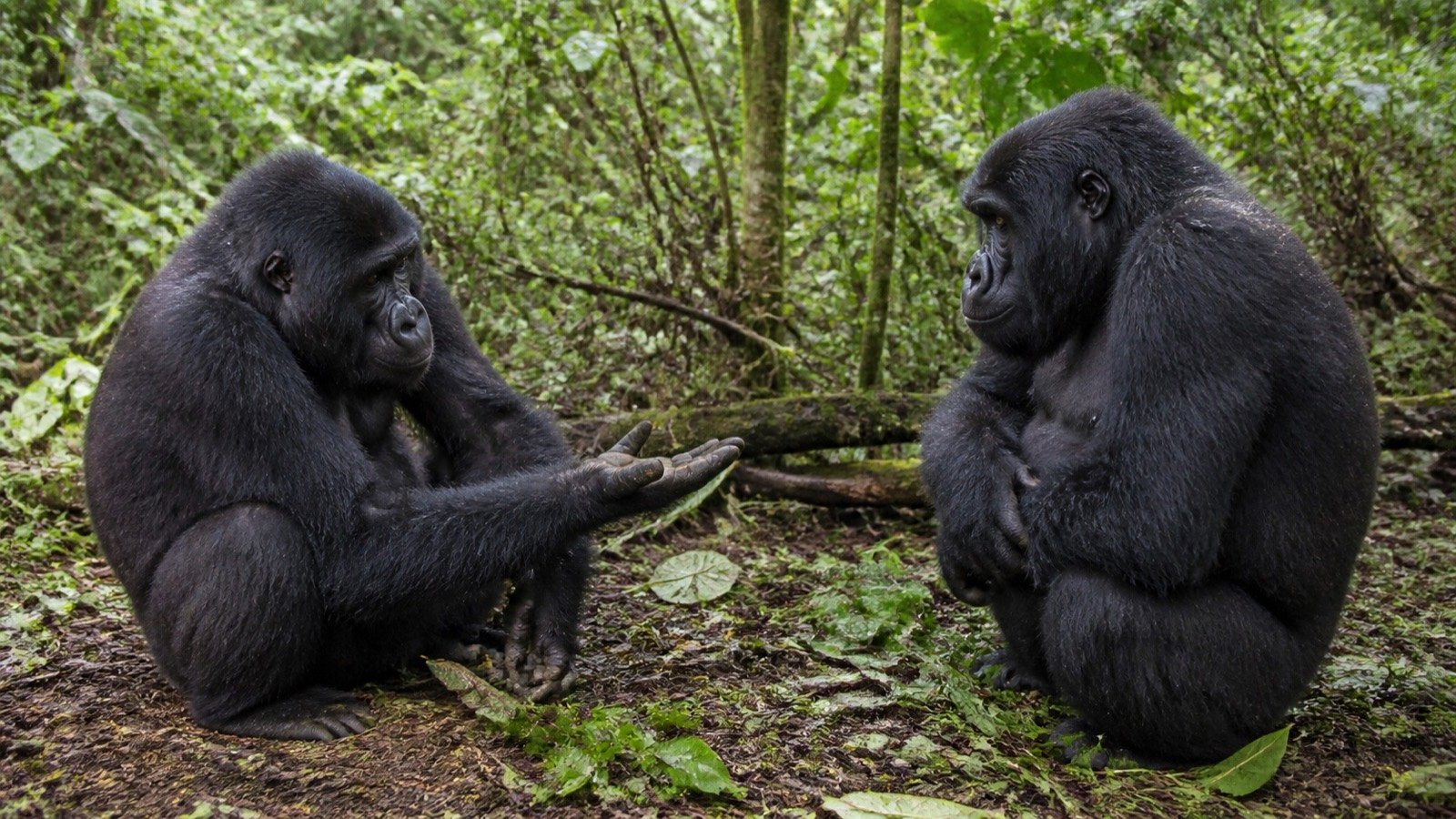
Gorillas use movements such as reaching, touching, pushing, presenting a body part, slapping a surface and drumming the body. Research across captive groups and a wild field site identified a large repertoire and found evidence of intentional use: gorillas directed signals toward an audience, waited for a response and sometimes changed tactics when the first attempt failed.
Silent visual gestures are used more when the recipient is looking, whereas tactile signals can work without visual attention. This audience sensitivity is one reason great-ape gesture is important to research on communication evolution.
Chest beating
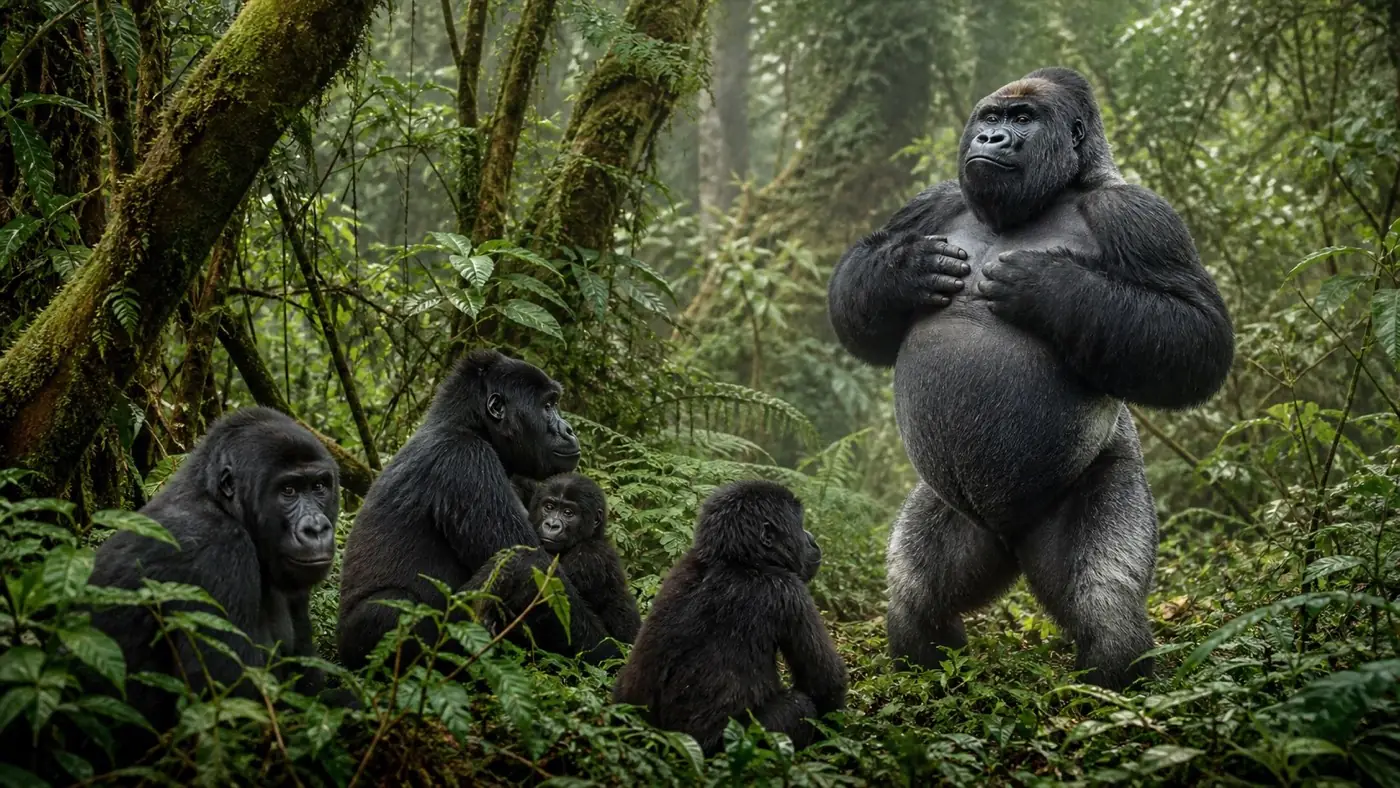
Chest beating is made with cupped hands, not clenched fists. Research on wild mountain gorillas found that larger adult males produced lower-frequency beats. The sound can therefore convey body-size information relevant to rivals or potential mates. The research did not prove that every individual has a uniquely recognizable beat.
See the full evidence in why gorillas beat their chests.
Facial expression and posture
Play faces, gaze direction, body orientation and movement speed add information to an interaction. Showing teeth cannot be interpreted safely from a still photograph alone. Human visitors should never imitate displays or assume a gorilla is “smiling” in the human sense.
Communication during play and conflict
Young gorillas use diverse gestures during play and may repeat or combine signals until a partner responds. During tension, gorillas can use vocalizations, staring, charging, ground slapping or chest beating. These displays may create distance and help prevent dangerous contact.
Do gorillas use sign language?
Some gorillas in human care have participated in projects using human-taught signs or symbols. Those claims are debated and should be separated from naturally occurring gorilla communication. Wild gorillas have a rich species-typical gestural repertoire, but there is no evidence that it has human grammar.
What scientists still need to learn
- How communication varies across all four subspecies
- How receivers interpret combinations of signals
- Which signals carry individual identity
- How social learning and local ecology shape gesture form
Continue with gorilla social groups and the four gorilla subspecies.
Sources
- Genty et al. (2009), “Gestural communication of the gorilla”, Animal Cognition.
- Roberts et al. (2017), great ape gestures and intentional communication.
- Wright et al. (2021), chest beats and male body size, Scientific Reports.