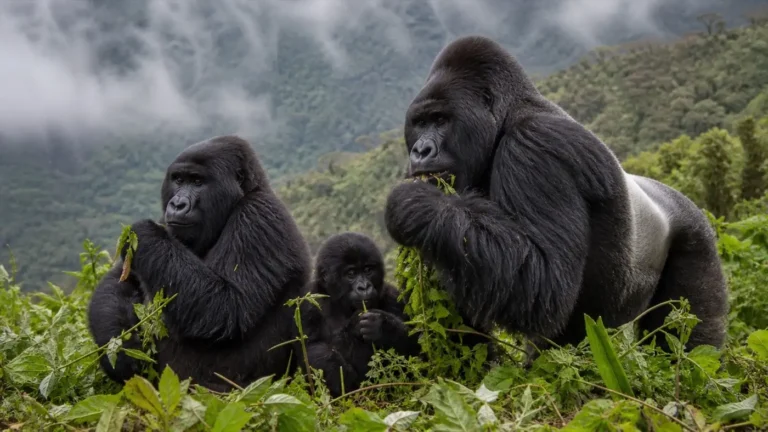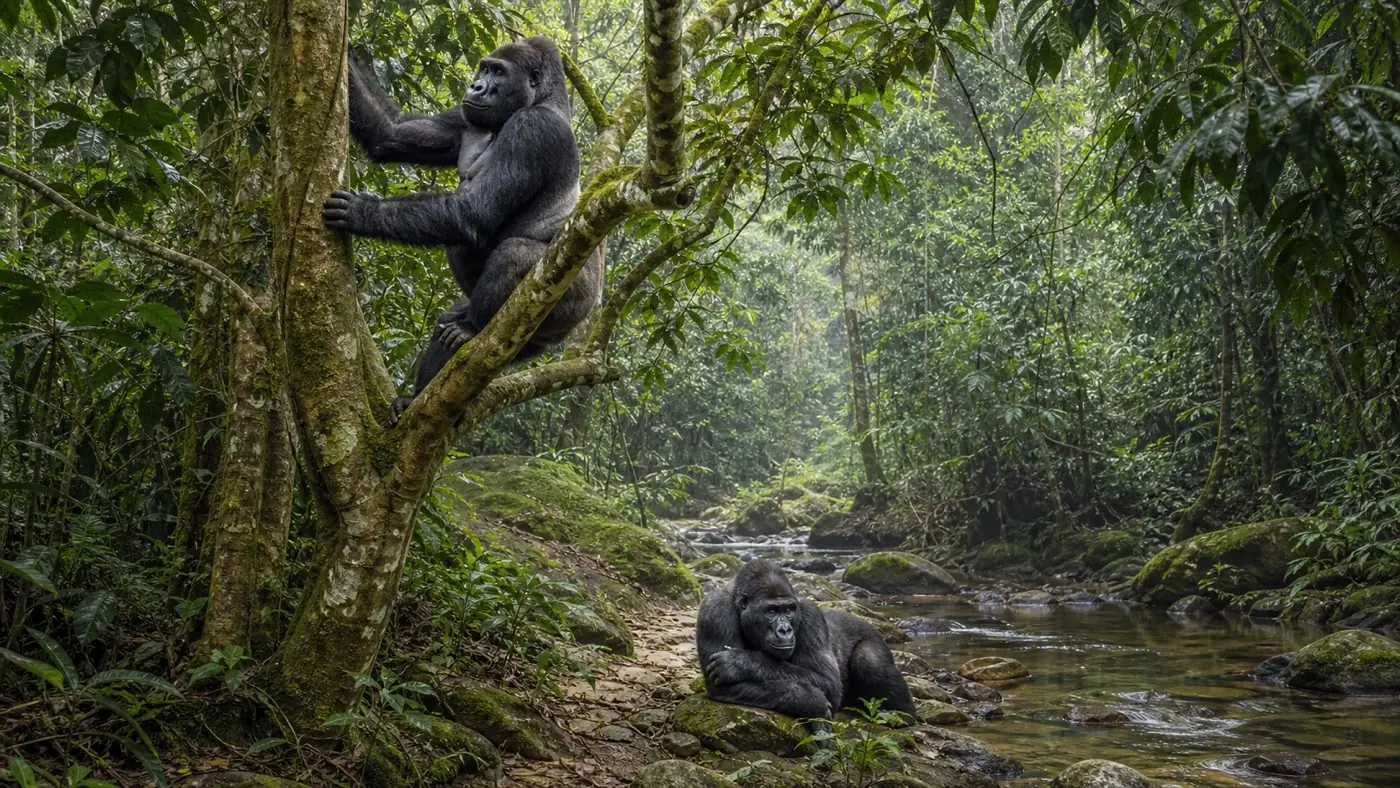
Short answer: A wild gorilla’s day usually alternates feeding and travel with long periods of rest, social interaction and play. Before nightfall, each weaned individual builds a fresh nest. Timing changes with food, weather, group needs and habitat.
Dawn: leaving the night nest
Activity begins around daylight. The group leaves nests built the previous evening and starts feeding nearby or travels toward a known food patch. Researchers can inspect abandoned nests after the gorillas leave, reducing disturbance.
Morning: the first major feeding period
Gorillas select leaves, stems, shoots, pith, bark or fruit depending on location and season. Feeding is active decision-making: animals choose plant species and parts, process them differently and move as patches are depleted.
Travel is not a march behind one leader
A silverback can influence direction, but group movement emerges from relationships, spacing and local opportunities. Mothers balance feeding with infant transport. Youngsters turn logs and vegetation into play structures while staying within the group’s social envelope.
Midday: rest is social time
Adults often rest around the middle of the day. Young gorillas may wrestle, chase and climb while older animals sleep or watch. Rest saves energy during digestion and creates opportunities for proximity, grooming and infant interaction.
Afternoon: feeding and movement resume
A second feeding period commonly occurs later in the day. Western gorillas may travel farther when ripe fruit is scattered, while groups with abundant terrestrial herbs can meet needs over shorter distances. No single timetable fits every subspecies.
Evening: a new bed every night
Before dark, gorillas pull nearby vegetation into circular nests. Adult males commonly nest on the ground; females and younger animals may choose trees more often. Infants share with their mothers until they can build independently.
What changes the schedule?
- Seasonal fruit and plant quality
- Temperature, rain and elevation
- Infants and group size
- Encounters with neighboring groups
- Human disturbance or perceived danger
- Individual age and health
How scientists build an activity budget
Observers record behavior at defined intervals rather than writing only memorable events. The proportion of samples spent feeding, resting, traveling or socializing becomes an activity budget. Visibility bias matters: a gorilla hidden while feeding may be undercounted.