Choose Rwanda when a compact Volcanoes National Park itinerary and simpler road access from Kigali matter more than permit price; choose Uganda when you want Bwindi or Mgahinga, multiple trail sectors and a lower published permit cost. Neither country is automatically “better.” The right choice depends on the entire trip, your mobility, dates and tolerance for road time.
The useful comparison
| Decision | Rwanda | Uganda |
|---|---|---|
| Main habitat | Volcanic montane forest in Volcanoes National Park | Bwindi’s steep, biodiverse forest or Mgahinga’s Virunga slopes |
| Standard permit snapshot | US$1,500 on the official visitor site | US$800 FNR outside eligible low-season discounts; verify category/date |
| Planning geography | Musanze/Volcanoes base | Bwindi has distinct sectors; Mgahinga is a separate park |
| Trip style | Can fit a shorter Rwanda itinerary | Often paired with longer Uganda wildlife routes |
| Terrain certainty | Still steep, muddy and variable | Still steep, muddy and variable |
Permit price is not total price
Rwanda’s permit costs more at the standard published rate, but a shorter transfer or fewer hotel nights can narrow the full-trip difference. Uganda’s permit can cost less, yet a badly matched Bwindi lodge and sector can create a long predawn transfer. Compare the same number of nights, transfer standard, meal plan and insurance—not two headline permits.
What the forest feels like
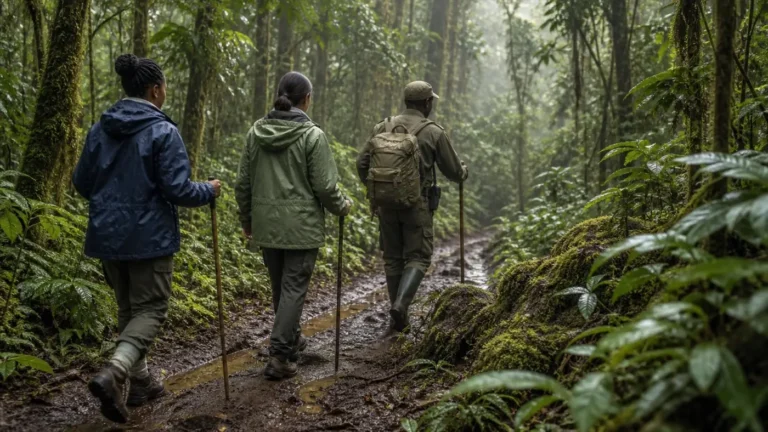
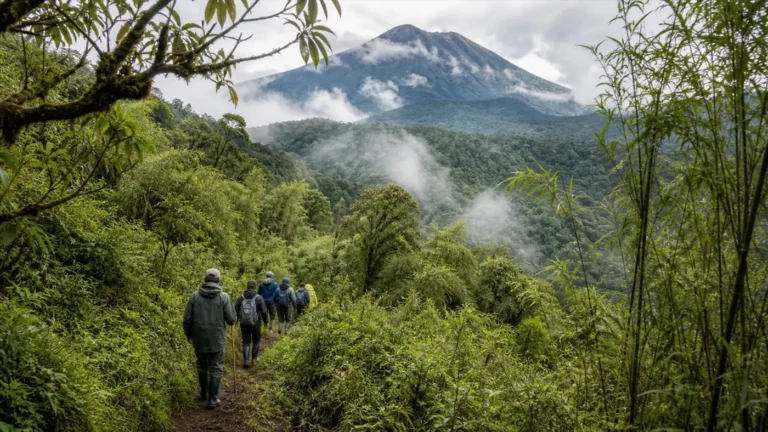
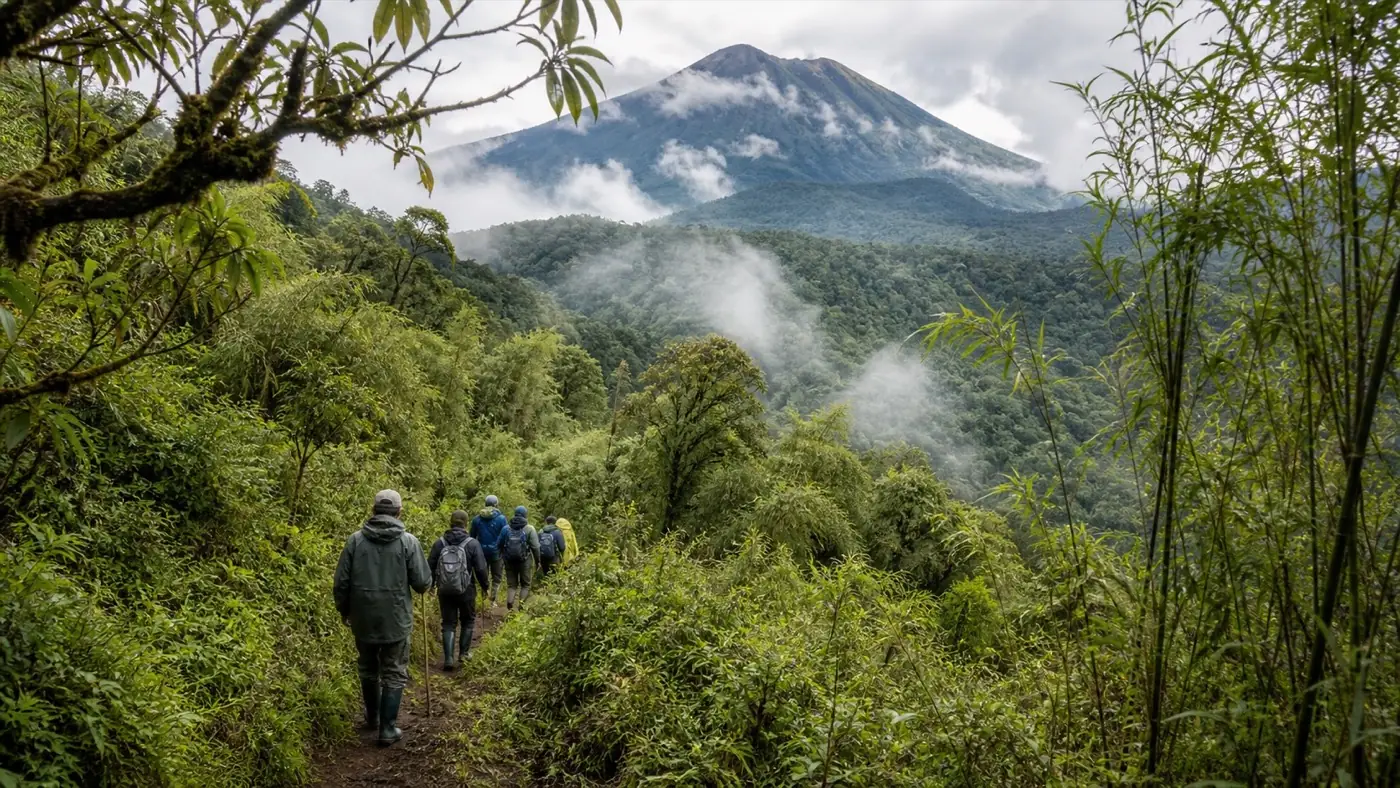
Volcanoes National Park is part of the Virunga massif, with bamboo zones and volcanic slopes. Bwindi is an older, exceptionally diverse forest with dense vegetation and pronounced ridges and valleys. Mgahinga also lies in the Virungas. None is a paved wildlife attraction: rainfall, gorilla movement and your assigned group shape difficulty more than country marketing.
Choose by constraint, in this order
- Health and mobility: discuss limitations honestly; no location can guarantee an easy assignment.
- Available permit dates: the perfect lodge is irrelevant without a legitimate permit.
- Total travel time: map the airport, borders, roads, briefing point and lodge.
- Budget: price the whole journey.
- Wider interests: consider other parks, culture and rest days without turning the trek into a checklist sprint.
Who often prefers Rwanda?
Travelers with limited vacation time, those building a Rwanda-centered itinerary, or people comfortable paying more for the standard permit may prefer Volcanoes National Park. That does not guarantee a shorter trek in the forest; it describes logistics outside the encounter.
Who often prefers Uganda?
Travelers seeking a Uganda wildlife circuit, a lower standard FNR permit price, or a choice between Bwindi and Mgahinga may prefer Uganda. The key planning detail is the named Bwindi sector. Book lodging for the correct sector rather than treating “Bwindi” as one gate.
Can you combine both?
Cross-border itineraries exist, but add border rules, transit time, vehicle arrangements and insurance complexity. Verify current entry requirements from governments, not blogs. A combined trip makes sense when each country adds value beyond collecting two permits.
Ethics should be identical
In either country: disclose illness, obey mask and distance instructions, disable flash, keep voices low, do not touch or feed wildlife, and let rangers manage unexpected approaches. Choose official permits and an operator who explains rules before selling scenery.
A one-minute decision test
If permit budget is the binding constraint, investigate Uganda first. If schedule compression is the binding constraint, investigate Rwanda first. Then price both complete itineraries and challenge your first answer. For practical preparation, continue to our complete trekking guide.
Sources and verification
- IUCN: Best Practice Guidelines for Great Ape Tourism
- Uganda Wildlife Authority: Gorilla Tracking
- Visit Rwanda: Gorilla Trekking
- Virunga National Park: current visitor status
Fact-checked 22 August 2026. Permit prices, entry rules and park access can change; confirm with the relevant park authority before paying.