
The most important Bwindi planning decision is not the lodge—it is the trekking sector printed in your confirmed arrangements. Bwindi Impenetrable National Park is not a single gate. Uganda Wildlife Authority identifies four gorilla-tracking sectors: Buhoma, Ruhija, Rushaga and Nkuringo. Booking a beautiful lodge in the wrong area can turn trek morning into a logistical problem.
Meet the four sectors
| Sector | Planning note |
|---|---|
| Buhoma | Northern Bwindi; one of the best-known tourism bases |
| Ruhija | Eastern side; road and lodging choices should match the briefing location |
| Rushaga | Southern area with its own access and accommodation pattern |
| Nkuringo | Southern Bwindi; steep landscape makes precise transfer planning important |
This table is orientation, not a driving-time promise. Road condition, route, weather and accommodation location matter. Get a mapped itinerary from someone who understands the current roads.
Permit facts to verify
UWA controls gorilla-tracking permits. Check traveler name, date, park/activity, residency category and sector or briefing details. The authority’s February 2026 notice introduced eligible low-season rates in April, May and November and said those discounted permits cannot be rescheduled. Do not send funds based only on a chat screenshot.
What the trek can feel like
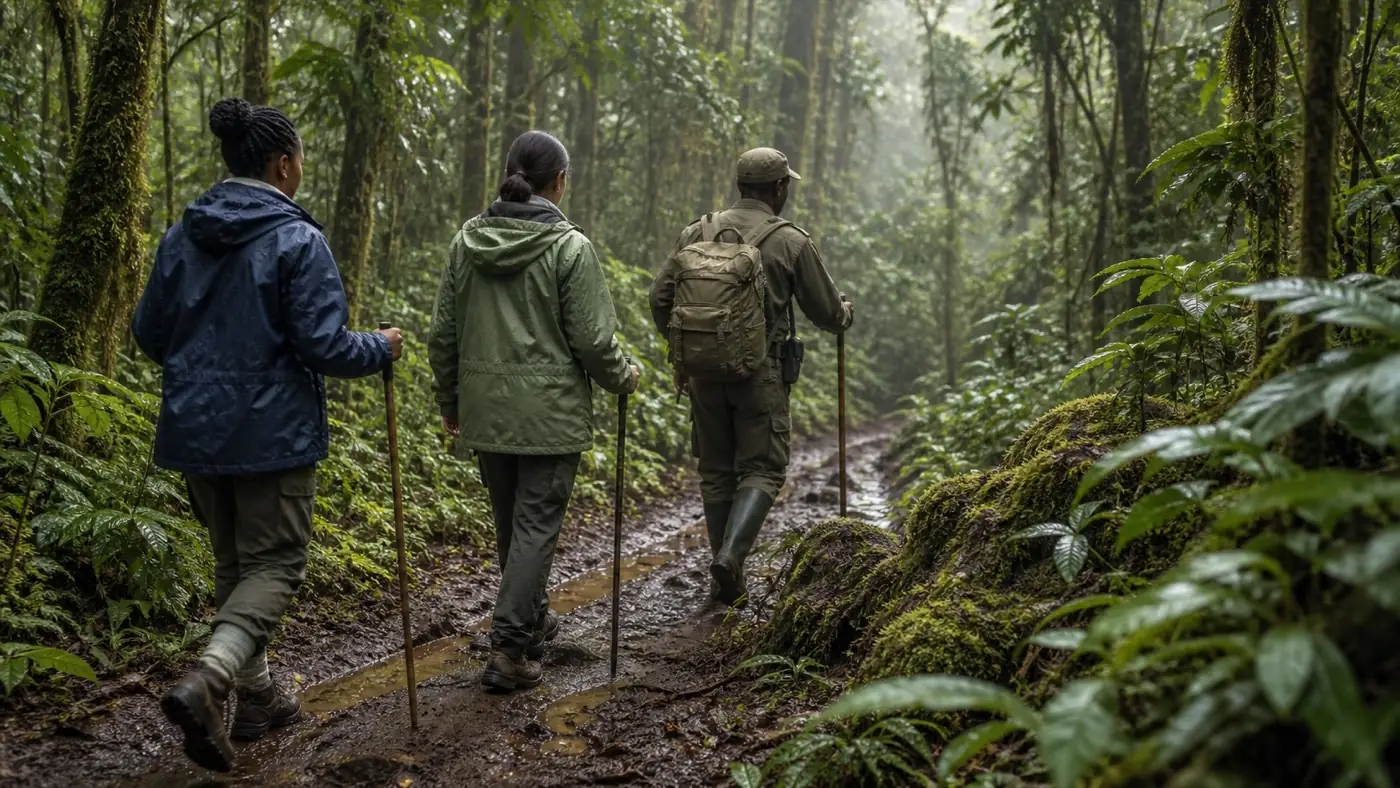
Bwindi’s name is not an exaggeration crafted by a hotel. The forest is dense, ridged and wet, with tangled vegetation and changing footing. Tracking commonly takes several hours; the gorillas’ daily movement shapes the route. A group reported nearby the previous day may be far deeper in the forest.
Build the itinerary backward from briefing
- Confirm permit and sector.
- Select lodging with a realistic route to that briefing point.
- Add transfer buffers from airport or previous park.
- Keep the night before free from a fragile late arrival.
- Plan the day after without a risky immediate international connection.
How to prepare
- Train on hills and uneven trails.
- Wear broken-in boots, long trousers and a rain shell.
- Waterproof medication and electronics inside the pack.
- Hire a porter if useful; the support can improve both safety and local income distribution.
- Tell staff about mobility limits without expecting a guaranteed easy allocation.
The hour with gorillas
After the group is located, follow the ranger’s viewing-duration, distance, health and mask instructions. Disable flash before the encounter. Do not eat, touch a gorilla or reposition yourself against instructions. If a youngster approaches, the correct response is calm compliance—not reaching out for viral footage.
What makes Bwindi different from “checking off gorillas”
The park is a living ecosystem, not a corridor to one species. Listen for birds, notice plant structure, and ask guides how trackers read broken stems, feeding remains and calls. The search is part of the ecological story. Our guide to where mountain gorillas live adds habitat context.
Common Bwindi mistakes
- booking lodging before the permit sector;
- underestimating road transfers;
- packing new boots;
- placing the trek immediately after arrival;
- assuming a lower permit price means a lower total trip;
- hiding respiratory symptoms.
Final planning checklist
Permit verified ☐ Sector confirmed ☐ Lodge mapped ☐ Transfer buffered ☐ Current UWA rules checked ☐ Insurance wording reviewed ☐ Fitness plan completed ☐ Rain protection tested ☐
Bottom line
Bwindi rewards precise logistics and flexible wildlife expectations. Lock the correct sector first, train for difficult terrain, then let rangers and gorillas shape the day.
Additional official source
Sources and verification
- IUCN: Best Practice Guidelines for Great Ape Tourism
- Uganda Wildlife Authority: Gorilla Tracking
- Visit Rwanda: Gorilla Trekking
Fact-checked 22 August 2026. Confirm permits, rules and access with the relevant authority before travel.