An ethical gorilla-tour operator can prove where the permit comes from, explains health and distance rules before payment, uses qualified local staff and never sells touching, feeding or access to unhabituated gorillas. A glossy conservation slogan is not evidence.
Start with the authority, not reviews
Confirm which agency manages the permit—Uganda Wildlife Authority in Uganda or Rwanda Development Board/Visit Rwanda in Rwanda—and how an operator is authorized to transact. Reviews can reveal service patterns, but they cannot authenticate a permit or make a closed park open.
The 12-point verification checklist
- Legal company name and physical contact details.
- Tourism license or association membership that you independently verify.
- Named park, trek date and Bwindi sector where relevant.
- Official permit documentation and payment trail.
- Written cancellation, illness and closure policy.
- No promise of touching, feeding or guaranteed close distance.
- Clear respiratory-health and mask briefing.
- Realistic fitness description and porter option.
- Vehicle, driver and seat-belt details.
- Fair, transparent porter and staff payment practices.
- Specific local suppliers or community benefit—not vague “we give back.”
- Privacy-conscious handling of passport data.
Ask questions that are hard to fake
- Who receives my permit payment and what proof will I receive?
- What happens if I report respiratory symptoms on trek morning?
- How do you choose lodges relative to the briefing sector?
- How are porters assigned and paid?
- What conservation claim can you document?
- How long do you retain my passport copy and who can access it?
Read wildlife marketing literally
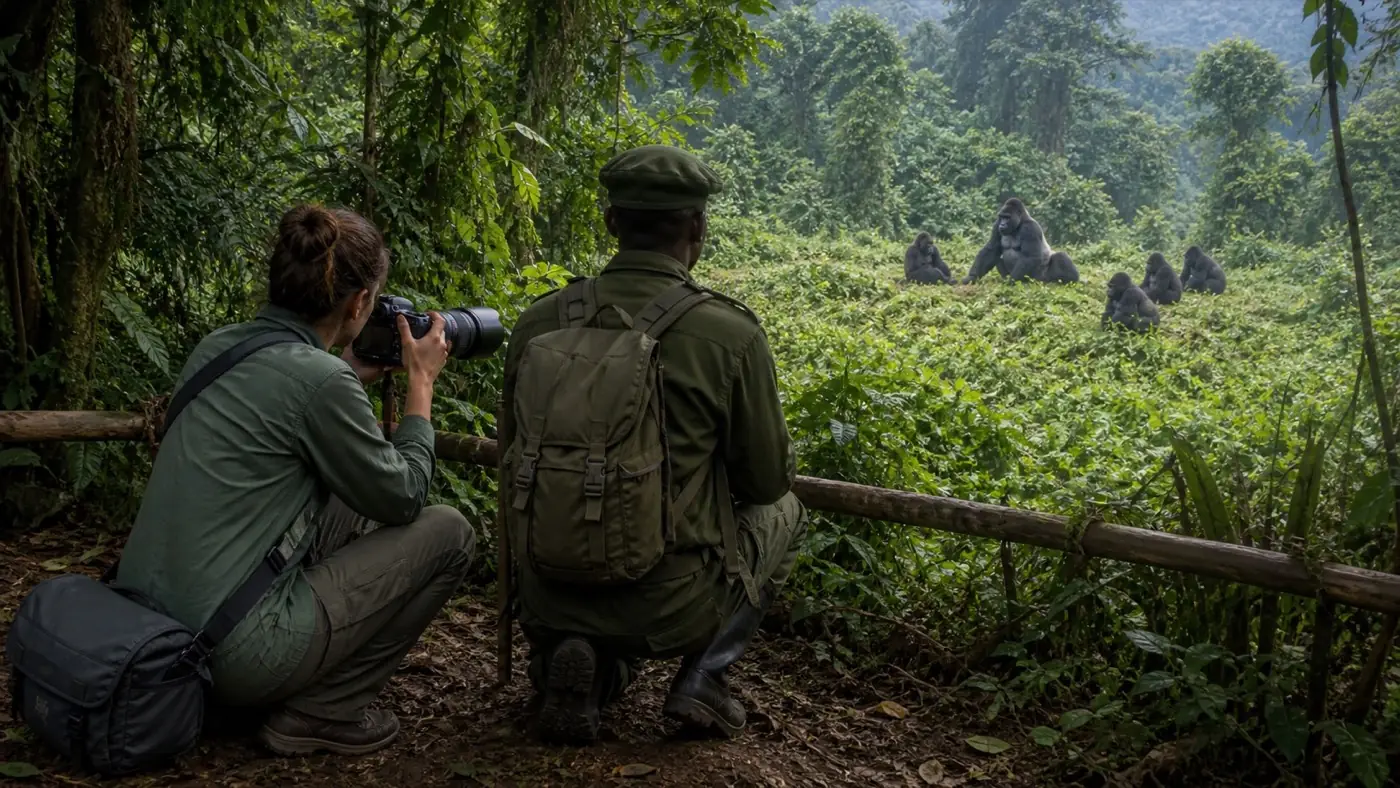
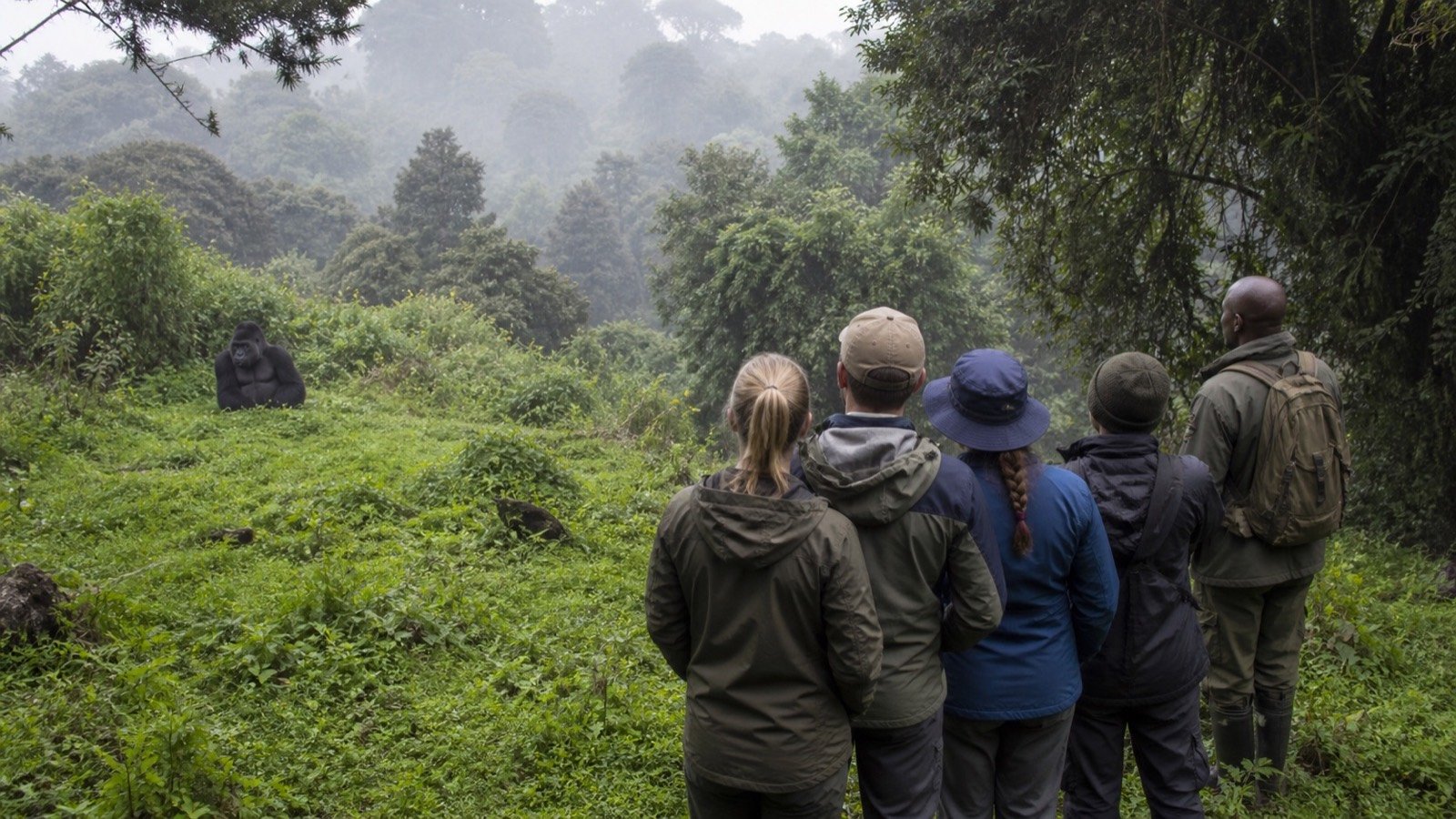
Reject phrases such as “cuddle a baby gorilla,” “guaranteed touching,” “off-trail secret group” or “ignore the distance for better photos.” Habituation allows controlled observation; it does not turn wildlife into props. Ethical marketing prepares you for foliage, rain and animal choice.

Local benefit: look beyond a donation badge
Tourism can support conservation and communities through permits, employment, local purchasing and revenue mechanisms. Ask for concrete practices: locally owned lodging, local guides, staff training, supplier payment terms and how porters benefit. No single model proves virtue, but specificity permits accountability.
Safety and ethics overlap
An operator willing to hide your cough may also cut corners on vehicles, insurance guidance or ranger rules. Look for a company that is comfortable disappointing a client when animal welfare or safety requires it.
Data privacy is part of professionalism
Permit processing may require identity details. Send documents through a secure channel, watermark a copy when appropriate, ask how long it will be retained and avoid exposing passport images in casual messaging groups. Do not provide more data than the authority needs.
How to compare three quotes
| Compare | Good evidence | Weak evidence |
|---|---|---|
| Permit | Authority, date, category and proof | “Included” |
| Animal welfare | Written health/distance rules | Heart emoji and “eco” label |
| Local benefit | Named employment/purchasing practice | Unquantified charity claim |
| Safety | Vehicle, guide, emergency and insurance detail | “100% safe” |
| Price | Itemized inclusions, taxes and terms | One total with urgency |
A note on certifications
Membership and certification can be useful signals, not substitutes for due diligence. Verify the membership on the issuing organization’s own site and check its scope. A sustainability badge does not authenticate this month’s permit.
The final test
Send your questions in writing and notice the quality of the answers. Ethical operators are not afraid of official links, uncertainty or rules that limit the customer. Then use our trek safety guide to review the itinerary itself.
Sources and verification
- IUCN: Best Practice Guidelines for Great Ape Tourism
- Uganda Wildlife Authority: Gorilla Tracking
- Visit Rwanda: Gorilla Trekking
Fact-checked 22 August 2026. Rules and access can change; follow the ranger and confirm current requirements with the park authority.