
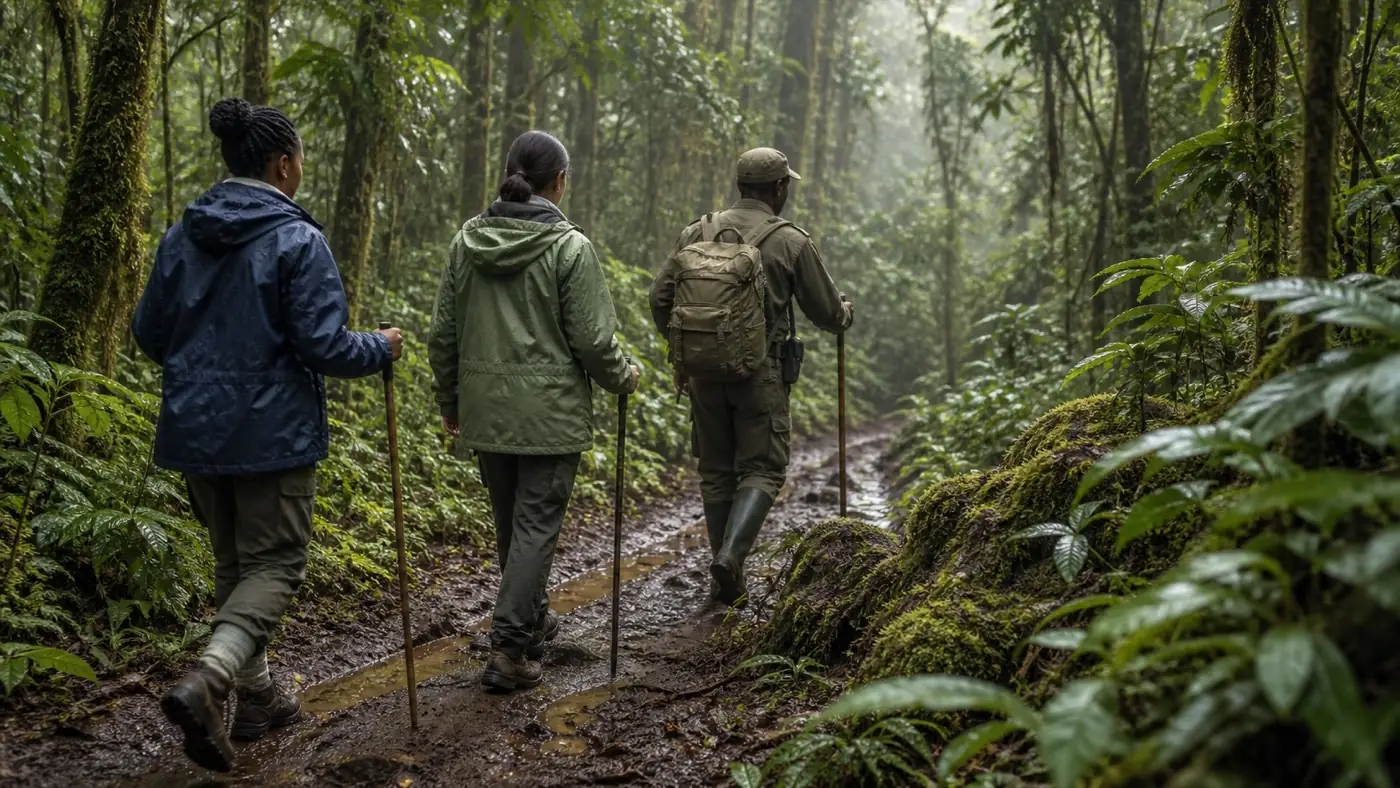
Regulated gorilla trekking is designed to reduce risk, but it is not risk-free. The most likely problems are often ordinary—slips, fatigue, illness and transport disruption—while the most memorable risk, proximity to a powerful wild animal, is managed by habituation, limited access and ranger instructions.
Risk 1: illness transmission
Humans and gorillas are close biological relatives, and respiratory disease can pass between us. This is an animal-welfare risk as well as a traveler issue. Report symptoms, follow mask and distance rules, do not touch gorillas, and never hide illness to protect a sunk cost.
Risk 2: slips and physical strain
Mud, roots, steep ground and long duration can cause falls or overexertion. Train beforehand, wear grippy boots, use a porter, keep both hands available on difficult ground and tell the guide before a minor problem becomes an evacuation.
Risk 3: gorilla behavior
Habituated does not mean tame. A silverback may display, a youngster may approach, or the group may change direction. Stay calm, keep your voice low, avoid sudden movements, do not stare or run, and follow the ranger’s precise instruction. Generic internet advice never overrides the guide beside you.
Risk 4: destination security and park closure
Conditions can change rapidly. Check your government’s current travel advice, the park authority and your insurer. As of 22 August 2026, Virunga National Park’s official visitor site says gorilla and Nyiragongo treks are closed until further notice. Treat any seller offering normal access there as a red flag.
Risk 5: road travel
Long transfers may expose travelers to nighttime driving, fatigue and variable road conditions. Ask who drives, whether the vehicle has working seat belts, what the daily driving plan is and whether the itinerary depends on unsafe connection times.
Risk 6: payment and documentation
Fraud is a travel-safety issue because a missing permit can strand a traveler far from support. Use official channels or a verifiable licensed operator, demand written terms and keep copies offline. Never misstate residency to obtain a tariff.
A practical safety matrix
| Hazard | Reduce likelihood | Reduce impact |
|---|---|---|
| Respiratory illness | Pre-trip health precautions; honest symptom reporting | Flexible itinerary and suitable insurance |
| Fall | Training, boots, lighter pack | Porter, first aid, prompt communication |
| Wildlife response | Quiet compliance and distance | Follow ranger immediately |
| Closure/disruption | Official checks and buffer days | Insurance and written cancellation terms |
| Road incident | Reputable transport, daylight plan, seat belts | Emergency contacts and coverage |
Insurance questions to ask in writing
- Is gorilla trekking covered at the destination’s elevation?
- Are medical evacuation and repatriation included?
- What happens if official travel advice changes?
- Does illness-related permit loss qualify?
- Are pre-existing conditions excluded?
Rules that protect both sides of the encounter
Participant age limits, group size, viewing duration, mask rules and minimum distance may vary by authority and date. They are not optional etiquette. Confirm current rules, attend the briefing and accept that the ranger may end an encounter to protect the group.
Red flags before booking
- guaranteed touching or “private” access to wild gorillas;
- no named park authority or permit evidence;
- pressure to ignore government advice;
- no illness policy;
- promises that terrain is always easy;
- current Virunga trekking sold despite the official closure.
Bottom line
Most safety comes from boring, excellent preparation: legitimate permits, current official checks, honest health decisions, suitable fitness and calm compliance. Review the ethical rules in our responsible tourism guide.
Sources and verification
- IUCN: Best Practice Guidelines for Great Ape Tourism
- Uganda Wildlife Authority: Gorilla Tracking
- Visit Rwanda: Gorilla Trekking
Fact-checked 22 August 2026. Rules and access can change; follow the ranger and confirm current requirements with the park authority.