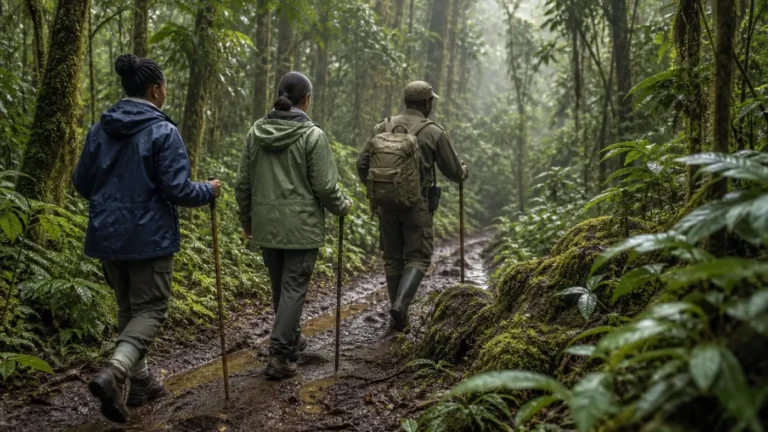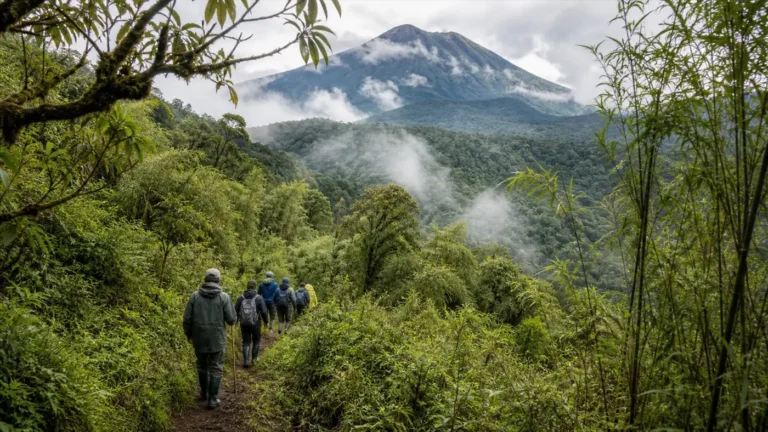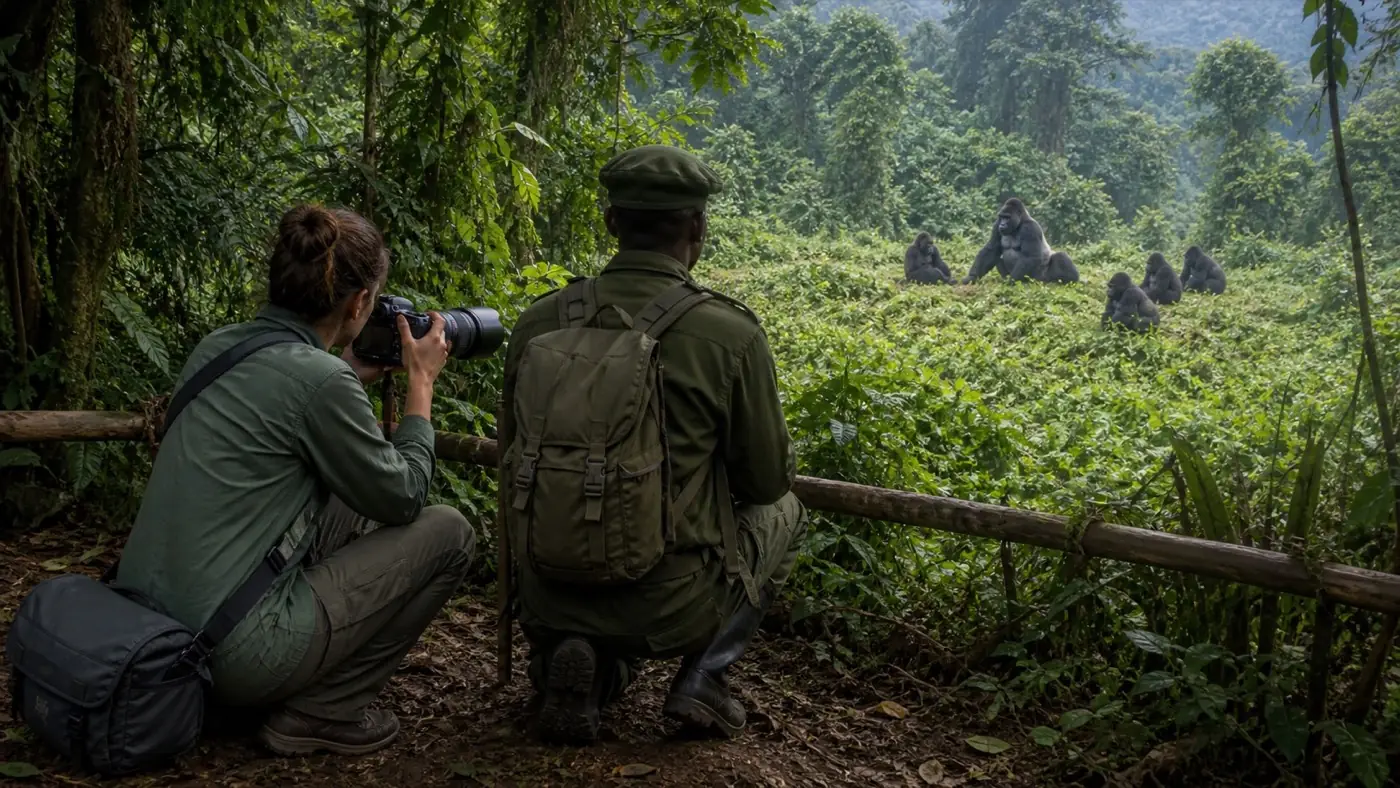
The best gorilla photograph begins with flash disabled, quiet movement and complete obedience to the ranger. Forest light is difficult, gorillas are dark and the viewing time is limited. Prepare settings before the group is found so technology does not consume the encounter.
The non-negotiable rules
- No flash.
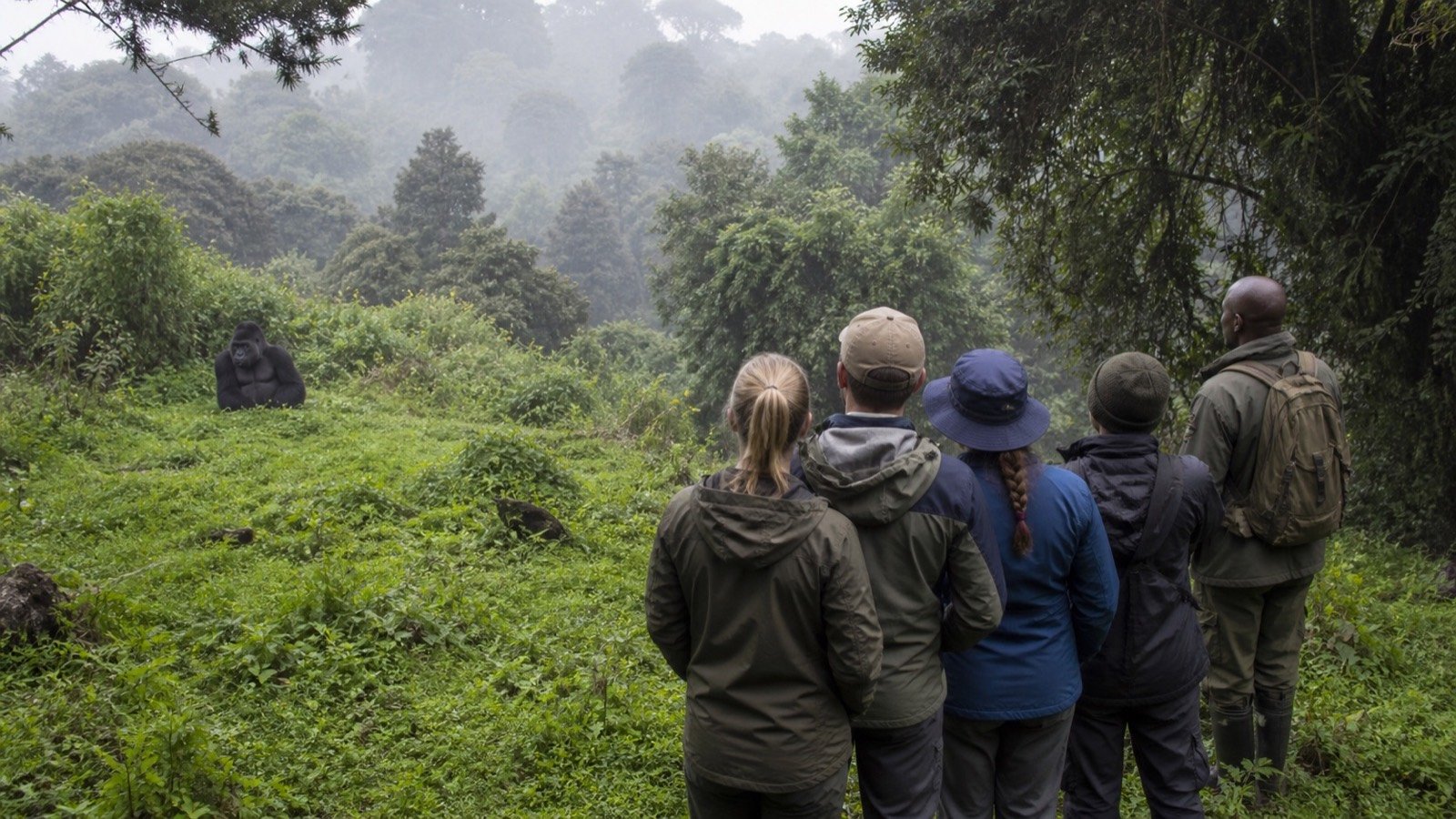
- Stay at the distance and position the ranger gives you.
- Do not touch, feed, call to or imitate gorillas for a reaction.
- Do not leave the group or clear vegetation yourself.
- If a gorilla approaches, stop photographing if instructed and follow the ranger.
- Observe current mask and health rules even if they complicate a selfie.
A reliable starting setup
| Control | Practical starting point | Why |
|---|---|---|
| Mode | Aperture priority or manual with auto ISO | Lets you manage motion and depth quickly |
| Aperture | Wide, but not automatically the lens maximum | Admits light while keeping key facial features sharp |
| Shutter | Fast enough for subject and hand movement | Juveniles move much faster than resting adults |
| ISO | Auto with a tested ceiling | A sharp noisy frame beats a clean blurred one |
| Focus | Continuous AF with animal/eye detection if dependable | Handles subtle movement |
| Flash | Disabled in menu and on body | Prevents accidental firing |
There is no universal number: canopy, rain, lens and camera differ. Practice in a dim park or garden with dark moving subjects.
Choose less equipment
One camera and a versatile telephoto or midrange zoom often outperform a heavy two-body kit you cannot manage on a slope. Know the minimum focusing distance. Fit the strap, format the card and set the clock before the trek. Keep a battery and lens cloth waterproofed.
Meter for dark fur, protect highlights
Camera meters may brighten black fur until pale leaves blow out. Check the histogram without staring at it after every frame. Use exposure compensation thoughtfully and shoot RAW if your workflow supports it. Preserve detail without making a wild gorilla look unnaturally gray.
Compose the habitat, not only a face
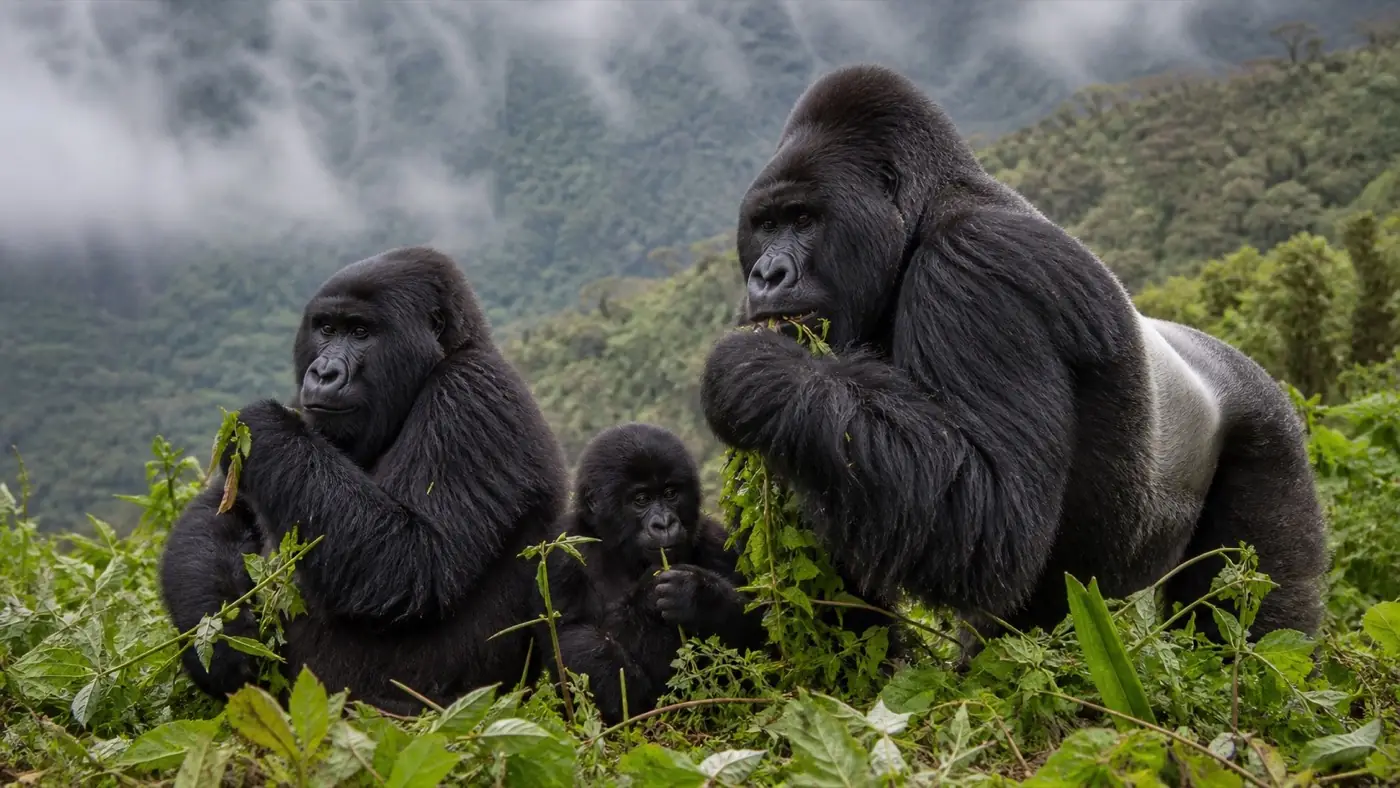
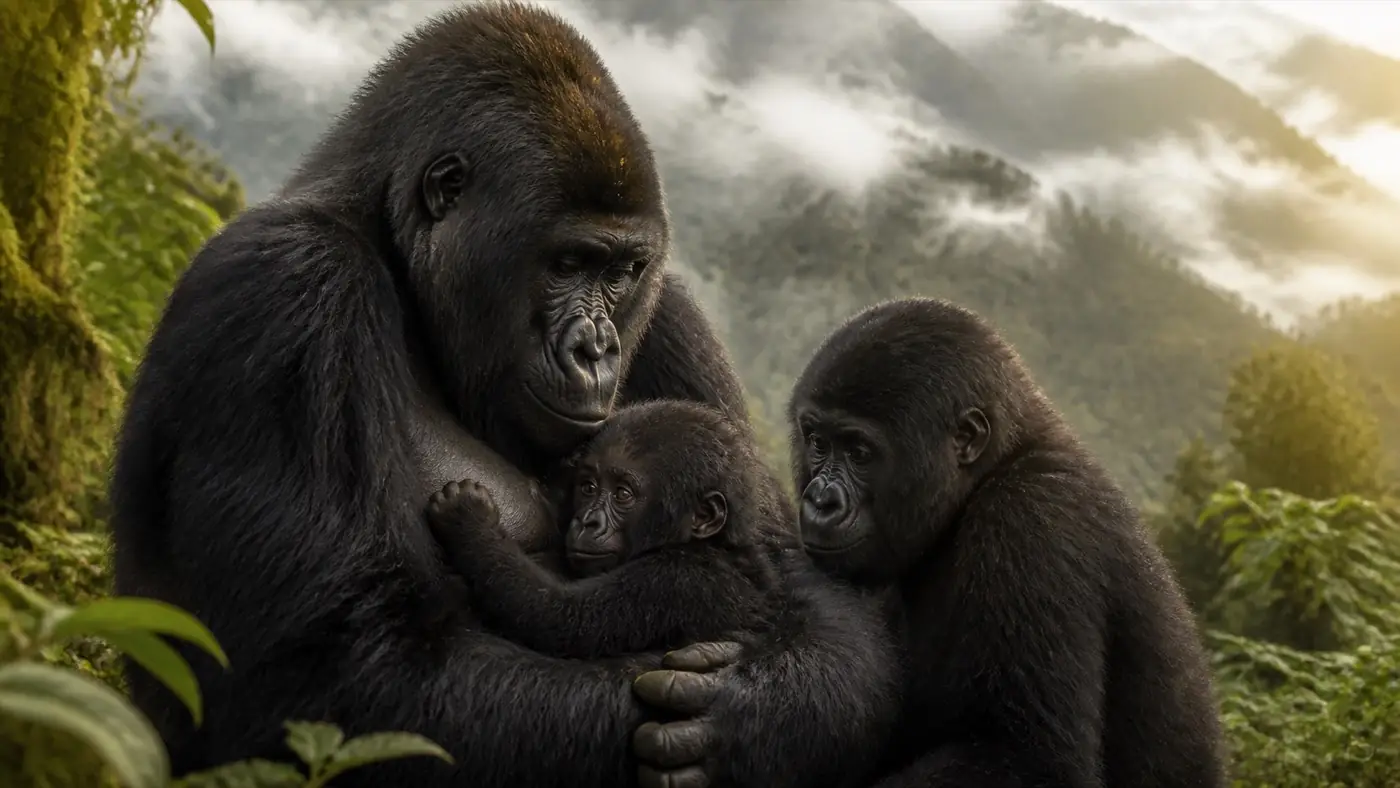
Portraits are powerful, but wider frames tell a rarer story: hands selecting plants, an infant’s position near its mother, mist in bamboo, the scale of a silverback beside dense vegetation. Do not remove leaves. A partially screened gorilla can be an honest picture of forest life.
Behavioral storytelling without baiting
Watch before firing bursts. Feeding has a rhythm; youngsters pause between play; group members exchange glances. Anticipation creates better images than noises or gestures designed to provoke a response. Never geotag sensitive, real-time locations if guides advise against it.
Phone photography
- clean the lens;
- turn off flash and shutter sounds where permitted;
- avoid excessive digital zoom;
- tap the face to focus and slightly reduce exposure if highlights clip;
- record short, steady video rather than filming the entire encounter through a screen.
Sharing ethically
Caption accurately: name the park and species/subspecies only when certain, do not imply touch, and state when an image is heavily composited or AI-generated. Avoid sensational captions about aggression. Credit guides where appropriate and get consent before posting identifiable staff or other visitors.
A five-shot challenge
- one habitat-wide frame;
- one quiet behavior;
- one relationship between group members;
- one anatomical detail such as a hand—without intrusive cropping in the field;
- one minute with the camera lowered.
The picture you do not take
If the ranger tells you to lower the camera, the light is unsafe for movement, or a gorilla is stressed, lower it. Ethical restraint is not a missed opportunity; it is the condition that allows future encounters. Review the wider rules in our responsible gorilla tourism guide.
Sources and verification
- IUCN: Best Practice Guidelines for Great Ape Tourism
- Uganda Wildlife Authority: Gorilla Tracking
- Visit Rwanda: Gorilla Trekking
Fact-checked 22 August 2026. Confirm permits, rules and access with the relevant authority before travel.