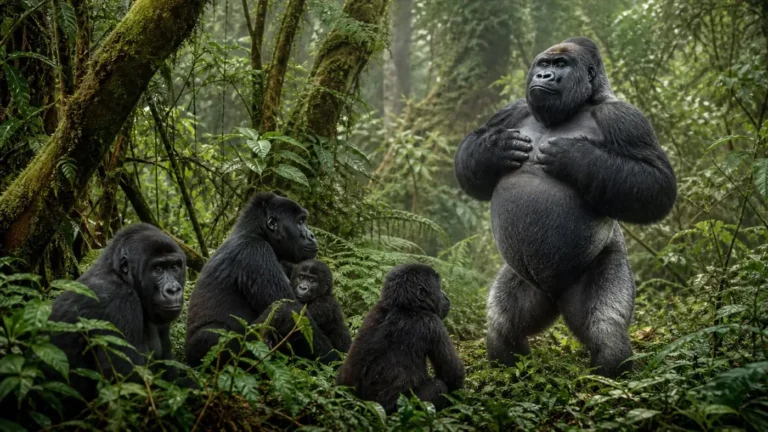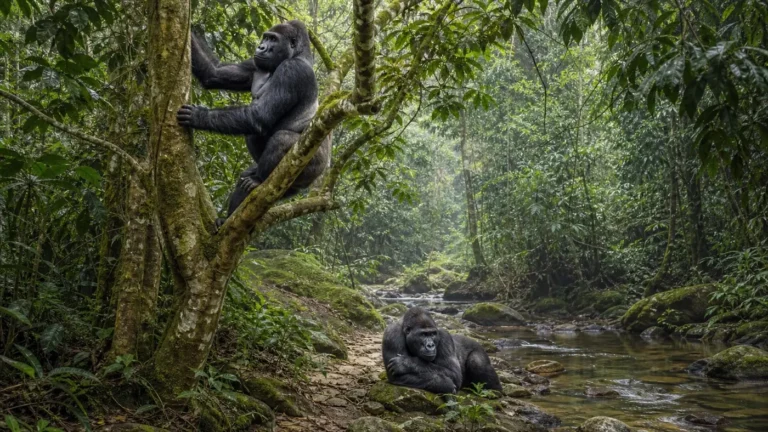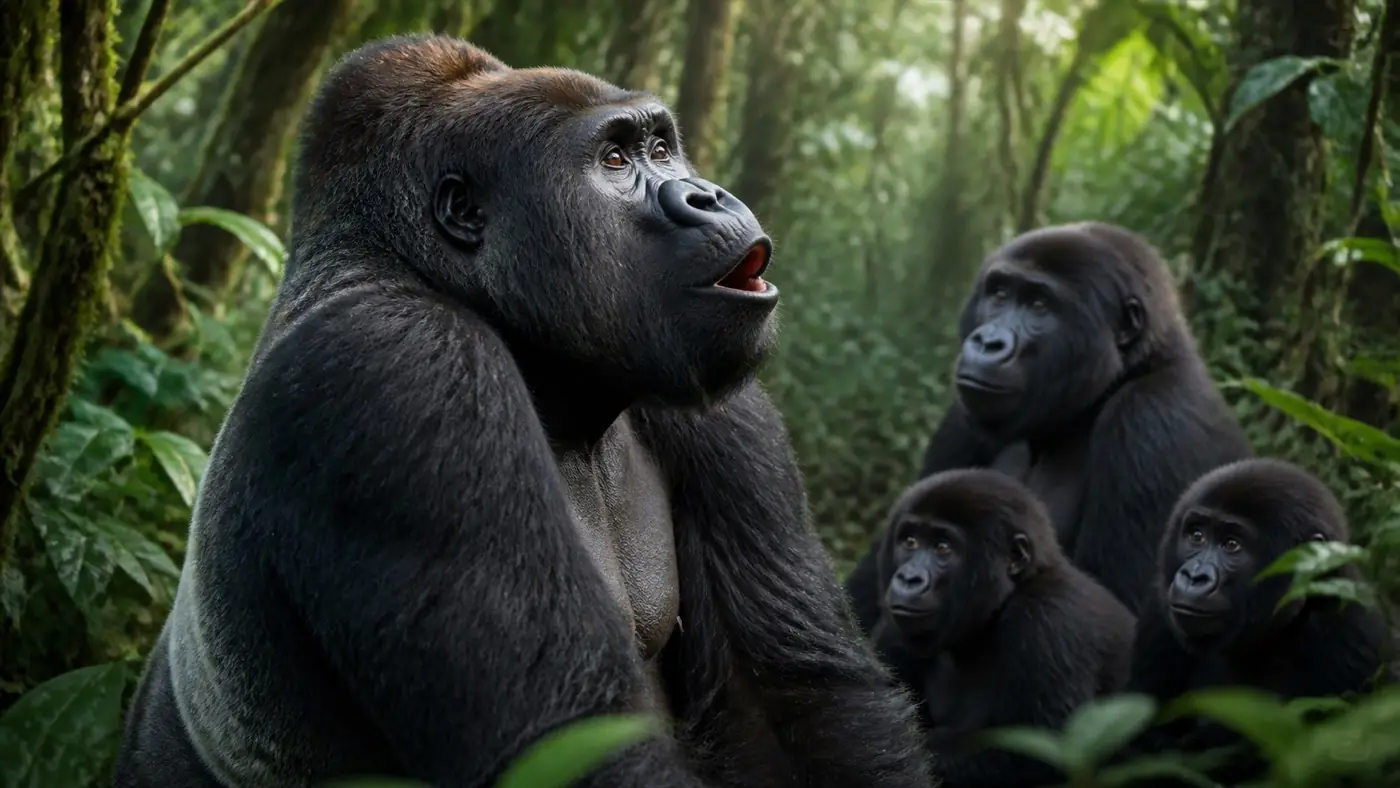
Short answer: Gorillas use a repertoire of soft contact calls, feeding-associated sounds, alarms, screams and louder display calls. Meaning comes from context, caller identity, posture and the listener’s response; one sound rarely translates into one English word.
Why a sound dictionary can mislead
A low grunt during peaceful travel differs from a similar sound during tension. Researchers classify acoustic structure and record what happened before and after the call. Good interpretation is probabilistic: the call makes certain outcomes more likely rather than carrying a fixed sentence.
Common sound categories
| Sound family | Frequent context | Caution |
|---|---|---|
| Soft grunts | Contact, reassurance or group coordination | Context changes interpretation |
| Hums and singing-like calls | Feeding and food enjoyment in some populations | Not every individual calls equally |
| Barks | Alarm or uncertainty | Different bark types may exist |
| Screams | Fear, distress or conflict | Age and social setting matter |
| Roars | High-intensity display | Not automatic evidence of attack |
Food-associated calling
Some gorillas hum or produce singing-like calls while eating, with call rate and type related to particular foods. This may help coordinate feeding or express individual motivation. Research samples are limited, so “gorillas sing because food tastes good” is an engaging hypothesis, not a complete translation.
Calls work with the body
A listener also sees orientation, gaze, facial expression, movement and gesture. In dense vegetation, sound can reach farther; at close range, touch or gesture adds precision. Read the broader guide to gorilla communication.
Can individual voices be recognized?
Calls contain information about the caller, and familiar group members can respond differently from strangers. Body size can influence acoustic properties: larger males produce lower-frequency chest beats, an instrumental rather than vocal signal.
What recording technology adds
Directional microphones and acoustic analysis reveal frequencies humans may miss, while automated forest recorders can monitor soundscapes over long periods. Algorithms still need validated field examples; a model label is not automatically a biological fact.