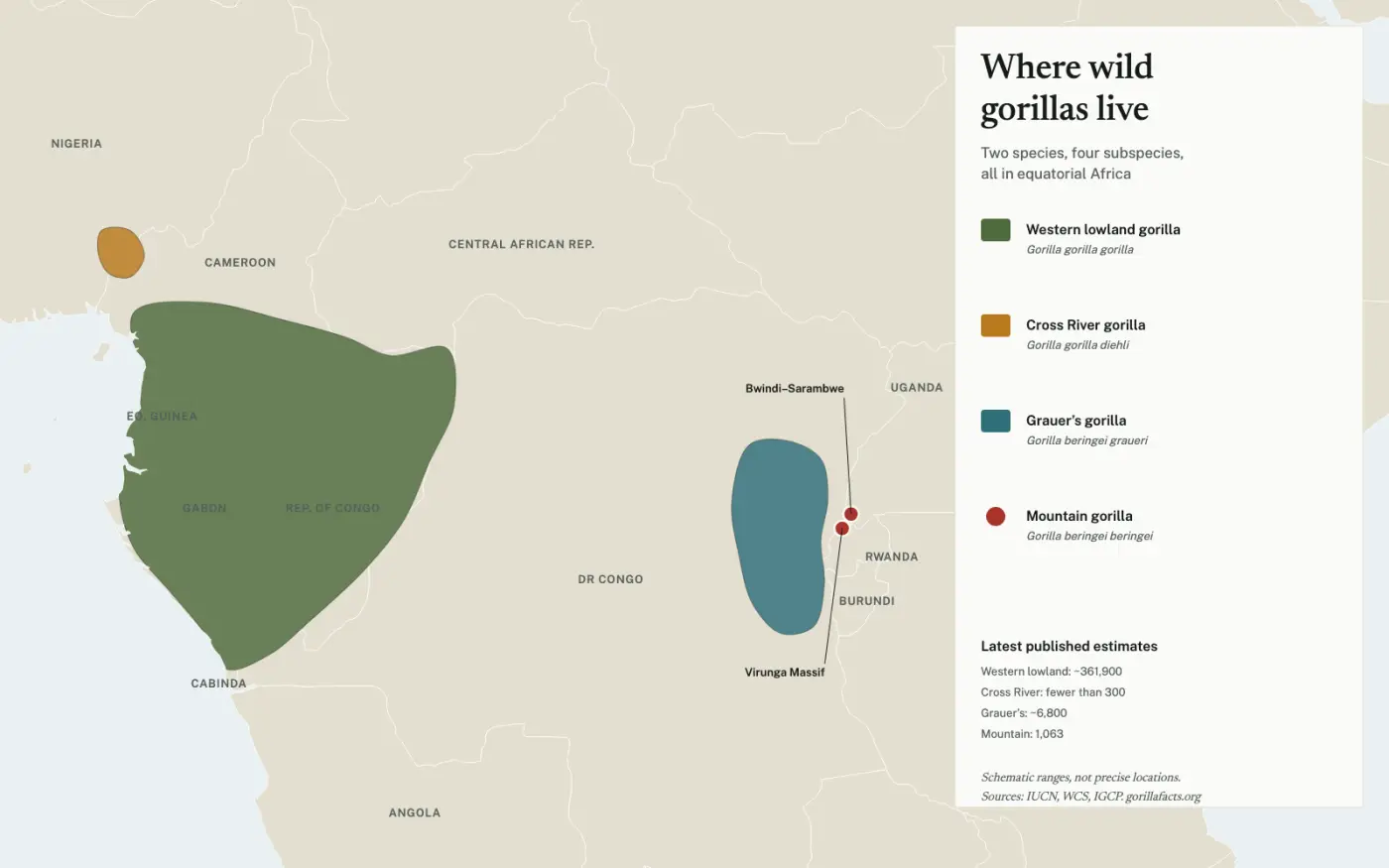
News summary: The World Health Organization reports an ongoing 2026 outbreak of Ebola disease caused by Bundibugyo virus in the Democratic Republic of the Congo, with cases across eastern provinces that include gorilla range. The public WHO updates cited here do not report confirmed infection in wild gorillas.
Situation checked: August 22, 2026. Human case totals change quickly; consult WHO and national health authorities for the current public-health situation.
Current human-health situation
The DRC and Uganda declared the outbreak in May 2026. WHO’s July 17 update described sustained transmission in the DRC and reported cases in Ituri, North Kivu, South Kivu, Haut-Uele and Tshopo. WHO published a further rapid risk assessment on August 20.
This is first and foremost a human public-health emergency. Gorilla Facts does not provide personal medical or travel advice. Readers should rely on WHO and the responsible national health authority rather than wildlife websites for health decisions.
Why conservation teams pay attention
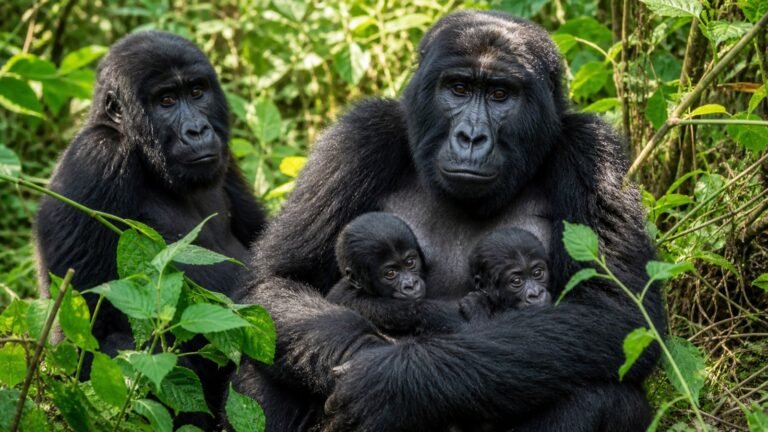
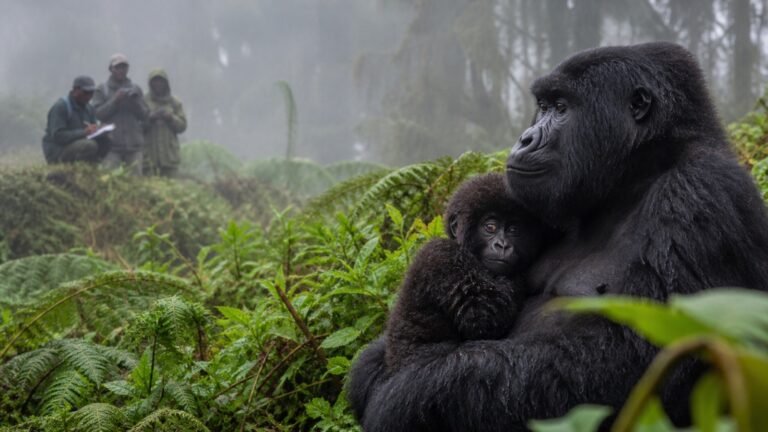
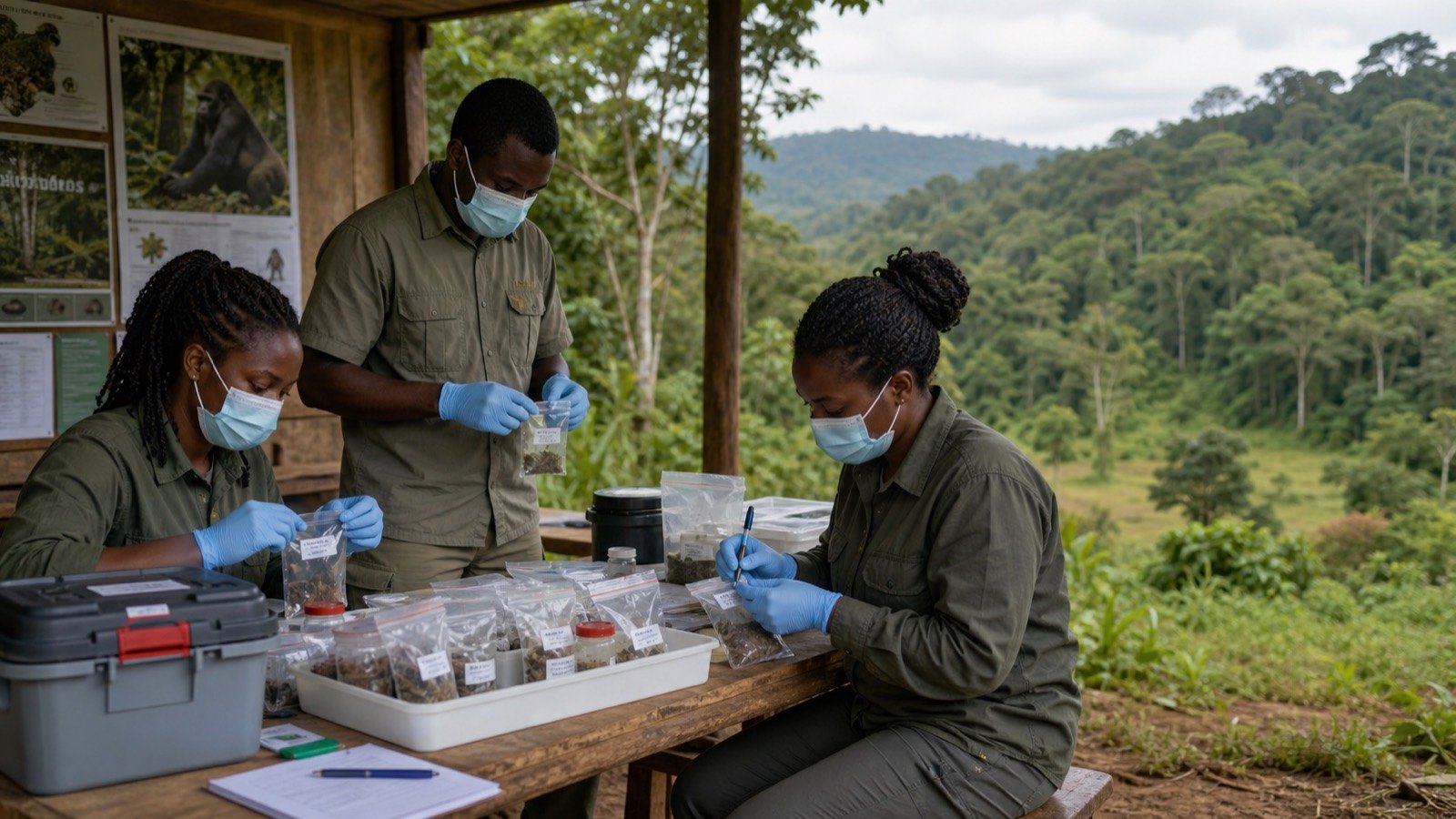
Ebola viruses have caused severe mortality in western gorillas during previous outbreaks. Gorillas are also susceptible to some human respiratory and gastrointestinal pathogens. An outbreak in or near great-ape landscapes therefore increases the importance of surveillance, staff health protocols and coordination between public-health and wildlife authorities.
Risk is not the same as evidence of infection. The sources reviewed for this report do not establish that mountain gorillas, Grauer’s gorillas or other wild gorillas have contracted Bundibugyo virus during this outbreak.
What should be monitored?
- Official wildlife-authority reports of unusual gorilla illness or mortality
- Changes to park access or tourism rules
- Diagnostic evidence identifying a virus in wildlife
- Guidance for rangers, veterinary teams and nearby communities
- Stigma or misinformation that interferes with human outbreak response
Avoid unsupported conclusions
A gorilla illness near an outbreak would require veterinary and laboratory investigation. It should not be labeled Ebola from symptoms or proximity alone. Likewise, previous Ebola impacts on western gorillas do not prove identical susceptibility or exposure for every gorilla subspecies.
Conservation and community health are connected
Effective response protects people first while reducing opportunities for pathogens to move between humans and wildlife. Community engagement, safe clinical care, surveillance and clear communication support both goals. Conservation messaging must not stigmatize affected communities or portray wildlife protection as more important than human lives.
Background: disease and other gorilla threats and gorilla ranges by subspecies.
Sources
- World Health Organization, DRC 2026 Ebola emergency page, including the August 20 risk assessment.
- WHO Disease Outbreak News, July 17, 2026: Bundibugyo virus disease situation update.
- Strindberg et al. (2018), evidence on disease as a western gorilla threat, Science Advances.