Short answer: Wild gorillas live only in equatorial Africa. Western gorillas occupy forests across west-central Africa, while eastern gorillas live in the eastern Democratic Republic of the Congo and, for mountain gorillas, Uganda and Rwanda. Rivers, mountains and human-modified landscapes separate many populations.
Gorilla range at a glance
| Taxon | Main range | Typical habitat |
|---|---|---|
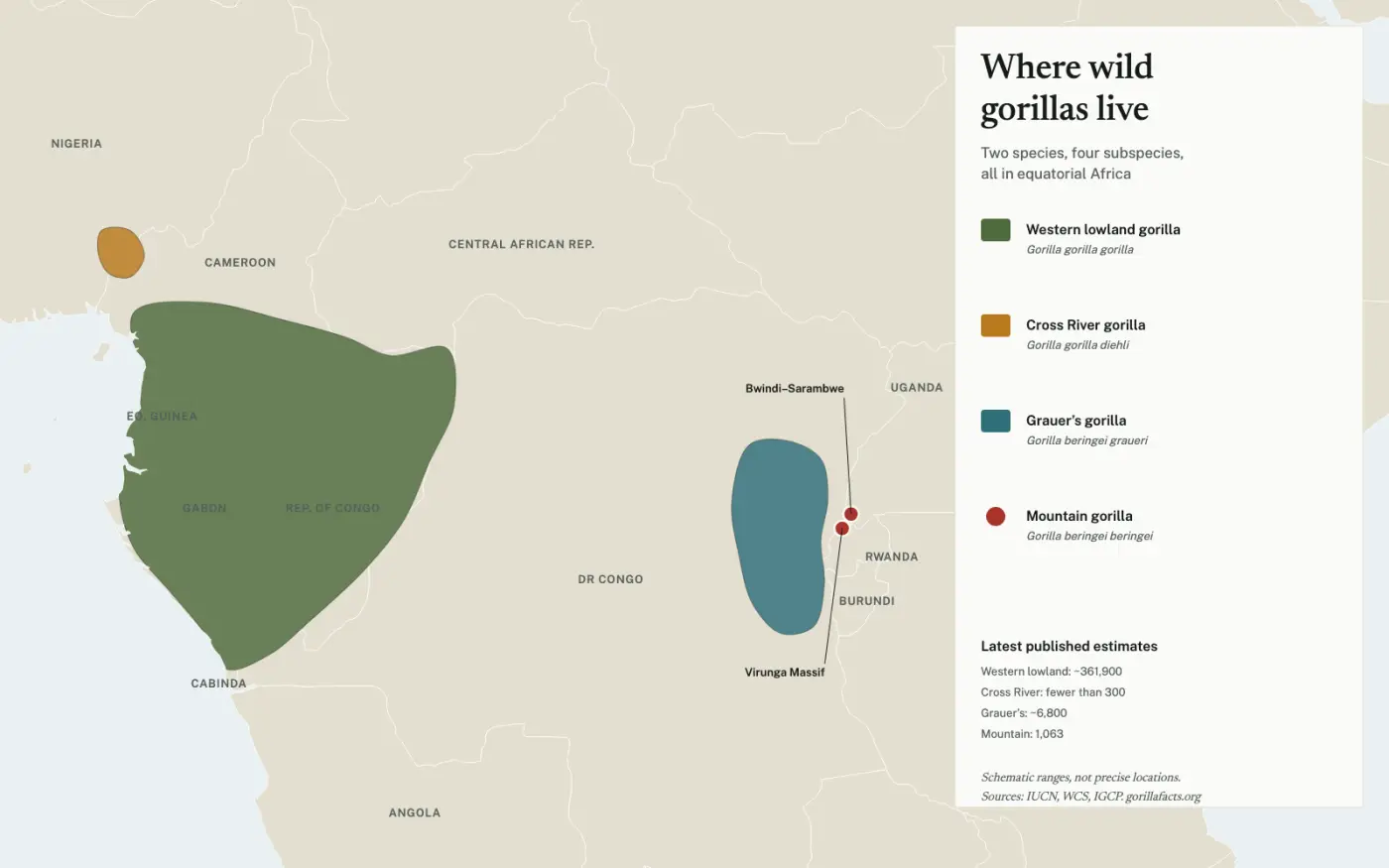
| Western lowland gorilla | Angola (Cabinda), Cameroon, Central African Republic, Equatorial Guinea, Gabon and Republic of the Congo | Lowland rainforest, swamp forest and secondary forest |
| Cross River gorilla | Nigeria–Cameroon border region | Rugged forested hills and mountains |
| Grauer’s gorilla | Eastern Democratic Republic of the Congo | Lowland, transitional and montane forest |
| Mountain gorilla | DRC, Rwanda and Uganda | Afromontane and high-elevation forest |
The map at the top of this page shows these ranges schematically. It is a summary, not precise location data.
Western gorilla habitat
Western lowland gorillas have the widest gorilla distribution. They occur across much of the Congo Basin, where habitat can include mature rainforest, regenerating forest, swamp forest and forest clearings. Fruit availability changes with season and place, influencing how far groups travel and what they eat. The Smithsonian’s western lowland gorilla profile describes their broad Congo Basin distribution and forest ecology.
Cross River gorillas have a much smaller and fragmented range in forested highlands along the Nigeria–Cameroon border. Remaining groups are separated by farms, roads and settlements. Protecting corridors between forest patches is therefore important as well as protecting the core sites themselves.
Eastern gorilla habitat
Grauer’s gorillas—also called eastern lowland gorillas—occur only in eastern DRC. Their range covers a substantial elevation gradient, from lowland forest to montane habitats. Political instability, mining, hunting and habitat conversion have made surveys and protection difficult in parts of this range.
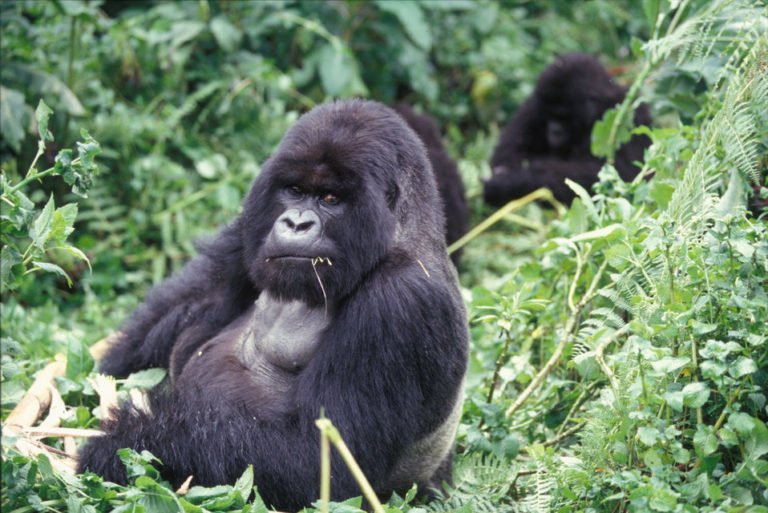
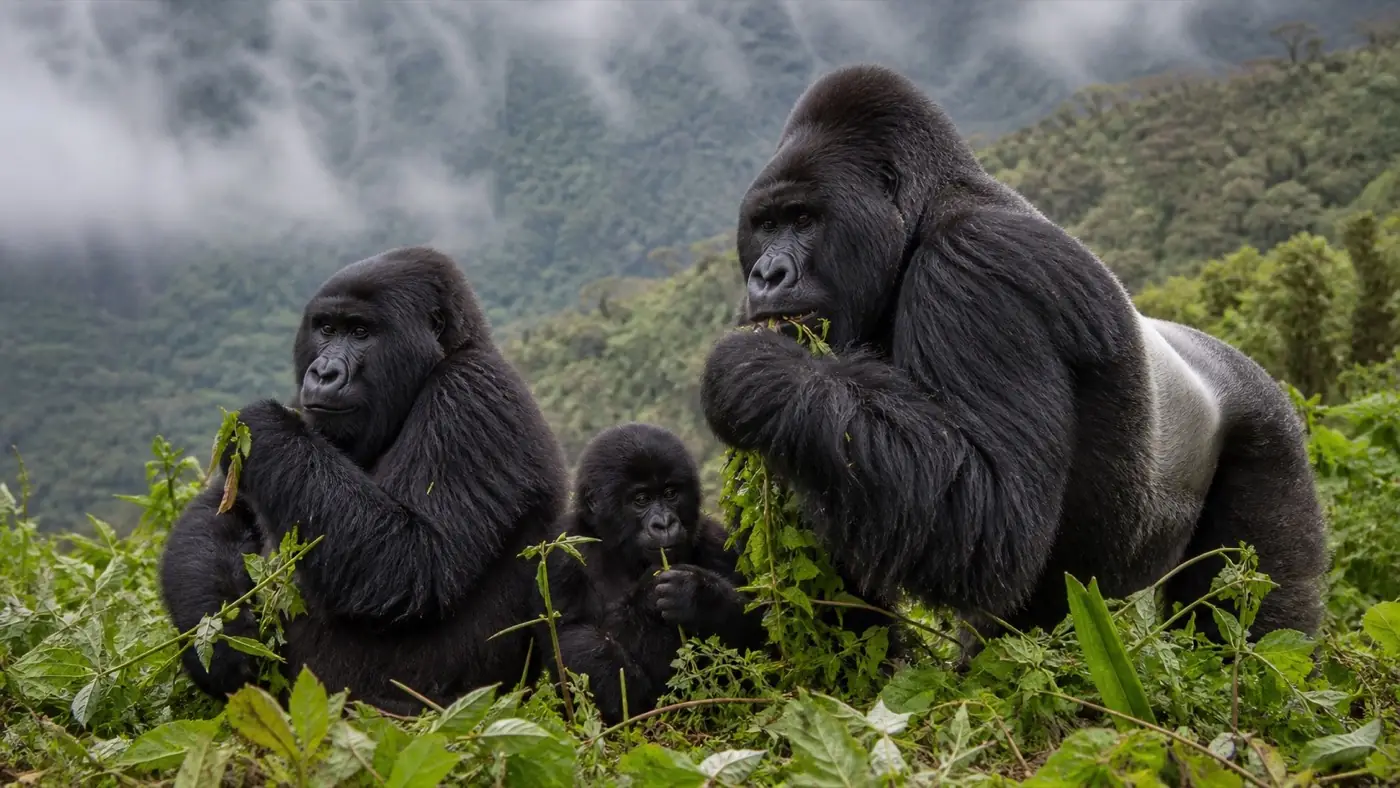
Mountain gorillas occupy two isolated landscapes: the Virunga Massif and the Bwindi–Sarambwe ecosystem. The International Gorilla Conservation Programme identifies their protected areas in DRC, Rwanda and Uganda. See our detailed guide to mountain gorilla habitat.
Why gorilla species are geographically separated
The Congo River and its tributaries form major natural barriers for gorillas and other forest mammals. Long-term changes in climate and forest cover also influenced where ancestral populations could move. Today, agriculture, roads, settlements and resource extraction add human-made barriers that can isolate populations further.
What makes good gorilla habitat?
- Reliable food: leaves, stems, shoots, pith, bark and seasonally available fruit.
- Connected forest: enough space for feeding, nesting, dispersal and gene flow.
- Low hunting pressure: gorillas reproduce slowly and cannot quickly replace losses.
- Disease protection: great apes are vulnerable to pathogens shared with humans.
- Effective management: ranger protection, community participation and cross-border coordination.
Do gorillas live in trees?
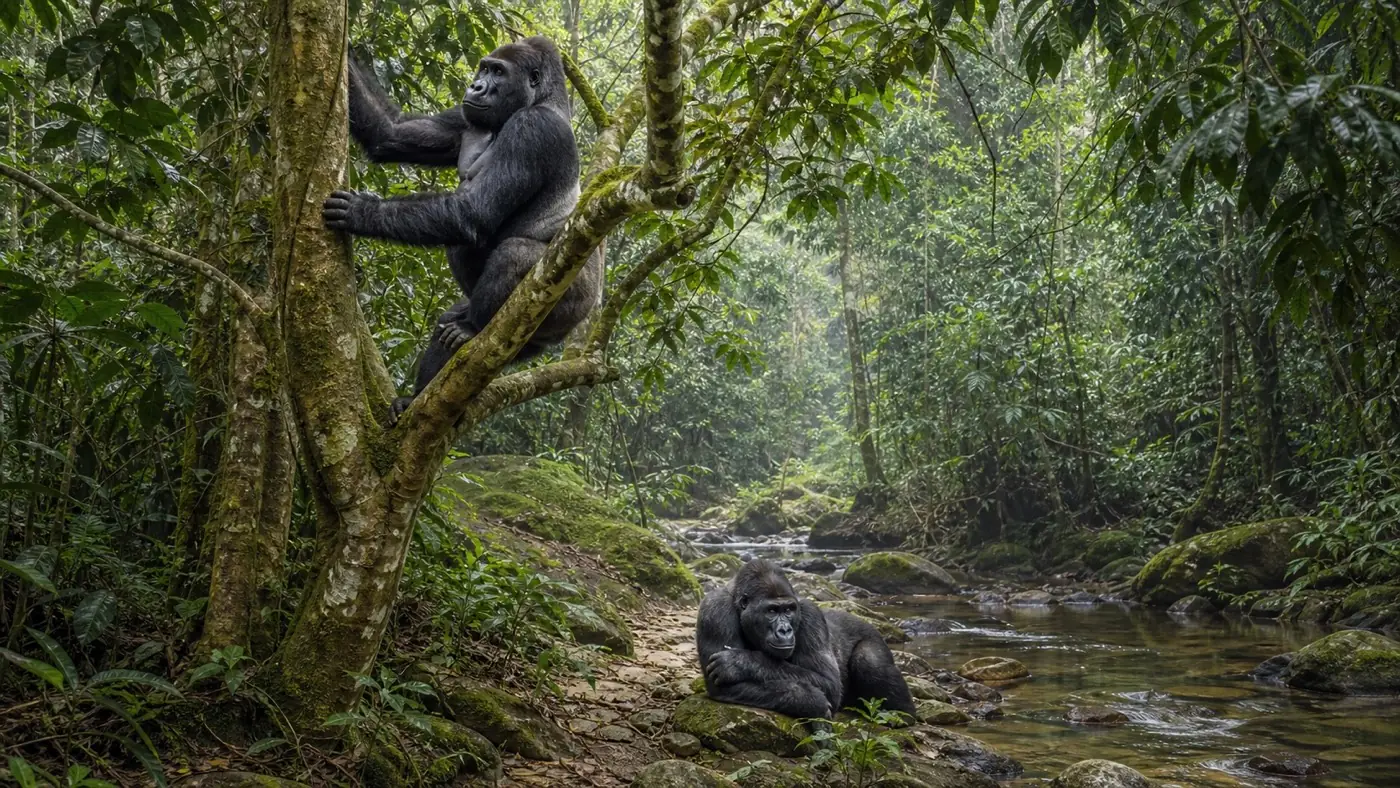
Gorillas can climb, particularly when young or when feeding, but they spend much of their time on the ground. They build nests for rest and sleep; nests may be on the ground or in vegetation depending on age, body size, habitat and local conditions. Learn more in How Gorillas Sleep and Build Nests.
Do gorillas live outside Africa?
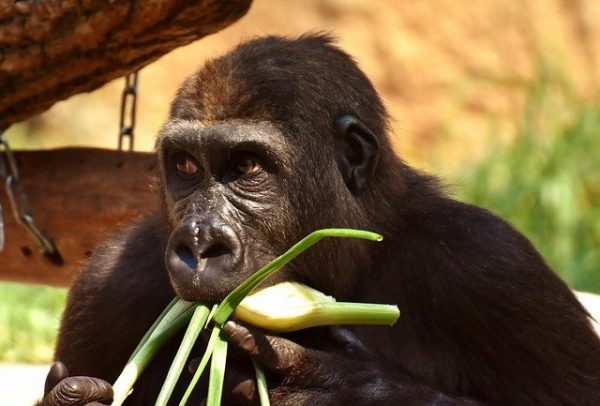
There are no wild gorilla populations outside Africa. Gorillas elsewhere live under human care in accredited zoological institutions. Zoo habitats are managed environments, not part of the species’ native range.
Conservation context
Habitat protection alone is not sufficient, but it is foundational. Gorilla conservation also addresses illegal killing, snares, infectious disease, mining, conflict and community needs. Read why gorillas are endangered and how the threats differ among taxa.
Sources
- Smithsonian’s National Zoo: western lowland gorilla
- International Gorilla Conservation Programme: mountain gorilla locations
- ITIS: eastern gorilla taxonomy
Related: compare the two species and four subspecies, then review the latest population estimates by subspecies.
Editorial note: Range descriptions are summaries, not precise location data. Sensitive wildlife locations should not be published in a way that increases risk.