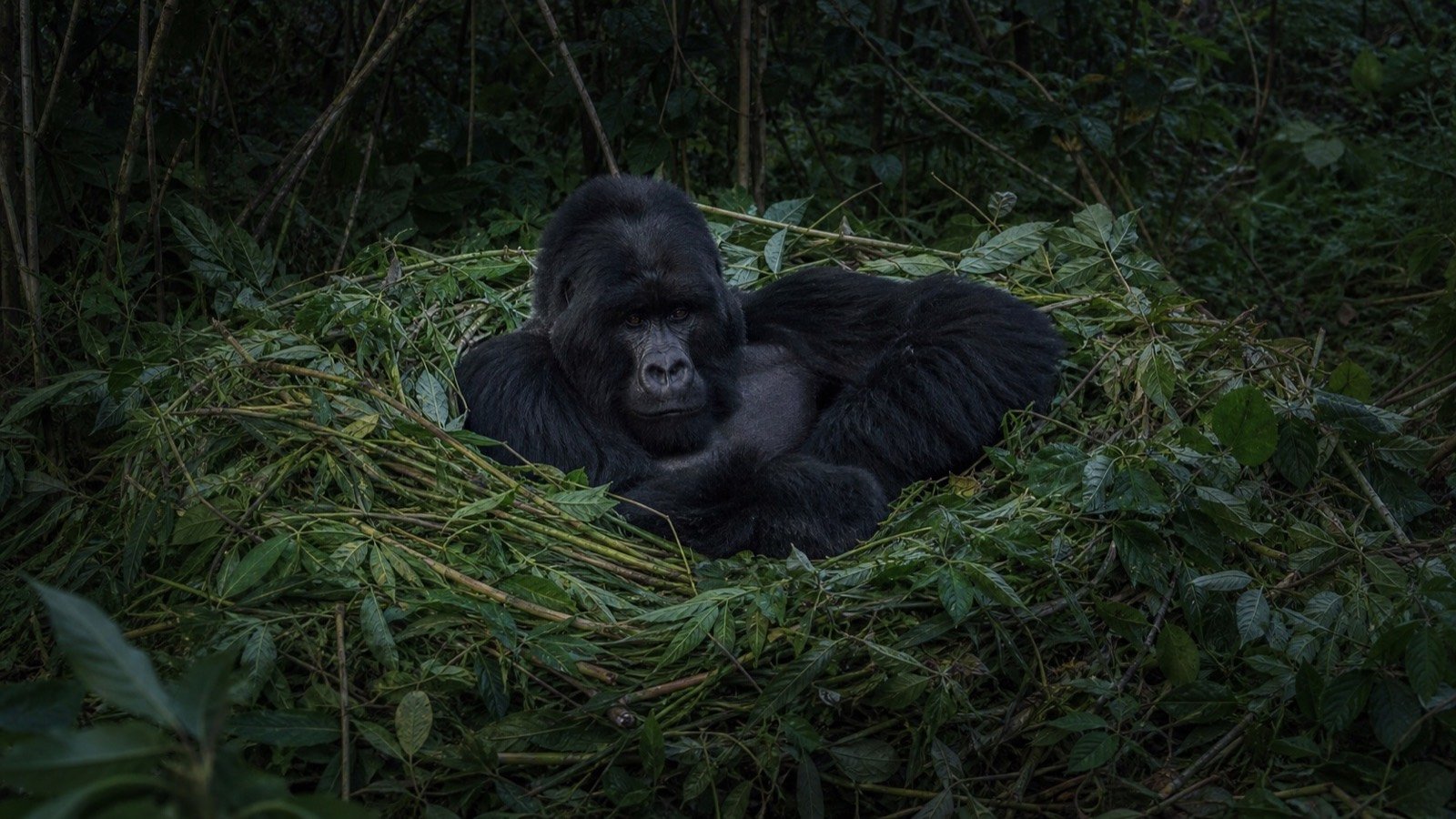
Short answer: Gorillas usually construct a new nest from vegetation for each night’s sleep. Nests may be on the ground or in trees depending on the individual, available vegetation, safety and local ecology. Infants initially share their mother’s nest.
How a gorilla builds a nest
A gorilla bends, breaks and layers nearby branches, leaves or herbaceous plants into a platform that supports the body. Construction style ranges from a simple arrangement of vegetation to a more elaborate platform. Materials are usually gathered within reach of the nest site.
Nest building is a normal great-ape behavior rather than an occasional response to cold weather. Construction can improve comfort, insulation and sleep stability while keeping the body away from wet or uneven ground.
Ground nests and tree nests
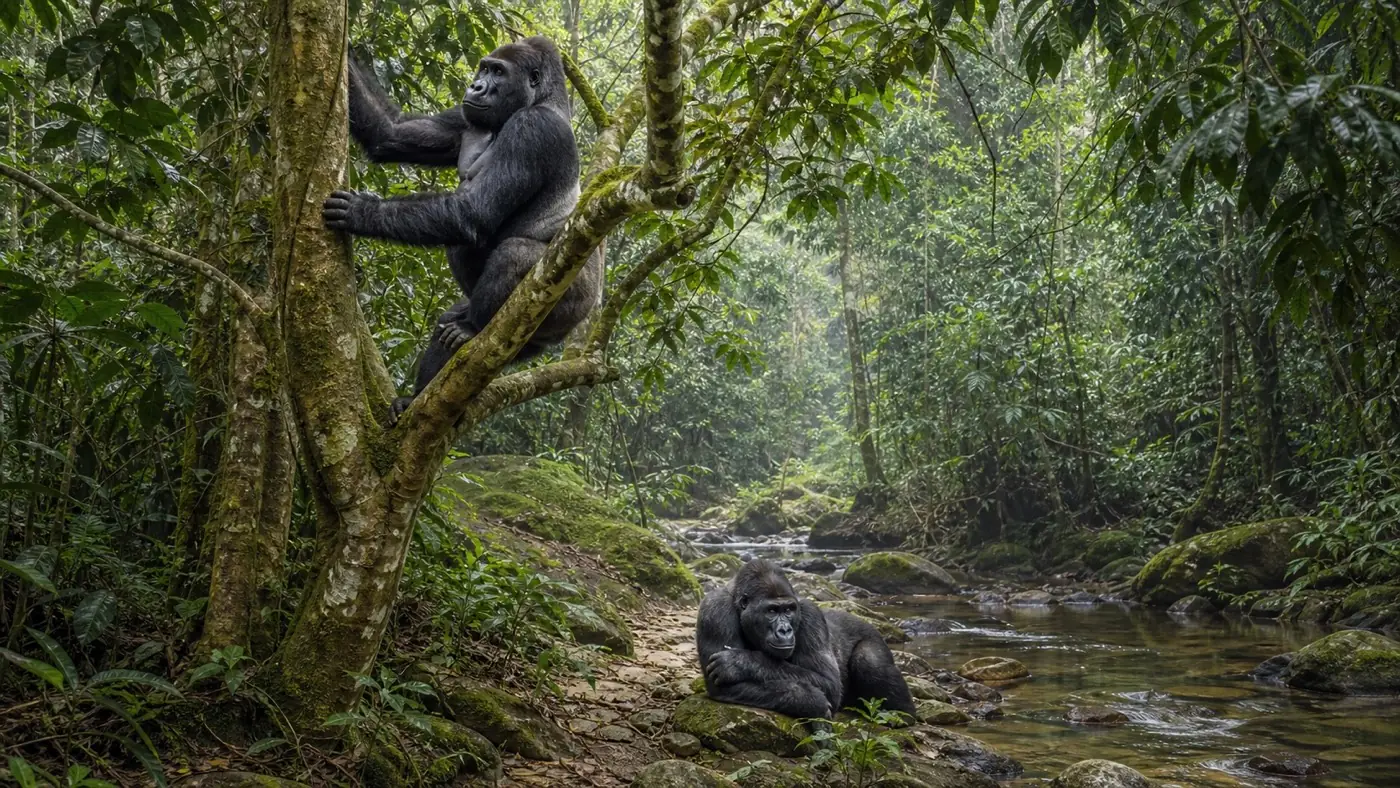
Large adult males often sleep on the ground, where their body mass makes thin branches less suitable. Females and younger gorillas may nest above ground more often, but patterns vary among populations and habitats. A tree nest is not automatically safer or “better”; the choice reflects vegetation, weather, disturbance and individual circumstances.
Do gorillas reuse nests?
Gorillas generally build fresh night nests, although reuse or day nests can occur. Researchers should not convert every old nest into one gorilla-night without accounting for nest production and decay. Rainfall, plant species and insects all affect how long a nest remains visible.
Infants and sleeping
Young infants sleep with their mothers and depend on them for warmth, transport and protection. As juveniles become more independent, they learn to construct their own nests. The transition is gradual rather than a single fixed birthday.

What nests reveal to scientists
Nest surveys are one of the most important non-invasive tools for studying gorillas in forests where direct sightings are rare. Teams record nest groups along designed survey lines, estimate nest age and collect dung for genetic analysis.
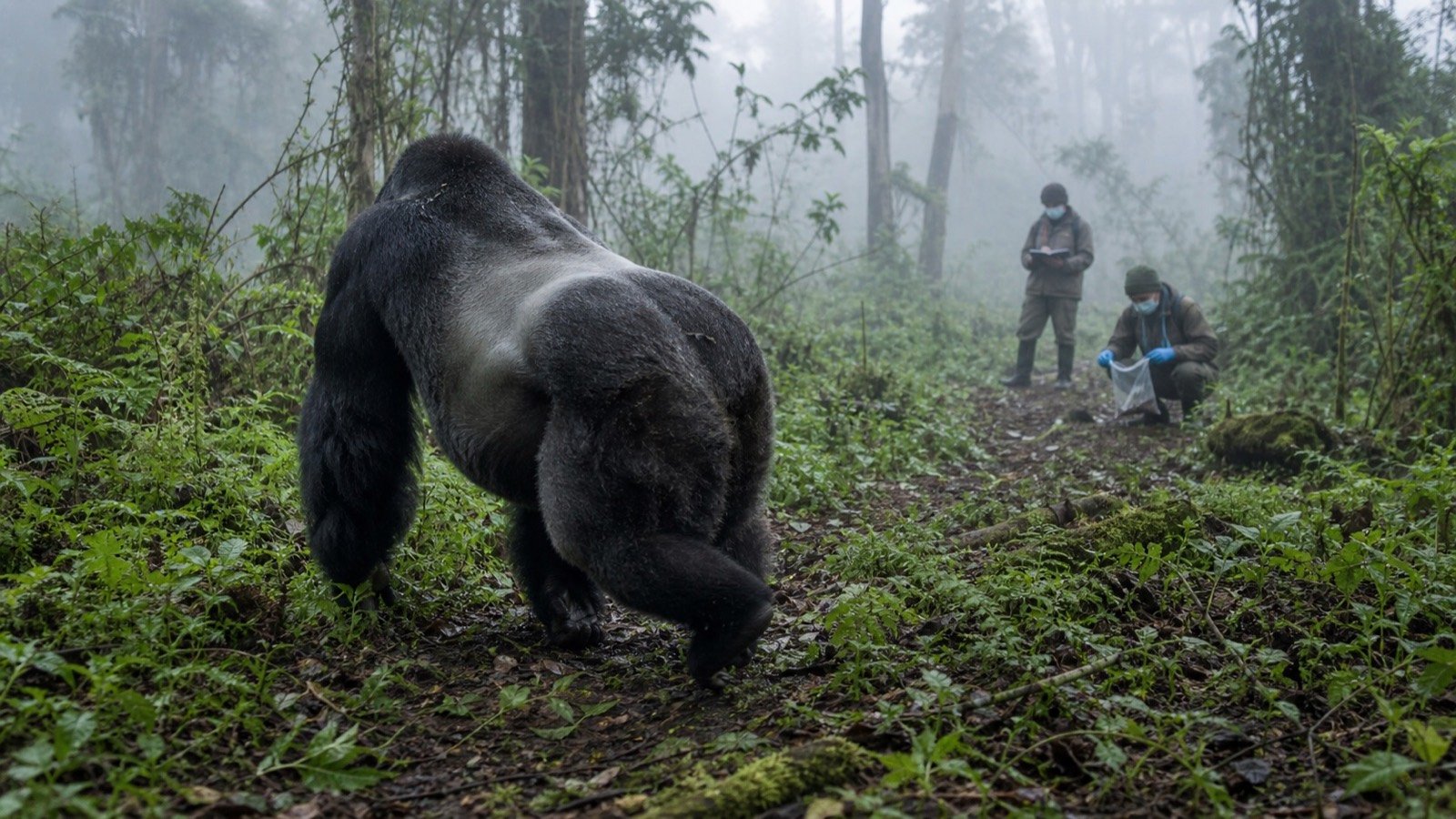
Turning nest counts into a population estimate requires more than counting visible platforms. Researchers account for how often gorillas build nests, how quickly nests decay, the probability of detection and the area sampled. That is why our gorilla population guide presents estimates with their methods and survey dates.
Do gorillas sleep all night?
Like other animals, gorillas can change posture, wake briefly or respond to weather and group movement. Field observation of sleep is difficult because researchers avoid disturbing gorillas after nesting and visibility is limited. Claims about an exact universal number of sleeping hours should therefore identify how and where sleep was measured.
Nests and conservation
Nests contain biological information but are also sensitive wildlife signs. Untrained visitors should not approach, handle or collect material from wild nests. Research teams use hygiene protocols because feces and vegetation can transmit pathogens in either direction.
Learn more about gorilla habitat, group life and feeding ecology.
Sources
- Deeming (2023), review of mammalian nest construction, including gorilla nesting.
- Strindberg et al. (2018), range-wide great-ape survey methods, Science Advances.
- IUCN (2018), best-practice guidelines for surveys and monitoring of great ape populations.