
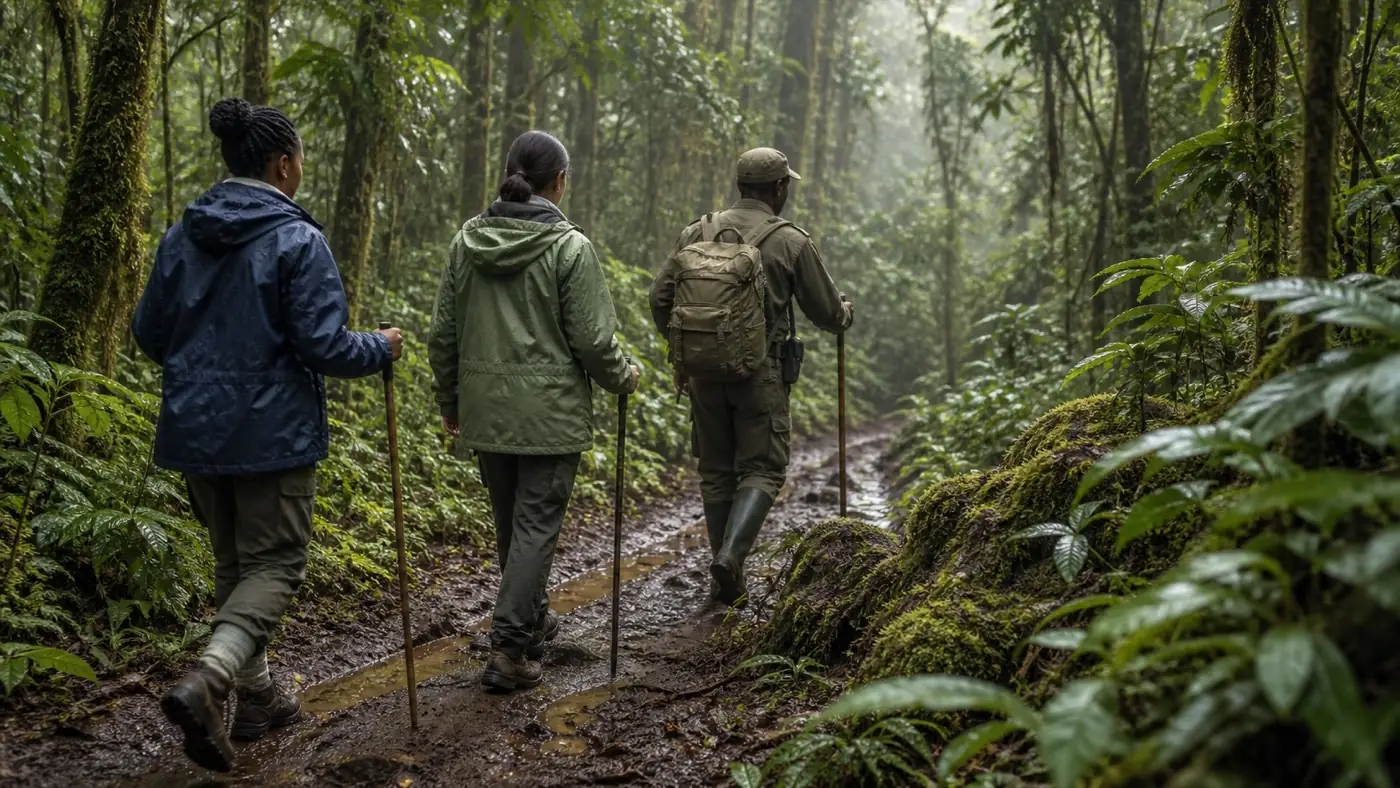
Wear broken-in hiking boots, long trousers, a long-sleeved top and a breathable rain shell for gorilla trekking. Pack light, waterproof the contents, and prioritize grip and quiet movement over safari style.
The wear-it list
- Boots: grippy, supportive and already tested; waterproofing helps, but drainage and fit matter more than marketing.
- Long trousers: durable enough for vegetation, flexible enough for high steps.
- Long sleeves: light protection from scratches and insects.
- Rain shell: breathable with a hood; ponchos can snag and flap.
- Hiking socks: moisture-managing, with a spare pair in a dry bag.
- Hat: brimmed for sun and dripping foliage, if it does not block your view.
Some trekkers tuck trousers into socks to deter insects. It is not glamorous; neither is discovering an ant column has chosen your ankle.
What belongs in the daypack
| Essential | Why |
|---|---|
| Water and food as instructed | Energy for an uncertain duration; never eat near gorillas |
| Pack liner/dry bags | More reliable than trusting a backpack’s coating |
| Personal medication | Carry it yourself and tell a companion where it is |
| Small first-aid kit | Blister care and minor needs; rangers manage emergencies |
| Camera/phone, spare battery | Low light drains batteries; flash must stay off |
| Lens cloth | Humidity and rain fog glass quickly |
| Mask | Follow the authority’s current health protocol |
Optional items worth considering
- light gardening gloves for vegetation, when locally recommended;
- gaiters for mud and debris;
- collapsible trekking pole only if the park permits it and you can use it safely;
- insect repellent and sunscreen;
- a clean shirt secured in a dry bag for after the trek.
What not to bring
- drones;
- flash photography equipment you cannot reliably disable;
- strong perfume, speakers or noisy dangling gear;
- food intended for use during the gorilla encounter;
- camouflage clothing without checking local restrictions;
- single-use clutter likely to become litter.
Camera packing without carrying a studio
Choose one camera and a versatile lens you know. Lens changes in rain and forest debris waste encounter time. Put the strap on before the gorillas are located, use silent mode if it truly makes the camera quieter, and set flash to disabled—not “auto.” A small microfiber cloth often earns its space more than a second heavy lens.
Rainproofing that works
Use layers: a pack liner around everything, small dry bags for electronics and medication, and a rain cover as the outer defense. Keep the rain shell accessible rather than buried under lunch. Test the system in a shower at home with paper inside.
Fit beats brand
New premium boots can cause more misery than familiar mid-priced ones. Walk hills in your full outfit before departure. Check whether trousers bind at the knee, whether the shell vents while climbing, and whether your pack bounces when you step over a log.
Printable final check
Boots ☐ Long trousers ☐ Long sleeves ☐ Rain shell ☐ Dry bags ☐ Water ☐ Food instructions checked ☐ Medication ☐ Mask ☐ Flash disabled ☐ Spare power ☐ Permit/passport instructions confirmed ☐
Equipment reduces discomfort; it does not replace fitness or ranger instructions. Pair this list with our honest difficulty guide.
Sources and verification
- IUCN: Best Practice Guidelines for Great Ape Tourism
- Uganda Wildlife Authority: Gorilla Tracking
- Visit Rwanda: Gorilla Trekking
Fact-checked 22 August 2026. Rules and access can change; follow the ranger and confirm current requirements with the park authority.