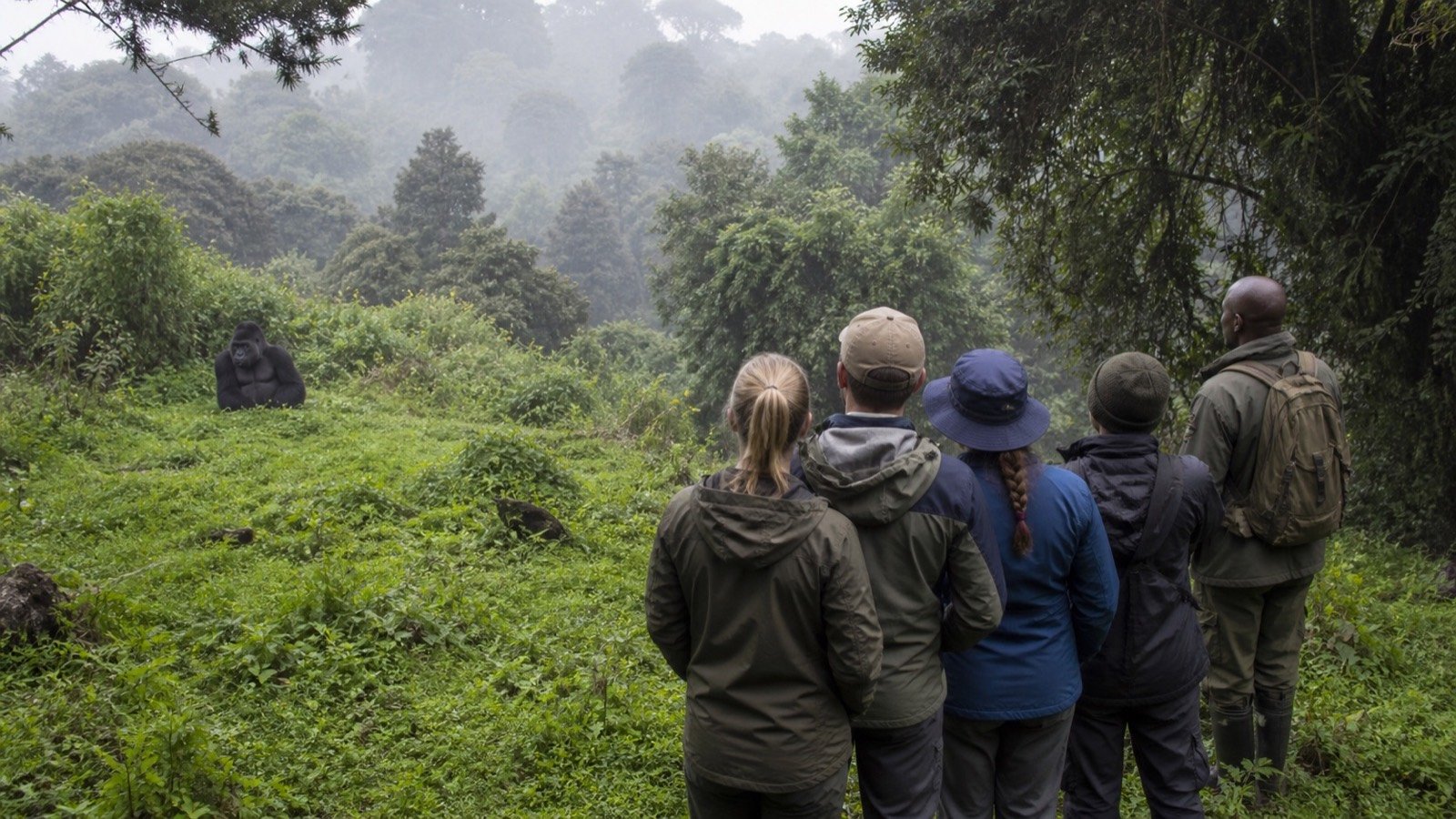
Short answer: Responsible gorilla tourism means following the official park’s distance, time, group-size and health rules; never visiting when ill; avoiding direct contact; and choosing operators that support conservation and local communities. A permit is not permission to ignore wildlife welfare.
Rules differ by country and can change during disease outbreaks. The responsible wildlife authority’s current instructions always take precedence over general advice on this page.
Why distance matters
Gorillas can acquire some human pathogens, including respiratory infections. Distance reduces opportunities for droplets, direct contact and contaminated objects to transmit disease. IUCN great-ape tourism guidance has historically described seven metres as a minimum for gorilla visits; individual authorities may require more distance or introduce temporary restrictions.
If a gorilla approaches, visitors should follow the guide’s instructions rather than moving closer, touching the animal or blocking its route. A gorilla choosing to approach does not remove the visitor’s responsibility.
Do not visit when ill
Fever, cough, sore throat, vomiting, diarrhea or other potentially infectious symptoms are reasons to notify the operator and wildlife authority. Concealing illness to avoid losing a permit can put an endangered population at risk. Mask and hygiene requirements should be followed exactly where imposed.
Keep the encounter low-impact
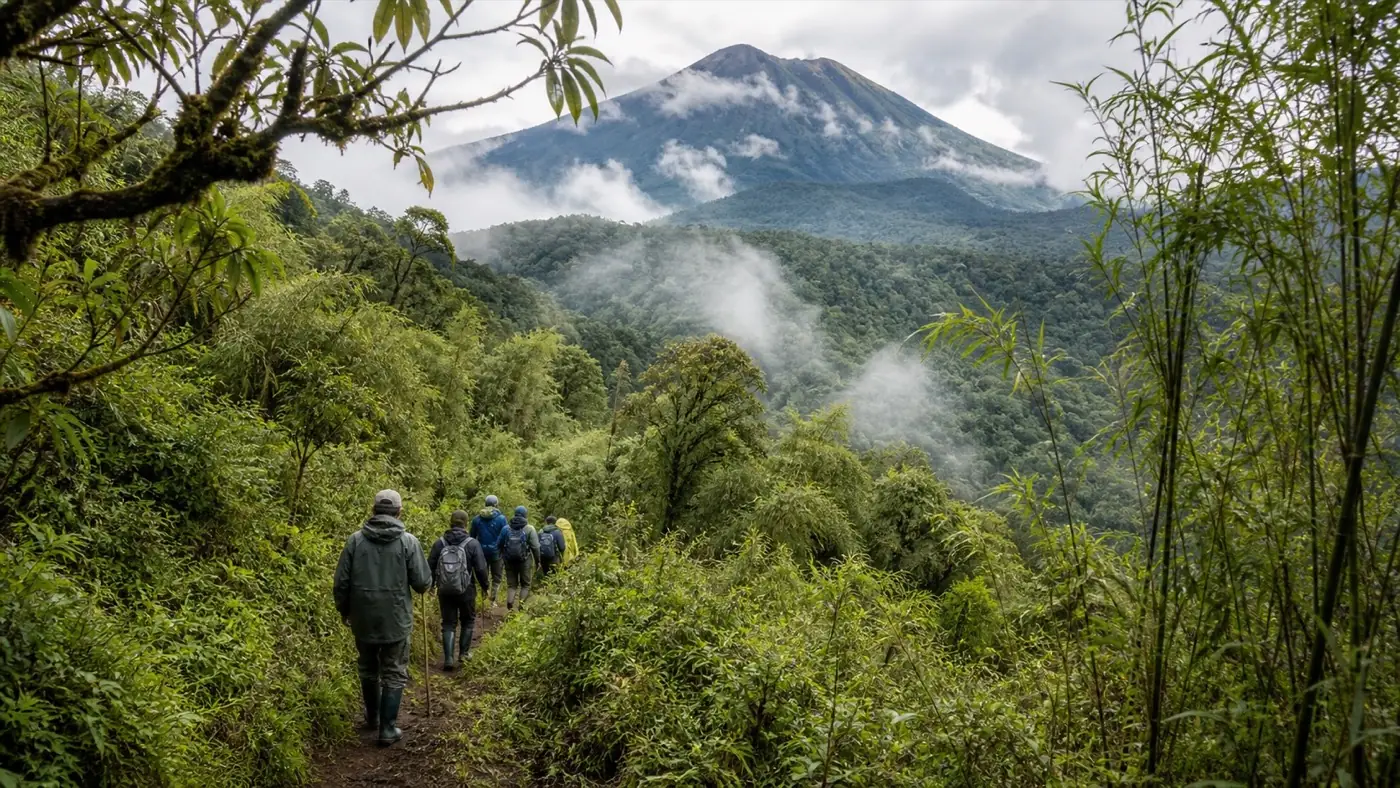
- Stay with the guide and remain within the authorized viewing area.
- Use quiet voices and controlled movements.
- Disable flash and follow camera restrictions.
- Do not eat, drink, smoke or leave waste near gorillas.
- Never imitate chest beats, vocalizations or aggressive postures.
- Do not reveal sensitive real-time locations on social media.
Photography ethics
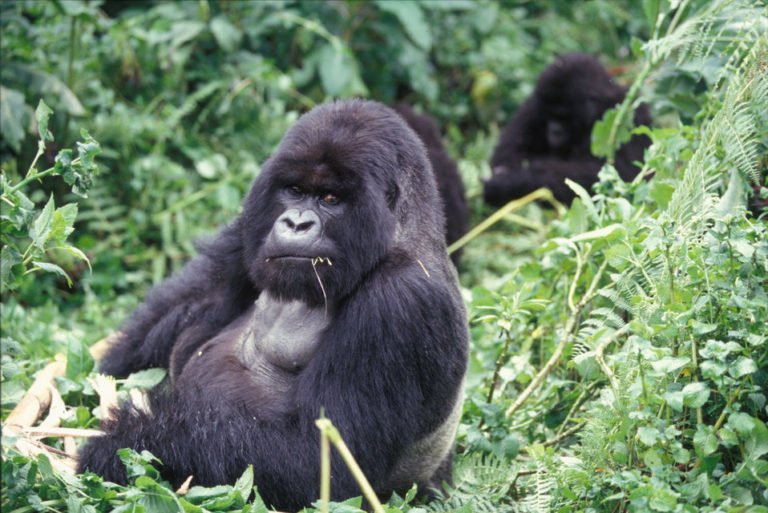
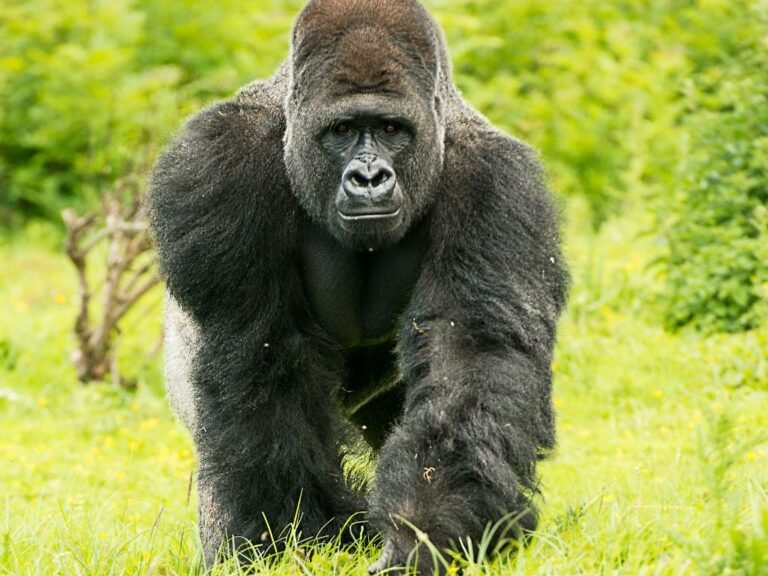
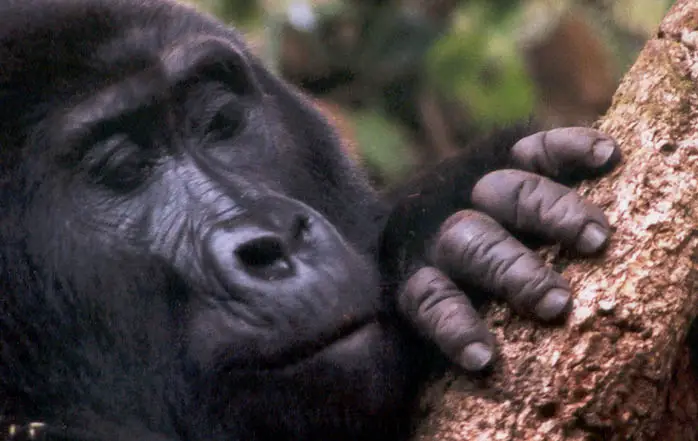
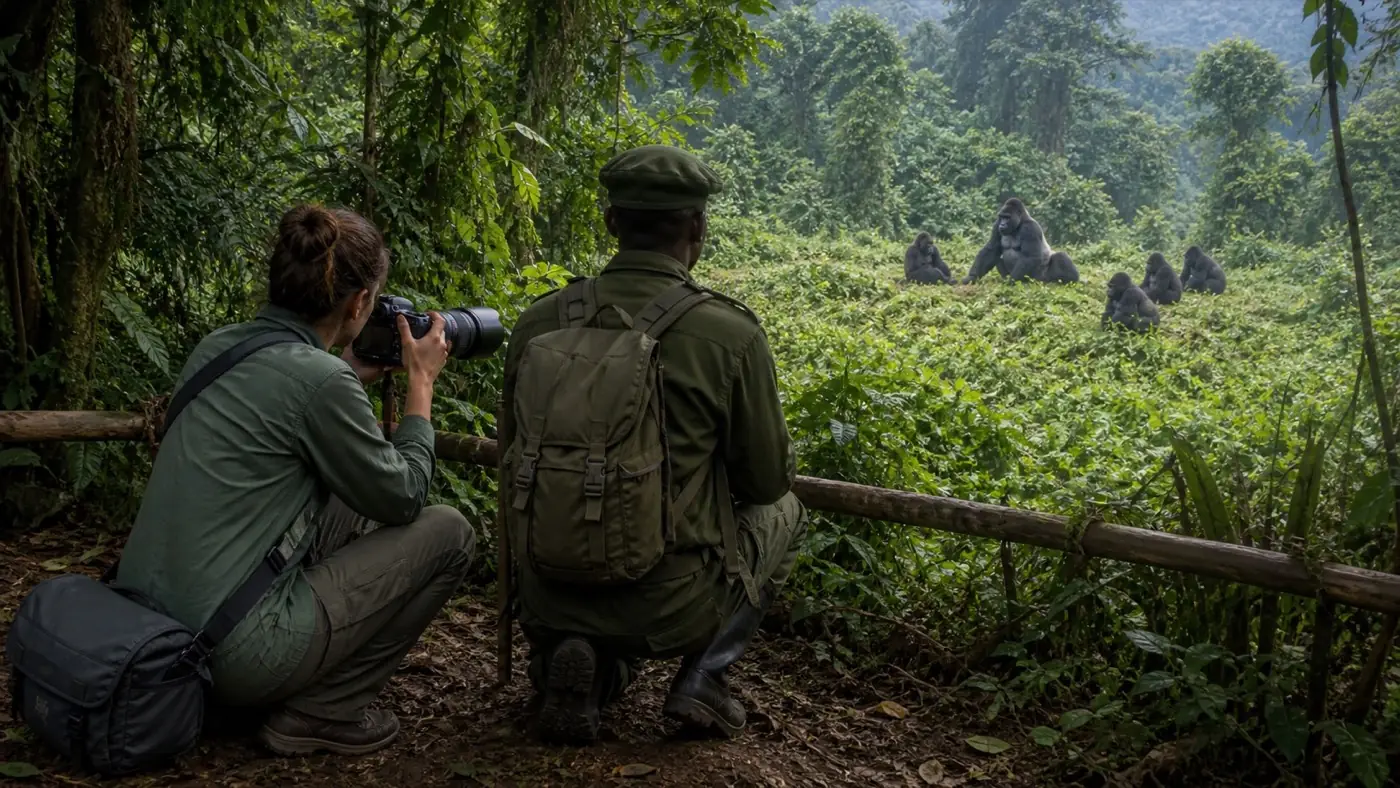
A dramatic image does not justify crowding an animal, separating a mother and infant, or pressuring a guide to break rules. Long lenses and patient observation produce better welfare outcomes. Captions should identify captive versus wild settings and avoid claims about an animal’s emotion from a single expression.
Choosing an operator
Verify that the operator obtains official permits and uses qualified local guides. Ask how revenue reaches the protected area and surrounding communities, how illness cancellations are handled, and what happens if animals show stress. Avoid businesses promising touching, feeding, guaranteed close-ups or access outside official systems.
Communities are conservation partners
People living near gorilla habitat may bear crop, access and opportunity costs. Ethical tourism should create transparent local employment and benefit sharing without presenting communities as scenery. Conservation claims are stronger when operators publish where fees go and how outcomes are measured.
Tourism is not automatically conservation
Permit revenue can support monitoring and protection, but tourism also introduces disease, disturbance and inequitable-benefit risks. Its value depends on regulation, enforcement, visitor density, health safeguards and accountable use of revenue.
Before booking
- Check the official wildlife authority’s current rules.
- Use a licensed operator and valid permit.
- Confirm illness, refund and rescheduling policies.
- Prepare to follow distance and mask requirements.
- Choose clothing and equipment that minimize waste and habitat damage.
- Accept that sightings and photographic conditions cannot be guaranteed.
Learn why health safeguards matter in why gorillas are endangered and see the gorillas’ range in mountain gorilla habitat.
Sources
- IUCN, Best Practice Guidelines for Great Ape Tourism.
- IUCN, Best Practice Guidelines for Health Monitoring and Disease Control in Great Ape Populations.
- International Gorilla Conservation Programme, mountain gorilla conservation information.