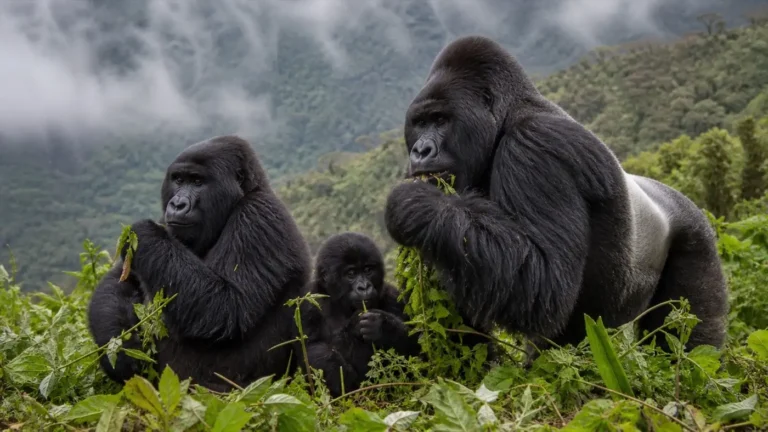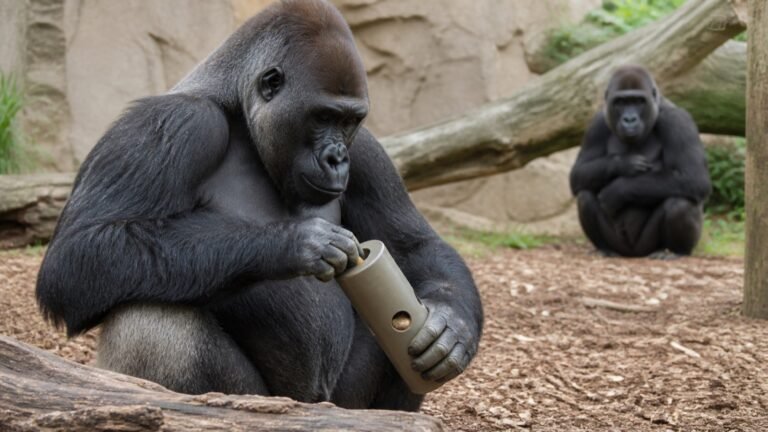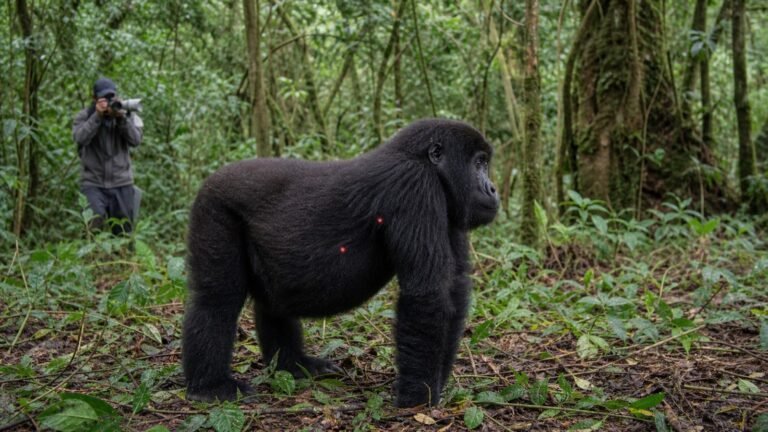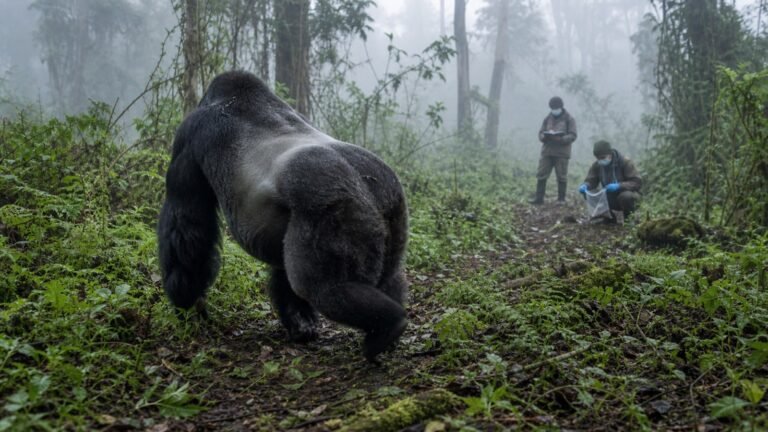
Short answer: Aging gorillas can develop tooth wear, graying hair, reduced mobility, muscle loss, joint disease and changing social behavior. Individuals age differently, and long-lived gorillas under human care should not be used as the wild average.
When is a gorilla old?
There is no single birthday. Wild gorillas commonly live into their thirties or forties, while some individuals under human care reach their fifties. “Geriatric” decisions in veterinary care depend on health and function as well as chronological age.
Visible signs
- Additional gray hair beyond the normal male saddle
- Slower climbing or careful transitions
- Reduced muscle mass
- Stiffness or altered gait
- Worn or missing teeth
- More resting or changed social participation
Teeth record years—but also diet
Molar dentine exposure increases with age, yet gritty roots and local ecology accelerate wear. Dental condition can suggest age class but should not be read as an exact calendar.
Joint health and mobility
Large bodies place substantial loads on hips, knees, shoulders and wrists. Accredited zoos use voluntary movement assessments, radiographs when warranted, medication, physical therapy and habitat modifications. Smithsonian has described laser therapy and exercises used for an older female’s joint issues.
How social roles change
An older silverback may remain central, lose status or rely on established relationships. Older females carry extensive ecological and social experience. Aging is therefore a group process, not only a medical condition.
Wild versus human-care aging
Wild animals face injury, infection and food uncertainty but remain in natural activity patterns. Zoo gorillas receive consistent nutrition and veterinary care but encounter different environments and disease profiles. Comparing the settings can generate hypotheses, not a simple quality ranking.
Why exceptional longevity makes news
The oldest known gorilla is a record holder, not the expected lifespan. Reports should distinguish current age, verified birth history and whether the individual was wild-born with an estimated birth year.