Research summary: A 2026 study of 197 wild mountain gorillas found that growth trajectories differed between the Bwindi and Virunga populations. Bwindi females reached a smaller adult size despite growing for longer, while adult-size differences among males were smaller.
Paper: McFarlin et al., Proceedings of the Royal Society B. DOI: 10.1098/rspb.2025.2227.
Why compare these populations?
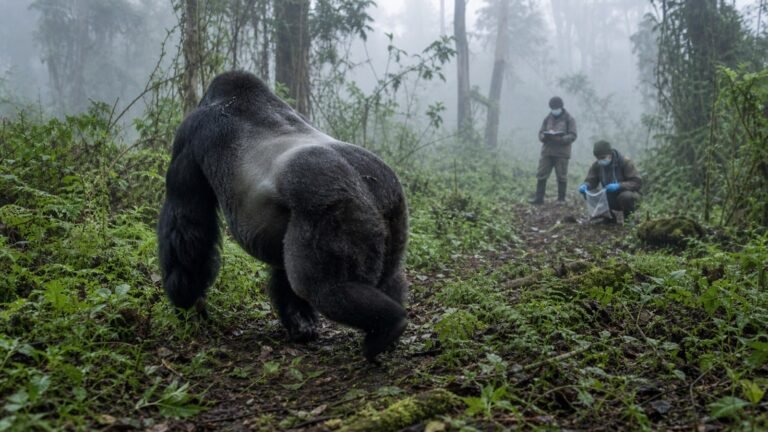
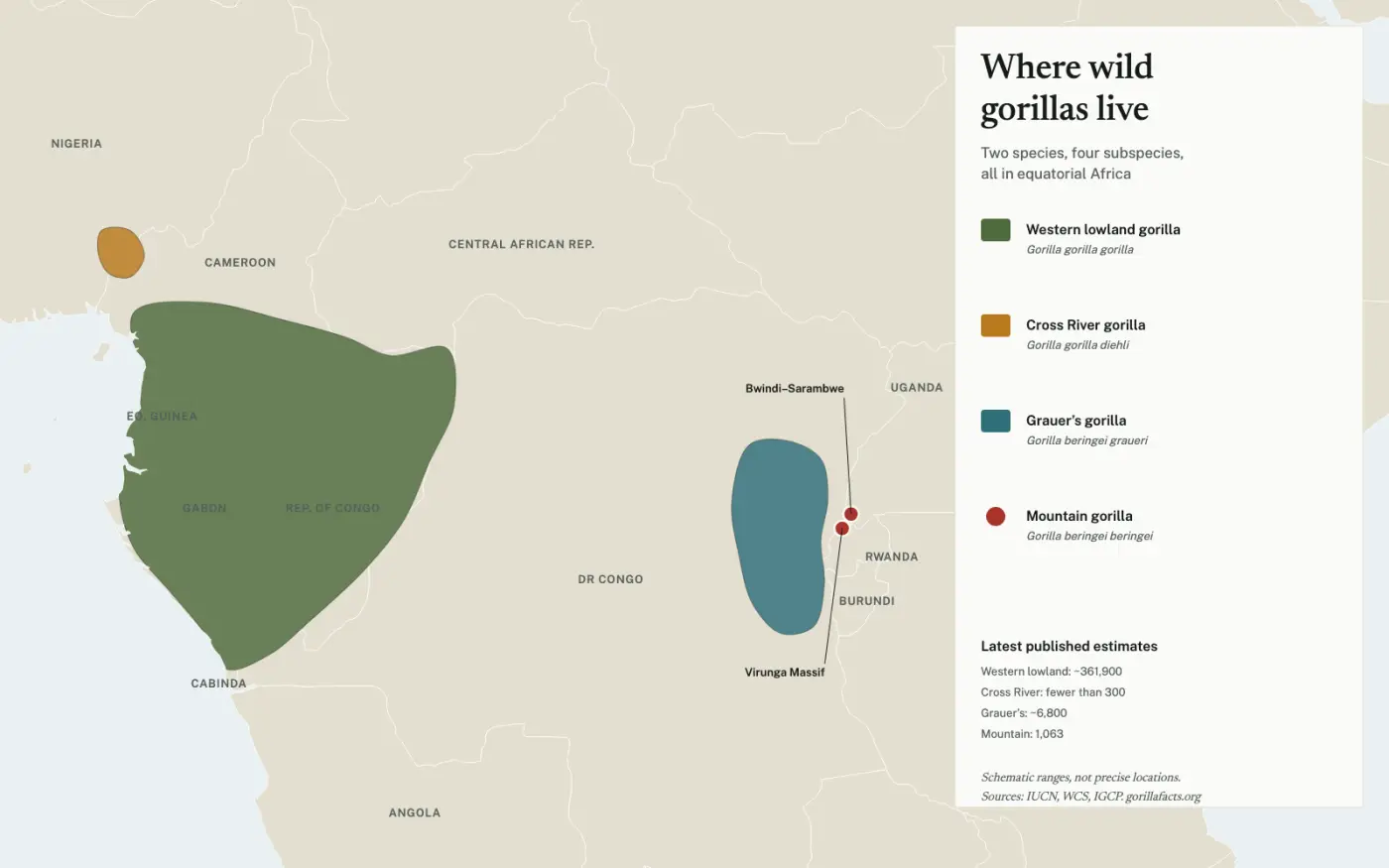
Mountain gorillas live in two ecologically distinct landscapes. Bwindi Impenetrable National Park in Uganda differs from Volcanoes National Park in Rwanda’s Virunga Massif in vegetation, diet and life-history patterns. Studying one subspecies in two environments can reveal how growth responds to ecology and other population differences.
How body size was measured
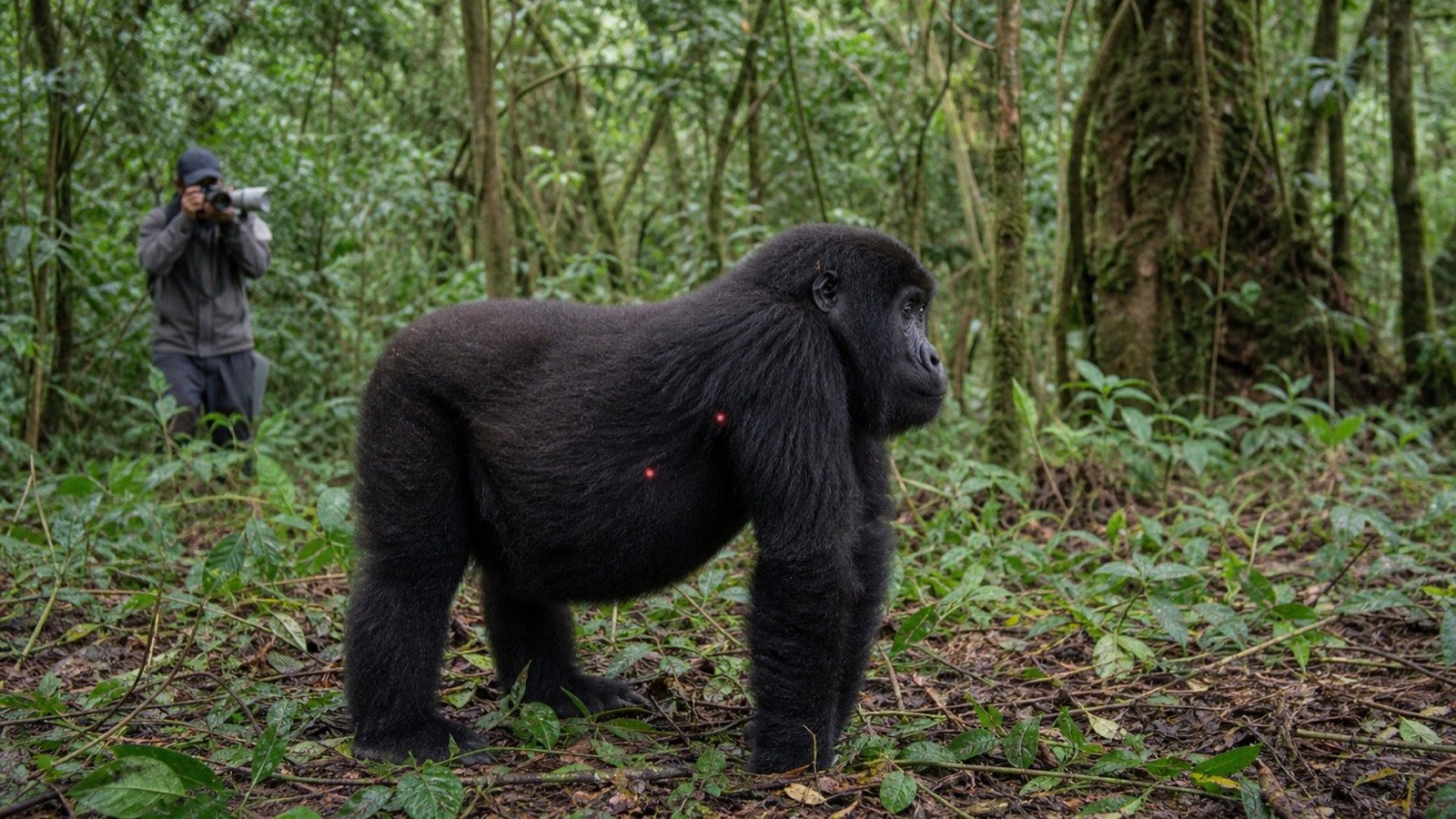
The researchers used non-invasive parallel-laser photogrammetry. Lasers provide a scale in photographs, allowing measurements without capturing or touching the gorillas. They modeled body length and back breadth for 197 gorillas aged approximately 0.3 to 42.7 years.
Main findings
- Bwindi females reached a smaller adult size than Virunga females, although their growth continued longer.
- Differences in adult male size were minimal.
- Bwindi males continued growth in back breadth for longer.
- For both sexes, Bwindi gorillas were smaller in early infancy, but population differences narrowed during development.
The study reports the first evidence of within-species differences in body-size growth between populations of living wild apes with distinct ecologies.
What might explain the differences?
The observational design cannot isolate one cause. The authors identify several possibilities: genetic variation, developmental plasticity, ecological constraints and trade-offs between growth and reproduction. Diet quality or availability may contribute, but the study does not establish a simple food-to-size causal chain.
Why the result matters
Species averages can hide meaningful population variation. Conservation assessments, veterinary comparisons and life-history models benefit from knowing that gorillas of the same subspecies may not follow identical growth trajectories.
The result also cautions against giving one exact “normal” gorilla height or size without identifying sex, age, population and measurement method.
Limitations
This was an observational comparison, not an experiment assigning environments. Body length and back breadth are informative but do not capture every dimension of mass or condition. The results concern two mountain gorilla populations and should not be generalized automatically to other subspecies.
Background: gorilla height, gorilla weight and mountain gorilla habitat.
Primary source
McFarlin, S.C. et al. (2026), PubMed record and abstract, Proceedings of the Royal Society B.