Research summary: A 2026 open-access study of 17 zoo-housed western gorillas found that performance on a simple food-extraction enrichment improved with repeated exposure. Some individual and sex-related differences appeared, but the authors did not treat task success as a general intelligence score.
Paper: Gil-Dolz, Padrell and Úbeda, International Journal of Primatology. DOI: 10.1007/s10764-026-00549-y.
What did the researchers test?
The team examined whether rated personality, sex and age were associated with interest in and success at a cognitive feeding-enrichment task. Environmental enrichment is designed to encourage species-appropriate activity and choice in animals under human care.

Methods
The sample included four males and thirteen females, aged 4–37 years, in three social groups at Barcelona Zoo and Parque de la Naturaleza de Cabárceno in Spain. Caregivers rated personality using a gorilla-specific questionnaire.
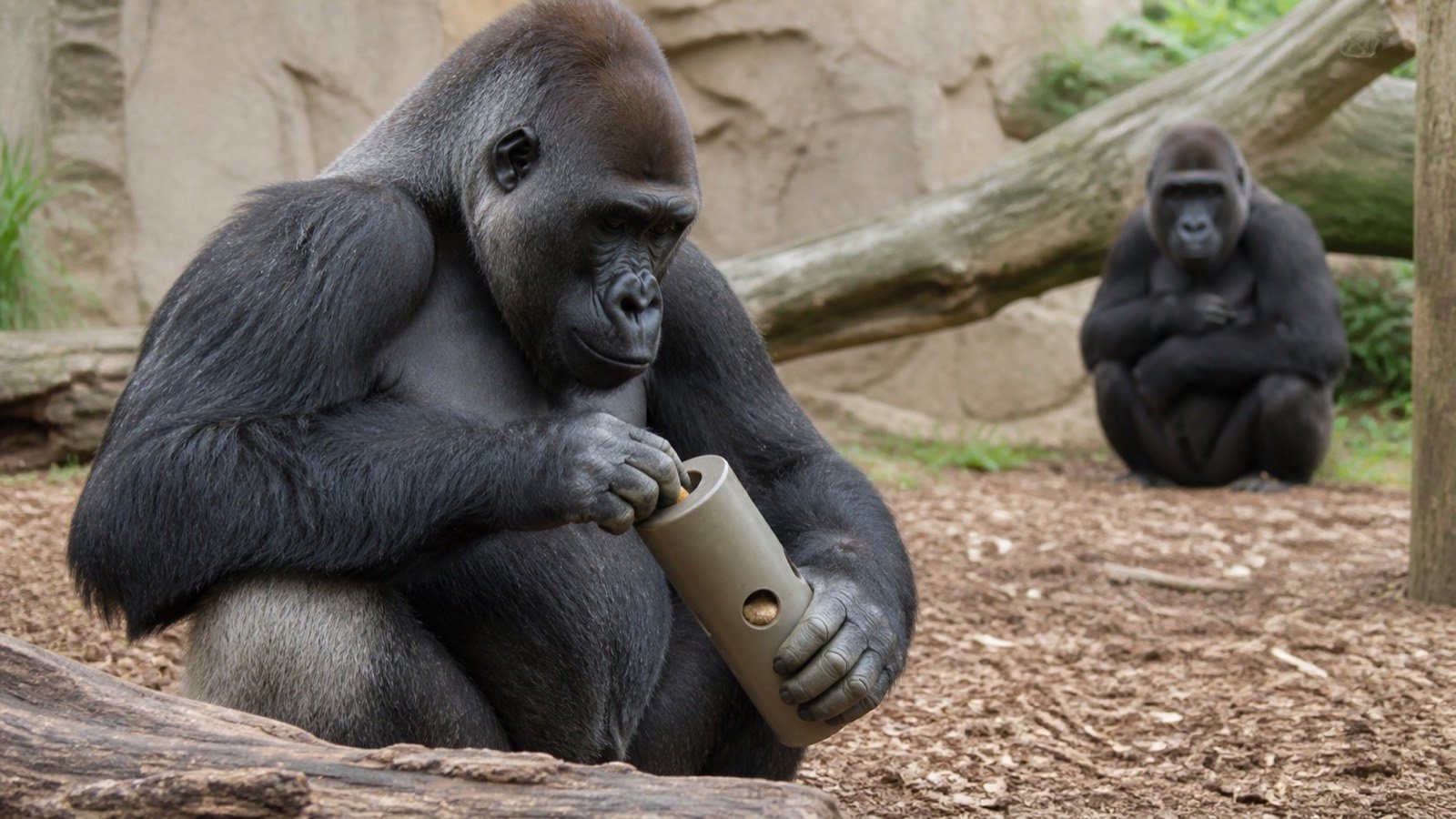
The task used a 30-centimetre hose containing crushed food from the regular diet. Each gorilla was observed in three 30-minute sessions while remaining with its social group. Participation was voluntary, and researchers recorded interaction, first-success time and successful food extractions.
Main findings
- Repeated exposure reduced the time to first success and increased successful extractions.
- Personality ratings did not explain how long gorillas showed interest in the task.
- A protectiveness–indifference factor was associated with success rate.
- Females extracted food more efficiently than males in this particular tube task.
- Age was not a significant predictor of interest.
What the study does not show
The task was relatively simple, the sample was small and females outnumbered males. Finger size, attention to social surroundings or the specific device could influence efficiency. The findings do not establish that females are generally more intelligent, or that one personality type is universally better at problem solving.
The researchers explicitly measured engagement and success rather than interpreting the results as a broad measure of cognitive performance.
Welfare implications
Individuals can respond differently to the same enrichment. Providing voluntary, socially compatible tasks and tracking outcomes can help care teams design varied programs rather than assuming one device benefits every gorilla equally.
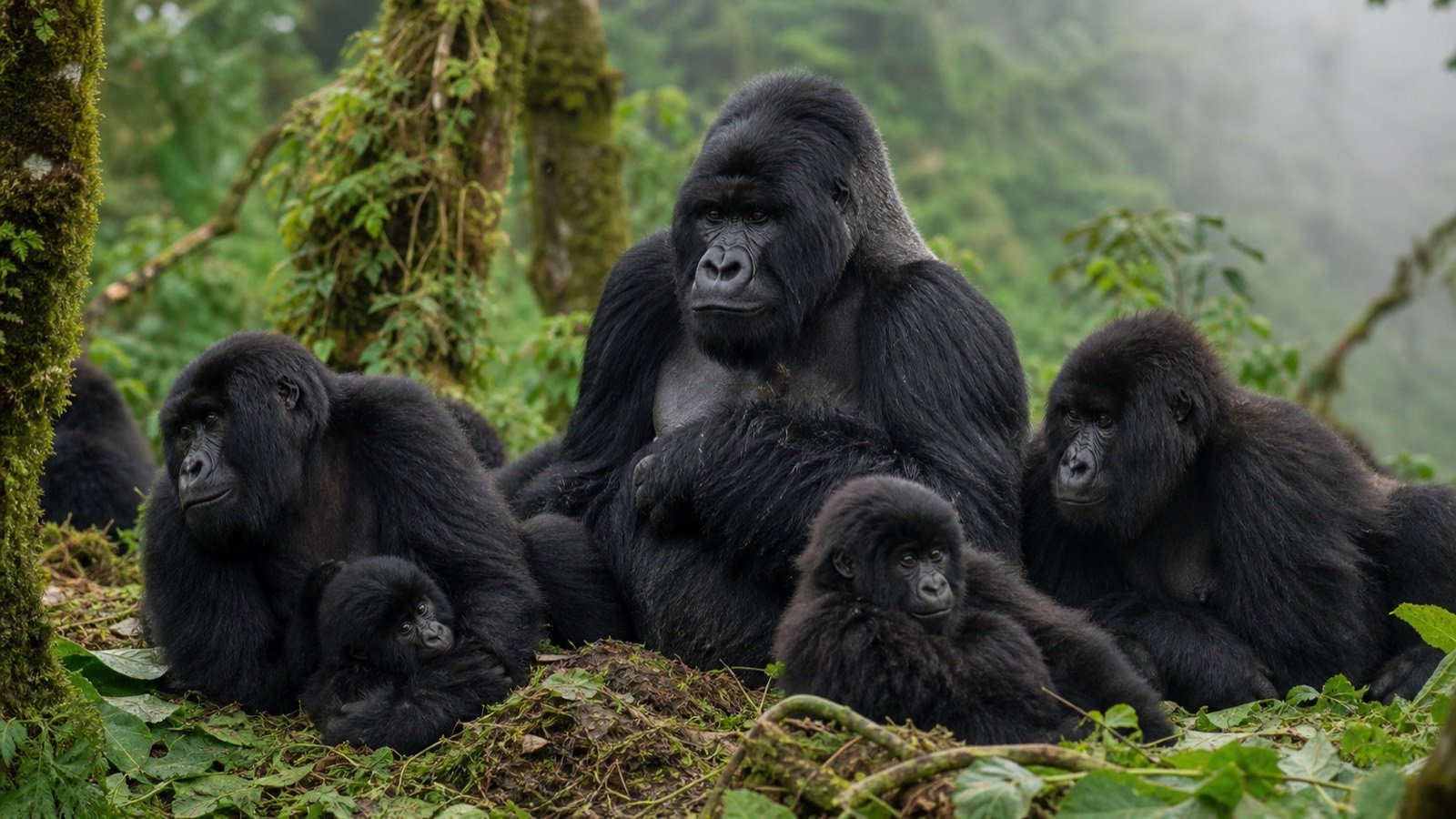
Background: gorilla communication and gorilla social life.
Primary source and data
Gil-Dolz, J., Padrell, M. and Úbeda, Y. (2026), open-access study. The authors link the underlying dataset through the Open Science Framework.