Research summary: A study published online on July 27, 2026 found that male mountain gorilla testosterone began its later-life rise before DHEAS—the reverse of the developmental sequence usually described in humans.
Paper: Brown et al., Journal of Comparative Physiology B. DOI: 10.1007/s00360-026-01702-y.
What question did the researchers ask?
Testosterone and dehydroepiandrosterone sulfate (DHEAS) are steroid hormones involved in male primate development. Human research describes an early-infant rise followed by decline, then an increase in DHEAS before the pubertal testosterone rise. Comparable lifespan data are scarce for other great apes.
The team asked how metabolites of the two hormones change with age in wild male mountain gorillas and whether the timing resembles the human pattern.
How was the study conducted?
Researchers analyzed a large collection of fecal samples spanning the male gorilla lifespan. Enzyme-linked immunosorbent assays quantified metabolites of both hormones, and high-performance liquid chromatography–tandem mass spectrometry was used to validate the assays.
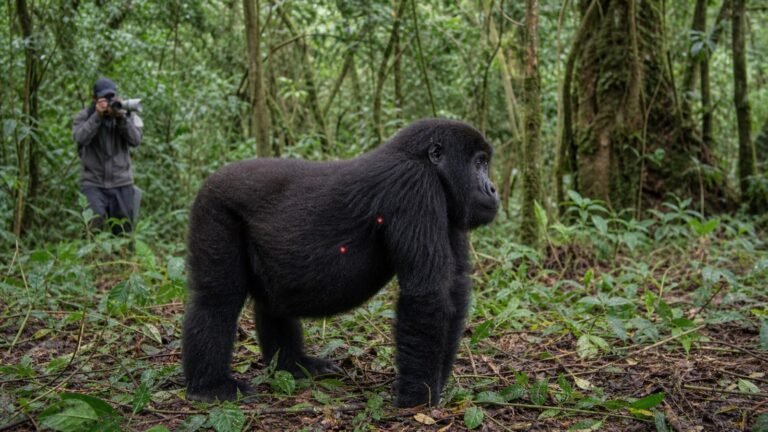
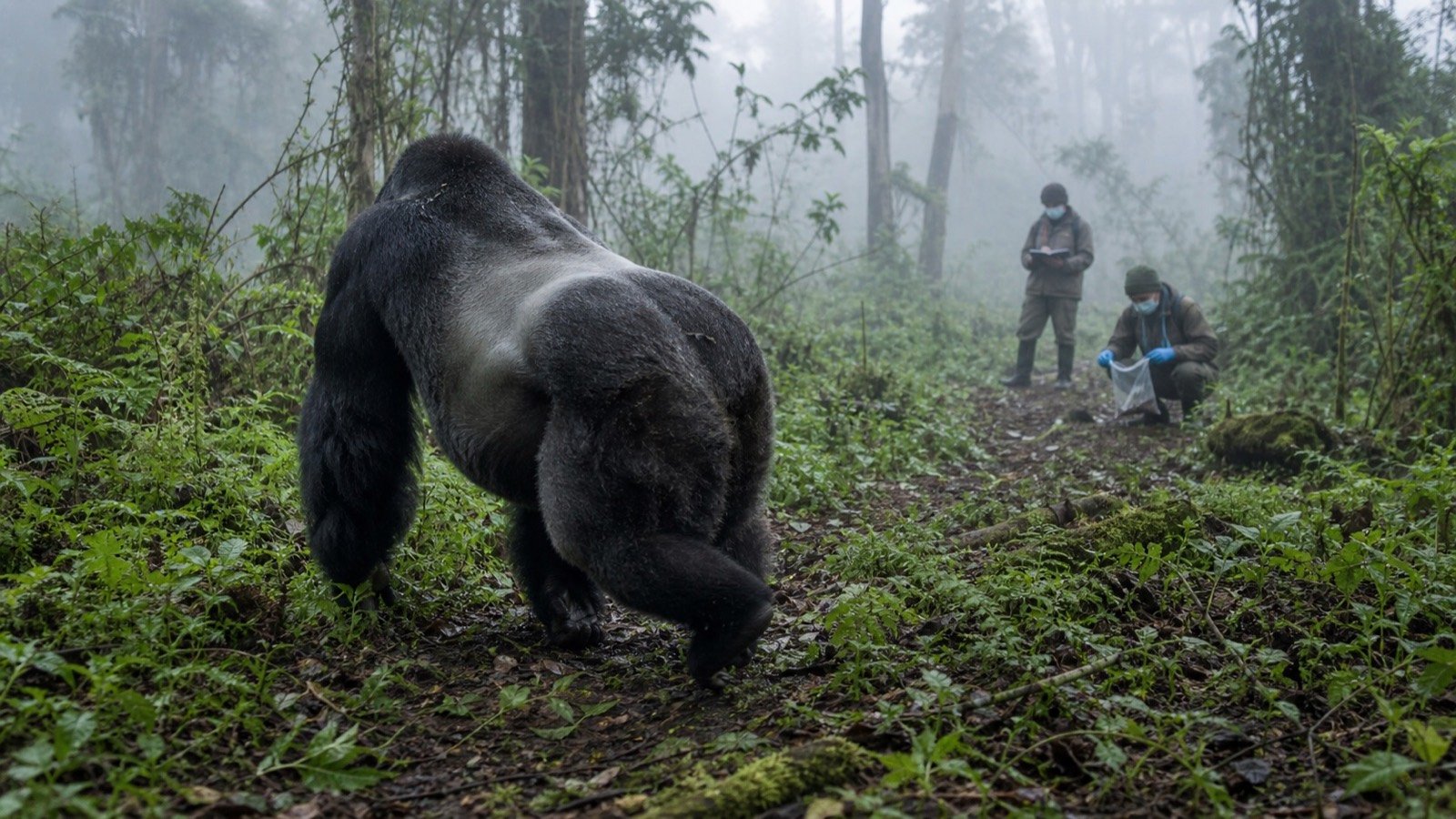
Sampling was non-invasive. According to the paper’s ethics statement, researchers waited until gorillas had moved at least seven metres away and wore surgical masks.
What did the study find?
- Both hormones were high during male infancy and then declined.
- Testosterone began rising again at an estimated 9.3 years.
- DHEAS rose later, at an estimated 10.7 years.
- Testosterone peaked at about 18 years.
- DHEAS reached a plateau at approximately 23 years.
The key result is the sequence: testosterone rose before DHEAS. That differs from the usual human pattern in which adrenarche—the DHEAS rise—precedes puberty-associated testosterone increase.
What does it mean?
The finding shows that developmental hormone timing cannot be assumed to follow the same sequence across great apes. Lifespan endocrine data from wild gorillas help researchers compare primate development and refine hypotheses about human evolution.
It does not mean gorillas have a single precise “puberty birthday.” The ages are population-level estimates from hormone metabolite patterns, and individual development can vary.
Limitations and next questions
Fecal metabolites are indirect measures and depend on validated laboratory methods. The study focused on wild male mountain gorillas; results should not be generalized automatically to females, captive gorillas or every subspecies. The authors call for more research on variation across the primate order.
Background guides: gorilla life cycle, gorilla social groups and species and subspecies.
Primary source
Brown, E.R. et al. (2026), PubMed record and abstract, Journal of Comparative Physiology B.